
Best personalised coasters ranked by material 2026
· 12 min read
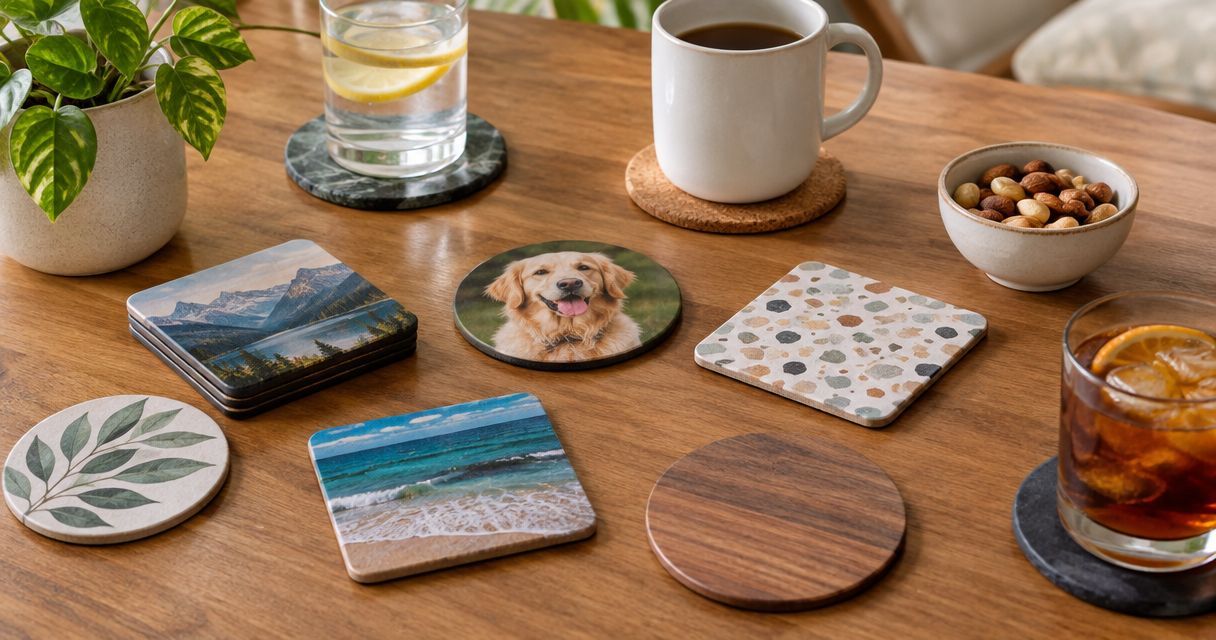
Best overall shortlist: cork-backed hardboard. Best for a smooth photo surface: glazed ceramic. Best for engraved names: slate. This 2026 guide ranks personalised coasters by how well each material suits your photos, your table and the person receiving them.
TL;DR
- For Pixaprints readers choosing personalised coasters, cork-backed hardboard is the best everyday material to shortlist.
- Choose glazed ceramic photo coasters for a smooth surface; check the underside protects your furniture.
- Choose slate for engraved names and simple artwork, rather than a full-colour family photograph.
- Check the complete coaster construction: surface, backing and care instructions matter as much as the material.
Why the material matters
A lovely photograph cannot fix a coaster that slides across your table or needs more careful cleaning than you want to give it. Choose the construction first, then make it your own with a favourite face, place or memory.
For your 2026 shortlist, separate the decorative surface from the backing. A coaster described as ceramic, wood or hardboard can have a different material underneath, and that underside is what touches your furniture.
Think about the setting, too. Our guide to personalised coasters for pub quiz and games nights offers an occasion-led starting point; the material comparison below helps you narrow the choice.
What makes the best personalised coasters?
These criteria put everyday usefulness ahead of appearance alone:
- Photo suitability: A smooth, evenly coloured printing surface gives a photograph a different effect from grainy wood or dark slate.
- Furniture contact: Look for a backing or protective feet that separate a hard underside from your table.
- Moisture handling: Distinguish a wipe-clean surface from an absorbent one. They solve different problems.
- Care requirements: Follow instructions for the finished coaster, including its print, coating, adhesive and backing.
- Personalisation style: Full-colour photographs, engraved names and simple line drawings need different surfaces.
- Handling: Consider weight, brittle edges and storage, especially if you regularly move coasters between rooms.
The best material is the one that suits the image and the way you will use it. A wedding portrait and an engraved house name do not need the same finish.
Personalised coaster materials at a glance: 2026
This is a material shortlist, not a claim that every supplier makes each construction to the same standard. Check the individual product description before choosing.
| Rank and material | Best for | Standout feature | Key limitation |
|---|---|---|---|
| 1. Cork-backed hardboard | Everyday family photographs | Smooth decorative face with a cork underside | Exposed board edges need protection from prolonged moisture |
| 2. Glazed ceramic | Smooth photo presentation | Hard, smooth glazed surface | Can chip or break if dropped |
| 3. Slate | Engraved names and simple artwork | Dark stone surface with natural texture | Texture and colour are not a neutral base for every photograph |
| 4. Wood | Natural-grain keepsakes | Grain becomes part of the design | Finish determines how it handles moisture |
| 5. Acrylic | Lightweight, modern designs | Light plastic construction | Surface scratches can show |
| 6. Cork | Simple line art and initials | Soft, textured contact surface | Texture competes with fine photographic detail |
1. Cork-backed hardboard: best for everyday photo coasters
Cork-backed hardboard combines a rigid board with cork underneath. For photo personalisation, look for a smooth, coated decorative face rather than assuming that the material name guarantees a particular print finish.
This construction earns the default shortlist position because it separates the jobs: the face carries your image, while the cork underside keeps the board itself away from the table. Check the edges and the cleaning instructions before deciding.
Cork-backed hardboard pros:
- A smooth coated face suits full-colour photographs.
- Cork backing separates the rigid board from furniture.
- A flat surface suits portraits, landscapes and simple captions.
Cork-backed hardboard cons:
- Prolonged moisture exposure can affect unprotected board edges.
- A coated face does not establish dishwasher suitability.
- A wipe-clean surface does not necessarily absorb condensation.
Best for: A family photo set that you intend to use regularly, rather than keep purely as a decoration.
Verdict: Buy if the finished coaster has protected edges, suitable backing and clear care instructions.
2. Glazed ceramic: best for a smooth photo surface
Glazed ceramic provides a hard, smooth face. It suits a design where you want the photograph to remain the focus rather than share attention with visible grain or stone texture.
Check the underside carefully. Ceramic itself is not a soft furniture-contact material, and the finished coaster needs appropriate backing or feet for the surface where you will use it.
Glazed ceramic pros:
- A smooth glaze avoids the pronounced texture of cork or slate.
- A light-coloured printing area suits many photographic designs.
- A glazed face is straightforward to wipe when its care instructions permit.
Glazed ceramic cons:
- Ceramic can chip or break after an impact.
- An unprotected underside can mark furniture.
- Glazed ceramic is not the same as absorbent, unglazed ceramic.
Best for: A favourite portrait or carefully composed photograph where the surface should stay visually quiet.
Verdict: Buy for smooth photo presentation; skip if breakage is your main concern.
3. Slate: best for engraved names and simple artwork
Slate gives personalisation a dark, textured stone background. Engraved names, initials and uncomplicated drawings suit that character better than a design dependent on a plain white background.
Printed slate also needs a closer look at the actual printing area and finish. Do not assume that a product labelled personalised slate will reproduce a full-colour photograph in the way you expect.
Slate pros:
- Natural texture becomes part of the keepsake.
- Simple engraving keeps the design easy to recognise.
- Dark stone suits restrained, high-contrast artwork.
Slate cons:
- Natural edges and surfaces are not perfectly uniform.
- Slate can chip, particularly at exposed edges.
- Protective feet or backing matter on scratch-sensitive tables.
Best for: A house name, anniversary date or short message with a simple illustration.
Verdict: Buy for engraved character; skip when faithful photographic colour is the priority.
4. Wood: best for natural-grain keepsakes
Wood makes its grain part of the finished design. That is appealing when you want a personal message or illustration to sit within a natural surface rather than cover it completely.
Check whether the coaster is solid wood, veneer or a wood-based board. Those descriptions are not interchangeable, and the finish matters when assessing cleaning and moisture care.
Wood pros:
- Visible grain gives the design a natural backdrop.
- Simple names and line drawings work with the surface.
- Engraving can leave the wood itself as the main visual feature.
Wood cons:
- Grain can interrupt fine image detail.
- Moisture can affect wood, depending on its finish and care.
- A sealed surface behaves differently from unfinished wood.
Best for: A woodland wedding keepsake, housewarming message or initials-led design.
Verdict: Buy when you want visible grain; skip when you want a uniform photographic background.
5. Acrylic: best for lightweight, modern designs
Acrylic is a plastic material used in clear and coloured forms. For personalised coasters, establish whether the photograph is printed onto the material or held within a layered construction.
That distinction changes what you need to inspect. With a layered design, pay attention to joins and edges; with a printed surface, check how the decoration should be cleaned.
Acrylic pros:
- Lightweight construction suits coasters you move around regularly.
- Clear material can frame a design without visible wood grain.
- Simple graphic layouts suit its smooth appearance.
Acrylic cons:
- Scratches can become visible on smooth surfaces.
- Clear designs show whatever sits beneath them.
- Heat and cleaning suitability require product-specific instructions.
Best for: A clean, contemporary design where low weight matters more than natural texture.
Verdict: Buy for lightweight styling; hold until you have checked heat and cleaning guidance.
6. Cork: best for simple initials and line art
Cork brings a soft, visibly textured surface to the table. It is a different choice from a cork-backed coaster: here, cork is also the decorative face.
Keep personalisation uncomplicated. Bold initials or a clear outline give the material room to show, whereas a detailed group photograph asks the textured surface to do a different job.
Cork pros:
- Soft contact avoids placing bare stone or ceramic on furniture.
- Low weight makes it easy to move and store.
- Natural texture suits simple, informal designs.
Cork cons:
- Fine photographic detail competes with its texture.
- Cork can stain and retain visible marks.
- Thin edges can crumble or tear with rough handling.
Best for: Initials, uncomplicated drawings and relaxed table settings.
Verdict: Buy for simple personalisation; skip for a detailed photo-led gift.
How to match your photograph to the material
For a 2026 gift, start with the memory rather than decorative extras. Pixaprints lets you upload personal photographs for personalised photo gifts; this material shortlist helps you think about the image before choosing a finished item.
Use these steps to avoid squeezing a lovely photograph into an unsuitable design:
- Choose the memory. Pick an image with a clear subject and a reason the recipient will enjoy seeing it.
- Check the crop. Preview the actual coaster shape and keep faces away from the edges.
- Simplify the layout. Start with 1 photo per coaster rather than a crowded collage.
- Review the finish. Check whether grain, texture or transparency changes the intended effect.
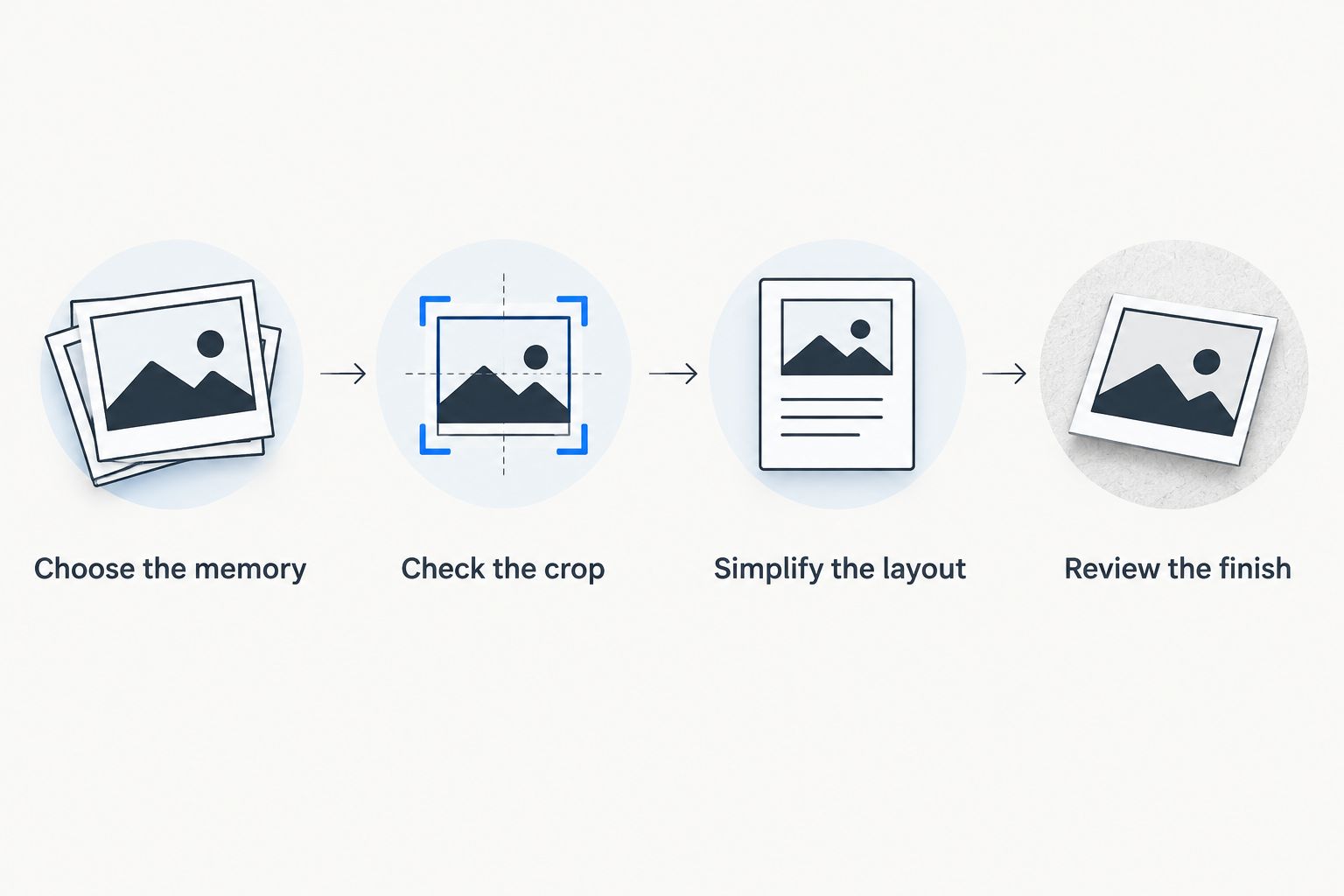
Choose the image first, then check how the material affects it.
For a set of 4 coasters, choose photographs linked by an occasion, place or person. They do not need identical colours, but a shared theme helps the set feel intentional.
Make 2 checks before confirming the design: one for the photograph and crop, another for names and dates. Read text separately from the image so an appealing layout does not distract you from a spelling mistake.
How these materials are ranked
The 2026 ranking prioritises everyday photo use, followed by distinct alternatives for engraving, natural grain and lightweight designs. It compares material characteristics, not laboratory-tested performance or individual supplier quality.
Pixaprints readers choosing personalised coasters should treat the table as a shortlist, then assess the complete construction. A material name alone does not establish print quality, heat tolerance or furniture protection.
Choose the finished coaster, not just the material label. Backing, coating and care instructions can change whether a promising option suits your home.
Which personalised coaster material should you choose?
Start with cork-backed hardboard for an everyday photo gift. Compare the coated face, edge protection and backing before committing; move to glazed ceramic if a smooth decorative surface is your main priority.
For engraving, choose slate when you want dark stone character or wood when visible grain is part of the appeal. Choose acrylic for low weight, and cork for uncomplicated initials or line drawings.
For a 2026 anniversary or housewarming, let the recipient's routine make the final decision. A coaster they can comfortably use is a better match than one whose care instructions they will find inconvenient.
FAQ
What's the best material for personalised coasters with photos?
Cork-backed hardboard with a smooth coated face is the best everyday material to shortlist for photo coasters. Check the finished product's edge protection, backing and care instructions before choosing.
Are ceramic coasters better than wooden coasters?
Glazed ceramic suits a smooth photo presentation, while wood suits designs that include visible grain. Ceramic can chip; wood needs care appropriate to its finish and construction.
Do personalised coasters absorb condensation?
Not every personalised coaster absorbs condensation. A glazed or sealed face behaves differently from a porous surface, so check the complete construction rather than relying on the material name.
Can personalised photo coasters go in the dishwasher?
Only put personalised photo coasters in the dishwasher when the product's care instructions explicitly permit it. The print, coating, adhesive and backing all need to be suitable, not just the main material.
Is slate good for a personalised photo coaster?
Slate is a stronger shortlist choice for engraved names and simple artwork than for photographs requiring a neutral background. For printed slate, inspect the printing area and finish before deciding.
What photograph works best on a personalised coaster?
A photograph with a clear subject and room around the edges is a good starting point. Preview the actual crop and simplify the layout so faces and important details remain easy to see.
Will a hard coaster scratch my table?
A hard, unprotected underside can scratch furniture. Look for appropriate backing or protective feet, and keep the contact surface clean and free of grit.
One last thing
The underside deserves as much attention as the photograph. A coaster can look perfect from above while having a bare contact surface that does not suit your table.
Before finalising a Pixaprints-inspired photo gift idea, picture it in daily use: the mug on top, the furniture underneath and the cleaning afterwards. Make the memory personal, but make the material practical.