
Newborn photography ideas you can try safely at home
· 11 min read
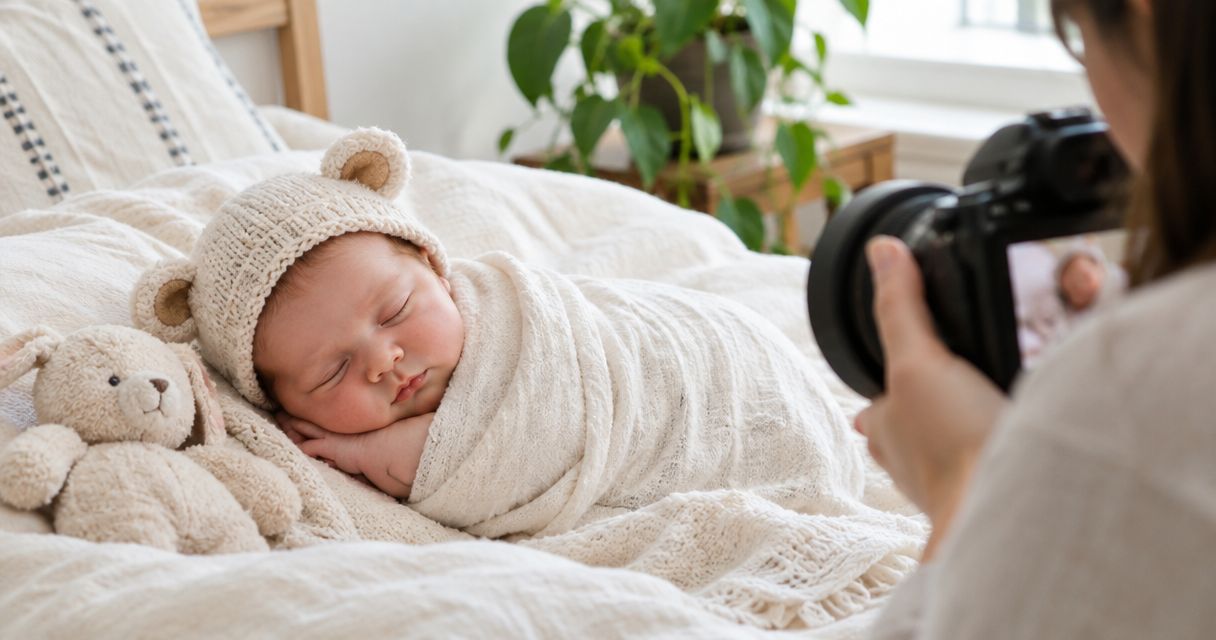
The safest newborn photography ideas at home use indirect window light, a clear cot or parent’s arms, and simple poses that never force or suspend your baby. In 2026, prioritise close supervision and baby-led timing over recreating complex studio photographs.
TL;DR
- For newborn photography ideas at home in 2026, use window light, a safe sleep space and baby-led timing.
- Never attempt suspended, unsupported or chin-on-hands poses without a trained newborn photographer.
- Parent-held portraits and close-up details are the easiest, safest and most personal options.
- Pixa Prints is best for parents turning finished newborn photos into personalised keepsakes.
Why this matters
The World Health Organization defines the newborn period as the first 28 days of life. During that time, your baby cannot support their head and should never be balanced, suspended or placed inside an unstable prop for a photograph.
NHS safer-sleep guidance recommends placing babies on their backs in a clear cot or Moses basket with a firm, flat mattress. Keep that guidance in place when taking sleeping photographs: use a fitted sheet, remove loose props and return your baby to their normal sleep routine when the shoot ends.
A short home session can still produce enough variety for a photo book of baby’s first year. Pixa Prints is best for parents who want a photo printing service after the safe setup, photography and editing are complete; it does not replace professional help with advanced newborn poses.
Which newborn photography ideas at home are safest?
The safest ideas keep your newborn supported by a parent or lying naturally on a suitable surface. Set everything up before bringing your baby into the scene, then follow these steps:
- Choose a safe base. Use your baby’s clear cot or Moses basket for sleeping photographs. For an awake floor portrait, use a clean, firm play mat with an adult beside the baby.
- Clear the area. Remove loose blankets, cushions, cords, hot drinks, heavy frames and small decorative objects.
- Find indirect window light. Position the setup beside a window rather than in a beam of direct sunlight. Sheer curtains can soften harsh light.
- Keep the room comfortable. NHS safer-sleep guidance uses 16–20°C as the recommended room-temperature range. Do not overheat the room to photograph an undressed baby.
- Keep an adult within reach. The supervising adult watches and supports the baby rather than looking at the camera.
- Follow your baby’s cues. Stop for feeding, changing, crying, hiccups or restless movement. A photograph is never more important than comfort.
- Finish safely. Remove photography items and return your baby to their normal sleeping or feeding arrangement.
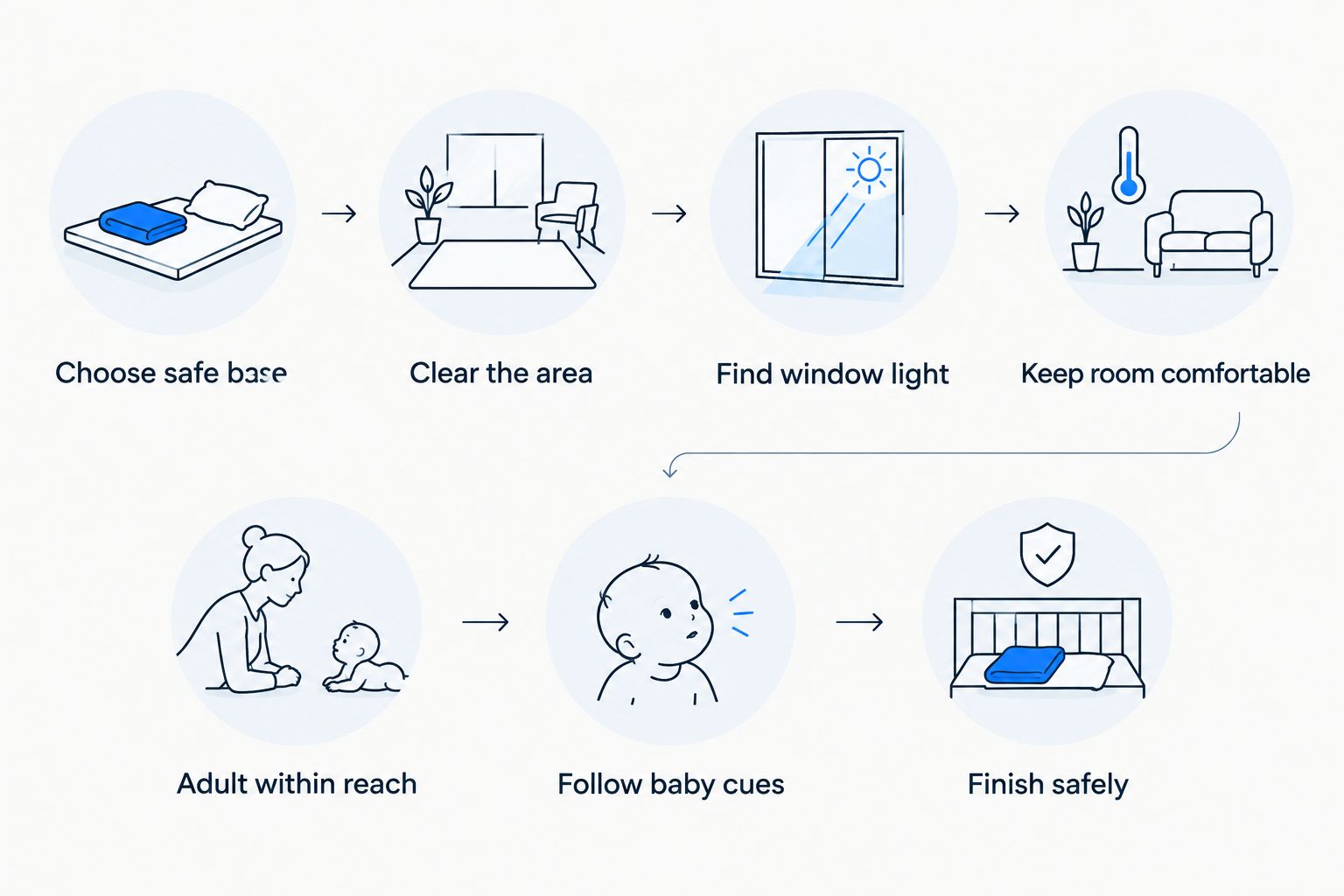
Prepare the surface, light and room before bringing your baby into the scene.
Use this comparison to choose an idea that matches your baby’s mood and the help available.
| Idea | Best for | Main benefit | Limitation | Verdict |
|---|---|---|---|---|
| Window-side cot portrait | A sleeping baby | Calm, uncluttered composition | Limited by daylight and cot position | Try first |
| Parent-held portrait | Reassurance and connection | Baby remains supported | Usually requires another adult to take the photo | Try first |
| Hands, feet and hair details | An unsettled or feeding baby | Needs no formal pose | Focus can be difficult at close range | Try first |
| Awake floor portrait | Alert expressions | Captures eye contact and movement | The useful window can be brief | Try next |
| Sibling portrait | A growing family story | Shows relationships | Requires close supervision and patience | Hold |
| Unsupported prop pose | Recreating studio imagery | Distinctive appearance | Introduces avoidable positioning and fall risks | Skip |
Window-side cot portraits
Best for: a baby who has settled naturally in their normal sleep space. Stand beside the cot and photograph from a safe position without leaning equipment over your baby. Move yourself to change the angle; do not move a sleeping newborn repeatedly for the camera.
Use a fitted, plain sheet as the background and keep the cot free from toys, pillows and loose fabric. The advantage is a simple portrait with very little setup. The drawback is that cot rails can interrupt the frame, so look for an angle through or just above them without standing on furniture.
Verdict: Try first. A clear cot portrait is safer and more honest than an imitation studio setup.
Parent-held newborn portraits
Best for: babies who settle through touch, feeding or skin-to-skin contact. Sit close to a window and ask another adult to photograph the baby resting against your chest, shoulder or forearm. Keep the head and neck supported throughout.
A plain top helps the baby’s face and hands stand out. The strength of this idea is emotional connection; the limitation is that you need a second adult or a phone placed securely at a safe distance.
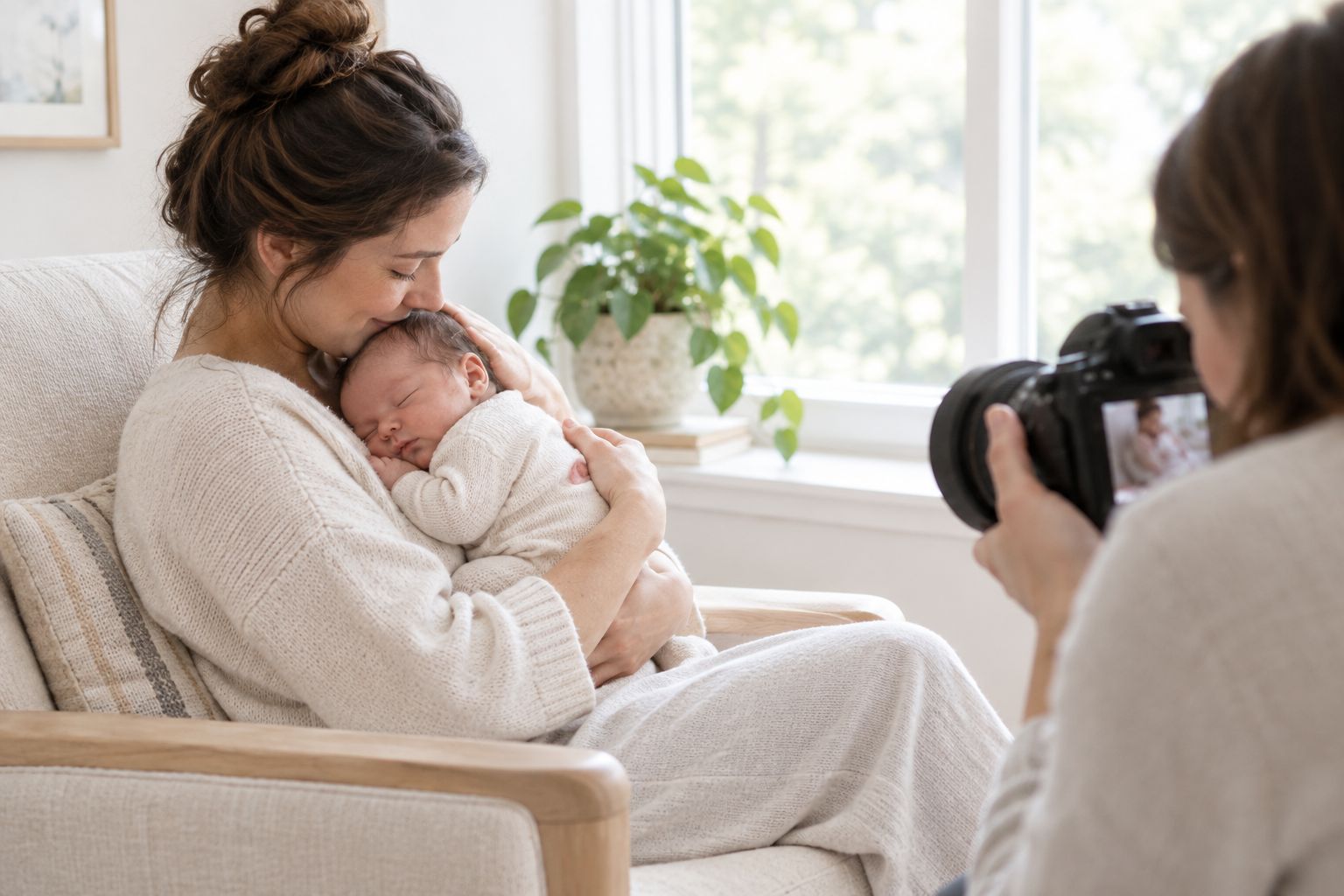
A seated, parent-held pose keeps the baby supported while natural light shapes the portrait.
Verdict: Try first. Parent-held portraits keep support visible and make the photograph more personal.
Newborn hands, feet and hair details
Best for: capturing small features without changing your baby’s position. Photograph curled fingers, toes, eyelashes, hair or a hand resting around your finger. These details work during a calm cuddle or feed, provided another adult remains responsible for the baby.
Move the phone closer instead of using heavy digital zoom. Tap the feature you want sharp and take several frames because small movements can shift focus. The advantage is that no pose is required; the drawback is a very shallow focus area at close range.
Verdict: Try first. Detail photographs are strong choices for Pixa Prints personalised photo printing because they can complement a wider portrait in a book, calendar or wall display.
Awake floor portraits
Best for: eye contact, stretches and natural expressions. Place an awake baby on their back on a clean, firm play mat at floor level, with an adult beside them. Photograph directly down only if you can stand securely on the floor and keep the phone strap, clothing and hair away from the baby.
Never place the baby on a table, sofa edge or adult bed for an overhead shot. The advantage is a clear view of the face and body; the limitation is that an alert newborn can move from calm to unsettled quickly.
Verdict: Try next. Use this idea only while your baby is awake, comfortable and continuously supervised.
Newborn and sibling portraits
Best for: showing a new family relationship without asking an older child to hold the baby. Seat the sibling on the floor and keep the newborn in a parent’s arms beside them. Another adult can take the photograph while the parent remains focused on both children.
Do not ask a young sibling to support the baby’s head or carry the baby for the picture. The benefit is a meaningful family photograph; the drawback is that both children need to be calm at the same moment.
Verdict: Hold. Capture individual portraits first, then attempt the sibling photograph without forcing cooperation.
Why newborn photos vary at home
Home photographs look different from polished studio work, and that is not a failure. These factors have the greatest effect on the result in 2026:
- Direction of light: Side light gives the face shape, while light from directly behind can turn the baby into a silhouette.
- Time and weather: Window light changes throughout the day and becomes weaker on dark, overcast afternoons.
- Baby’s mood: Feeding, tiredness and discomfort determine whether a planned photograph is possible.
- Movement: Newborn stretches and facial expressions happen quickly, making focus harder at close range.
- Background choice: Plain fitted fabric keeps attention on the baby; busy patterns compete with small facial details.
- Available help: A second adult can concentrate on the baby while you concentrate on framing.
Avoid copying composite studio images without understanding how they were made. A photograph that appears to show a baby supporting their own head or hanging from fabric may combine several frames in editing while adults support the baby outside the final image. It is not a single pose to reproduce at home.
How do you take clear newborn photos with a phone?
Start by cleaning the camera lens and selecting the standard rear camera rather than relying on digital zoom. Face the baby towards the window at an angle, tap the nearest eye to set focus and lower the exposure slightly if pale blankets lose visible detail.
If your camera offers manual shutter control, start around 1/250 second to reduce blur from small movements. Increase the available light before accepting a photograph that is too dark, but never move the baby into direct sun or place a lamp close to the cot.
Take wide, medium and close compositions without changing the pose. A wider frame preserves room for different print crops, while a close frame captures fingers, eyelashes and expressions. Before uploading photographs to Pixa Prints, keep the original full-resolution files and edit copies rather than repeatedly saving over the originals.
In 2026, many phones apply portrait blur automatically. Check hair, fingers and blanket edges before keeping the effect, as software can blur part of the subject by mistake. A clean standard photograph is better than an artificial blur with missing details.
What room temperature is suitable for newborn photos?
16–20°C is the NHS recommended room-temperature range for sleeping babies. Keep your baby appropriately dressed or wrapped, avoid portable heaters near the setup and check the chest or back rather than hands or feet when assessing warmth.
What age counts as newborn for home photography?
The first 28 days after birth are the newborn period used by the World Health Organization. You can take meaningful baby photographs after that period too, so do not force a session into a narrow schedule if recovery, feeding or sleep needs come first.
What shutter speed helps with newborn movement?
1/250 second is a practical starting point when a phone or camera provides manual shutter control. It helps reduce blur from stretches and moving hands, but you still need enough window light for a clear exposure.
FAQ
What’s the best background for newborn photography at home?
A plain fitted sheet or uncluttered wall is the best background for home newborn photographs. Avoid loose fabric around a sleeping baby and remove objects that compete with the face.
Can I use flash for newborn photography?
Natural window light is the better first choice because it produces softer shadows and is less likely to startle your baby. If the room is too dark, wait for better daylight rather than placing a bright lamp close to the baby.
Is it safe to put a newborn in a basket for photos?
An unsupported basket pose is not a suitable DIY newborn photography idea. Use the baby’s clear cot, a supervised floor mat while awake, or a parent’s supported arms instead.
Can I take newborn photos while my baby is asleep?
Yes, photograph a sleeping baby in their normal safe sleep space while following NHS safer-sleep guidance. Keep them on their back on a firm, flat mattress with the cot clear of pillows, toys and loose props.
How do I photograph a newborn with an older sibling?
Place the older sibling on the floor and keep the newborn supported by a parent beside them. Do not ask a young child to hold or carry the baby for the photograph.
What should a newborn wear for home photos?
Choose comfortable clothing or a properly fitted sleep garment suitable for the room temperature. Avoid tight accessories, loose decorations and anything that needs frequent repositioning.
How do I stop newborn photos looking blurry?
Use bright indirect window light, clean the lens and tap the baby’s nearest eye to focus. If manual controls are available, 1/250 second is a useful starting shutter speed for small movements.
Are complex studio newborn poses safe to copy at home?
No, suspended and chin-on-hands studio poses should not be copied without specialist training. Many finished examples are composites created from separate photographs with an adult supporting the baby.
One last thing
Choose one wide portrait, one parent-held photograph and one close detail before taking dozens of similar frames. That small set tells a clearer story and gives you more useful options for a Pixa Prints photo book or personalised gift in 2026.
The safest photograph may also be the most valuable: your baby resting naturally in familiar arms, without elaborate props or a perfect pose.