
Best Acrylic Photo Block for Desks in 2026: Buying Guide
· 8 min read
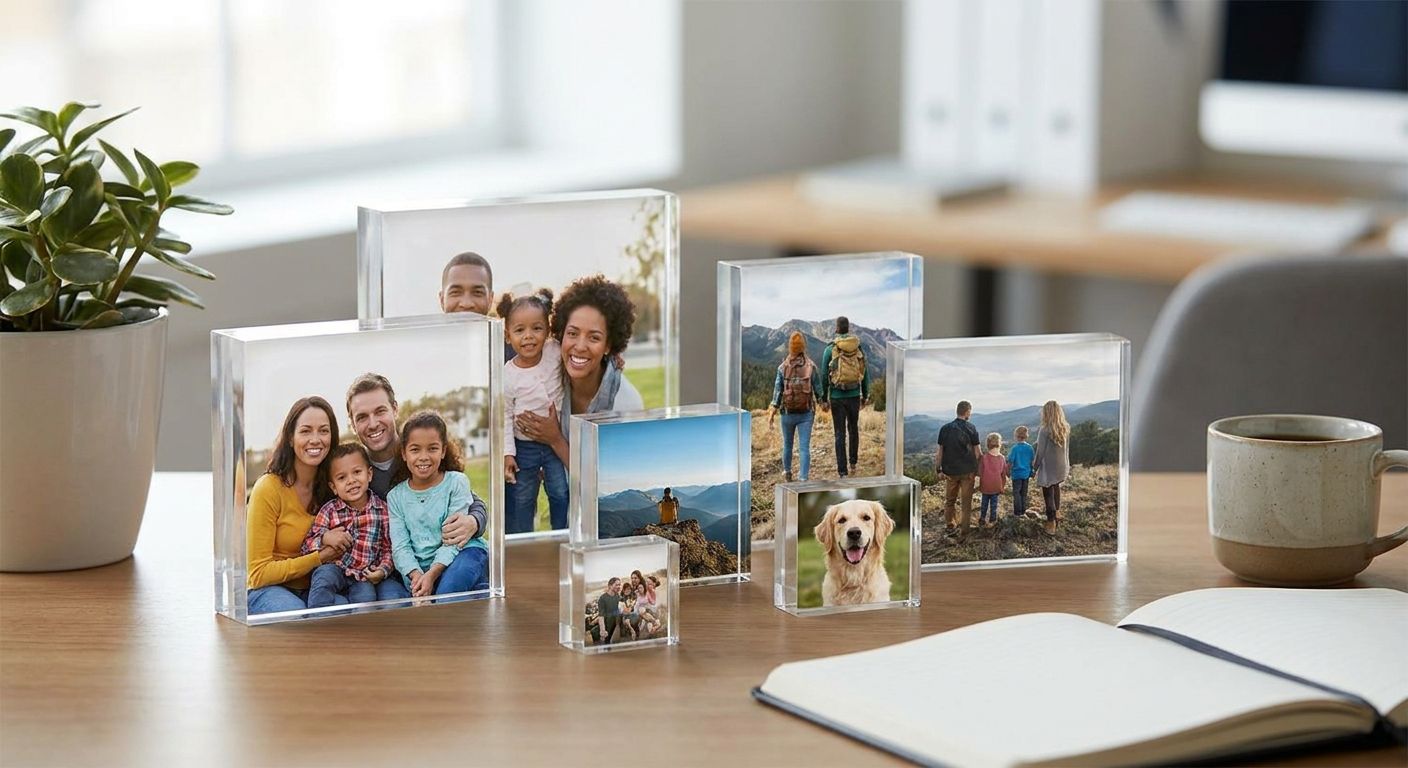
An acrylic photo block turns a printed photo into a solid, self-standing display piece that sits on a desk without a frame or stand. This guide ranks the styles worth buying in 2026, tells you which specs actually matter, and flags the one design that looks better in an advert than it does next to your keyboard.
TL;DR
- The best acrylic photo block for most desks is a classic 20mm rectangular block — buy it.
- Cube-style blocks work as a five-minute desk gift; skip LED-lit bases if cable clutter bothers you.
- Multi-aperture blocks around 30cm wide suit photo series better than single portraits.
- Anything under 15mm thick risks warping near a sunny window — check thickness before you order.
Why this matters
A desk photo display gets touched, knocked and stared at for hours a day, which is a different job than a wall-mounted print. Thickness, edge finish and footprint decide whether a block survives a coffee spill and a laptop bag, or ends up in a drawer within a month. Get those three specs right and the block outlasts most desk accessories you own; get them wrong and you've paid for a paperweight.
Most of what makes a good desk display isn't the acrylic at all — it's the photo. A sharp, well-lit source image reads clearly at 15cm; a blurry phone screenshot doesn't, no matter how good the block is. Pixa Prints covers this properly in its guide to photo prints for framing and wall display, and the same file-quality rules apply before any photo goes into acrylic.
How this list was ranked
Every style below is judged on three things: thickness (the number that predicts warping and drop resistance), footprint (how much desk space it eats), and practical fit — single portrait, group shot, or photo series. Thickness and size specs quoted here are the standard ranges used across the acrylic photo block category in the UK market as of 2026, not marketing copy from any single retailer. Verdicts are Buy, Consider or Skip, and they're based on how each style behaves on an actual desk rather than how it photographs in a listing.
The ranked list
1. Classic rectangular block — the safe pick
Standard thickness sits at 20mm, in sizes like 15x10cm or 20x15cm, and the flat base means it stands without any separate stand or bracket. This is the shape that handles a single portrait, a couple's photo or a baby picture without any design decisions to get wrong. It's the block to buy if you want one clean image on a desk and nothing else to think about.
Verdict: Buy.
2. Cube block — the conversation piece
A cube typically runs 8cm to 10cm on each edge, with the image sitting inside the block rather than printed on a flat panel, so it reads differently depending on where the light hits it. It's a strong gift shape for a colleague's desk because it looks deliberately different from a standard print, but it needs more desk depth than a rectangular block of the same photo size. Buy this one for a gift; it's a slightly odd choice as your own everyday desk photo.
Verdict: Buy for gifting.
3. Curved-edge or bevelled block — the softer look
Thickness runs 25mm to 30mm here, and the rounded or bevelled edge cuts down glare on the corners compared to a sharp-cut block. It's the safer physical shape for a shared desk where kids or pets are nearby, since there's no sharp acrylic corner at elbow height. The trade-off is a slightly bulkier footprint for the same photo size as a classic block.
Verdict: Consider.
4. Multi-aperture block — the story-teller
A two- or three-photo block scales in width with the number of images, so a three-photo layout commonly runs close to 30cm across. It's built for sequences — a wedding day timeline, a baby's first year, a before-and-after — and it does that job better than three separate single blocks lined up. The catch is you can't reposition one photo without disturbing the whole set, and it eats real desk width.
Verdict: Consider, and only if you actually have a photo sequence to show.
5. LED-lit base block — the night-stand pick
The acrylic panel itself doesn't change, but the illuminated base adds 3cm to 5cm of height and a cable running to a plug or USB port. It looks striking in low light and suits a bedside table more than a work desk, where a stray cable is one more thing to route around a monitor stand. Most people who buy one stop using the light within a few weeks and are left with a bulkier standard block.
Verdict: Skip for a work desk.
6. Mini desk block — the budget space-saver
Running under 10cm tall, this is the smallest footprint on the list and the easiest to fit on a crowded desk next to a monitor and a keyboard. It's genuinely too small for a group photo with more than two or three faces, since detail disappears at that scale. For a single close-up portrait on a tight desk, it's the most practical size here.
Verdict: Buy for tight desks, skip for group photos.
Comparison table
| Style | Thickness / size | Best for | Verdict |
|---|---|---|---|
| Classic rectangular | 20mm, 15x10cm-20x15cm | Single portrait, everyday desk | Buy |
| Cube block | 8-10cm edge | Gifting, novelty desk piece | Buy for gifting |
| Curved-edge | 25-30mm | Shared desks, kids nearby | Consider |
| Multi-aperture | ~30cm wide (3-photo) | Photo sequences, timelines | Consider |
| LED-lit base | +3-5cm base height | Bedside, low-light display | Skip for desks |
| Mini block | Under 10cm | Tight desks, single close-up | Buy for space |
Where to buy
- Check the stated thickness before checkout, not just the photo size — anything under 15mm is the one spec most likely to warp near a window.
- Ask whether the acrylic has a UV-resistant coating; uncoated blocks are the ones that yellow fastest under office lighting or direct sun.
- Prep the source photo properly before you upload it. A file straight from your phone camera at full resolution prints far sharper on acrylic than a screenshot or a resized social media download — Pixa Prints breaks this down step by step in its guide on how to order photo prints straight from your phone.
If the acrylic price puts you off, a canvas print does the same permanent-desk-display job for a photo that's going to sit out for years rather than months, without the thickness or warping questions above.
FAQ
What is the best acrylic photo block for a desk in 2026?
A classic rectangular acrylic photo block at 20mm thickness is the best all-round pick for a desk in 2026. It handles a single portrait cleanly, stands without a separate base, and doesn't need the extra desk depth a cube or multi-photo block requires.
How thick should an acrylic photo block be?
20mm to 30mm is the standard thickness range for a desk-sized acrylic photo block. Anything under 15mm is more likely to warp if it sits near a sunny window.
Is acrylic or glass better for a photo block?
Acrylic is lighter and far less likely to shatter if knocked off a desk, which makes it the safer choice for everyday use. Glass can give a slightly sharper finish but carries more risk around kids, pets, or a crowded desk.
Do acrylic photo blocks yellow over time?
Uncoated acrylic can yellow with prolonged UV exposure, especially near a window. A block with a UV-resistant coating holds its colour far longer under normal office or home lighting.
What size acrylic photo block fits a standard desk?
A block between 10cm and 15cm fits most desks without crowding a keyboard or monitor stand. Anything wider than 20cm starts competing for space with other desk items.
Do acrylic photo blocks need a stand?
No, most acrylic photo blocks have a flat cut base and stand on their own without a separate stand or bracket. This is one of the main advantages over a framed print, which usually needs an easel back or wall mount.
How do you clean an acrylic photo block?
Wipe it with a microfiber cloth and a little mild soap and water. Avoid ammonia-based glass cleaners, since they can cloud or scratch acrylic over repeated use.
Is a multi-photo acrylic block better than a single block?
It depends on what you're displaying. A multi-aperture block suits a photo sequence like a wedding day or a baby's first year, while a single block does a better job with one portrait or couple's photo.
One last thing
The spec that gets overlooked most often isn't thickness or size — it's coating. Two blocks can look identical in a listing photo, but the one without a UV-resistant finish will visibly dull within a year on a desk that catches afternoon sun, while the coated version won't. Ask the specific coating question before you compare prices, because thickness alone won't tell you which block survives 2026 and beyond.