
Food photography ideas for preserving family recipe memories
· 8 min read
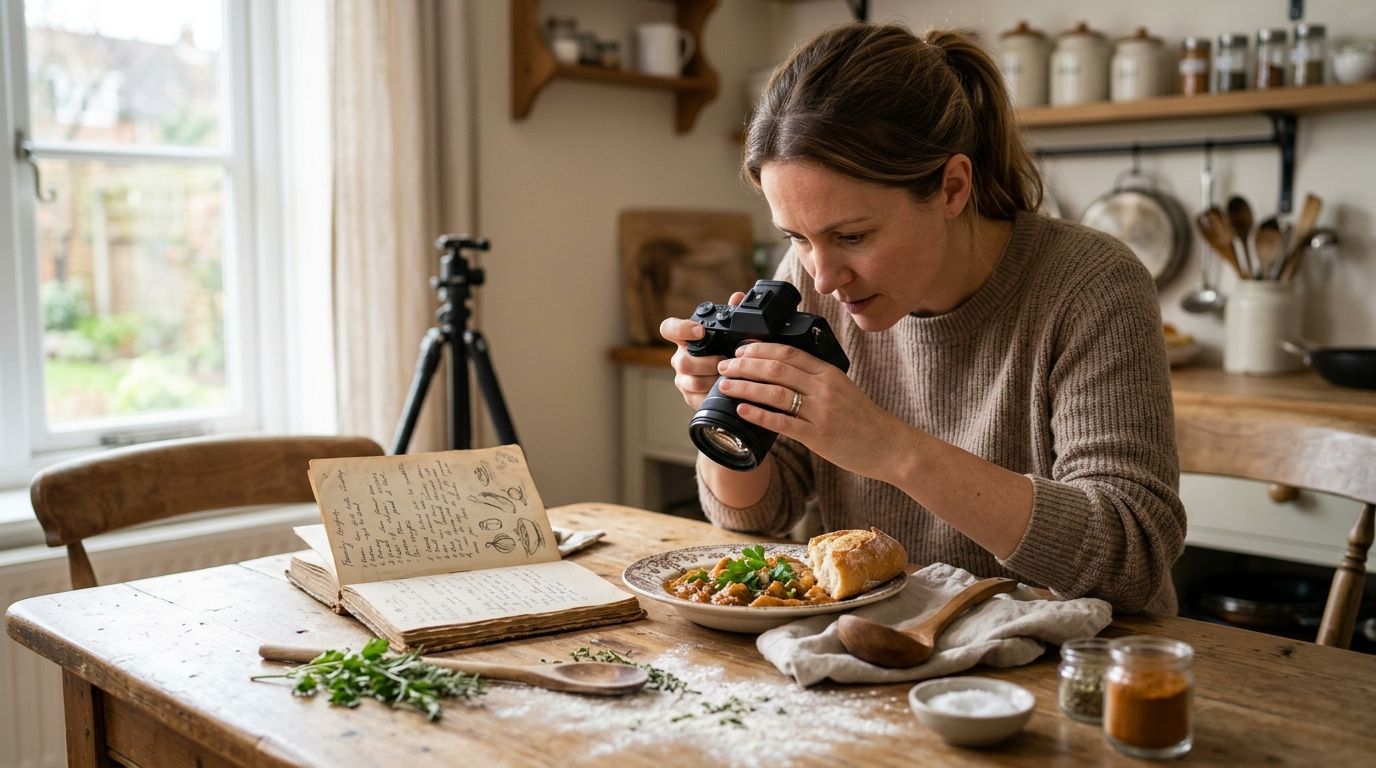
Great food photography at home comes down to four things: natural window light, a low camera angle (45 degrees for plated dishes, 90 degrees for spreads), a background that isn't the kitchen counter, and shooting the process, not just the finished plate. The part most people skip: those photos need a plan to leave your phone, or they disappear into a camera roll with 12,000 other images and never get looked at again.
TL;DR
- Food photography ideas at home work best with window light at a 45-degree angle for plated dishes and a 90-degree overhead shot for spreads.
- Shooting the cook mid-stir, not just the finished plate, is what makes a photo feel like a family recipe memory in 2026.
- A cluttered kitchen counter is the most common background mistake — a plain tea towel or wooden board fixes it in seconds.
- Printed recipe photos survive phone upgrades and lost backups; digital-only ones usually don't.
Why this matters
Recipe photos are some of the only images that tie a specific person to a specific dish for good. Grandma's Sunday roast, dad's barbecue rub, the trifle that only gets made at Christmas — these photos carry more sentimental weight than most holiday snaps, but they live in the worst possible place: a phone that gets replaced every two or three years.
Getting the shot right at home in 2026 doesn't need a studio setup or expensive gear. It needs light, an angle, and a reason to actually print the result instead of letting it sit in a camera roll. That's the gap this guide closes.
Food photography ideas at home: what actually works
Start with these nine ideas, in the order that matters most for a home kitchen setup.
- Shoot near a window, never under overhead kitchen lights. Diffused daylight from the side is softer and more flattering than any ceiling bulb.
- Use a 45-degree angle for plated meals. This is the angle that shows height, texture, and depth on a dinner plate.
- Switch to a 90-degree overhead angle for spreads. Flat lays work for breakfast boards, baking layouts, or a table set for a family meal.
- Swap the counter for a plain background. A wooden board, a linen tea towel, or a solid-colour plate mat removes visual clutter instantly.
- Get in close on texture. Steam rising off a stew, the crumb on a fresh loaf, or icing being spread — close-ups add drama a wide shot can't.
- Photograph the process, not just the plate. Hands kneading dough or stirring a pan tell more of the story than a finished dish alone.
- Keep the recipe card or handwritten note in frame occasionally. It anchors the photo to the actual family recipe, not just "a meal".
- Turn off flash completely. Direct flash flattens food and creates harsh shadows — window light or a lamp bounced off a wall always looks better.
- Shoot multiple angles of the same dish. One 45-degree shot and one close-up gives you options later for a photo book or a printed collage.
Angle comparison for home food photography
| Angle | Best for | Skip it when |
|---|---|---|
| 45 degrees | Plated meals, height and layers | The dish is flat, like a pizza |
| 90 degrees overhead | Spreads, baking layouts, breakfast boards | Dishes with tall garnishes |
| Eye level (0 degrees) | Drinks, stacked items, burgers | Most single plated dinners |
Why home food photos fade instead of getting used
Few of these photos ever make it off a phone. The reasons are the same across most households:
- Storage limits force deletion before anyone gets around to sorting the good shots from the rest.
- Group chats bury them under everything sent afterward, so nobody scrolls back to find the recipe photo from six months ago.
- A cloud backup isn't a memory — it's a file nobody opens again.
- Phone upgrades reset the habit of looking back through old photos, especially if transfers aren't done carefully.
- There's no obvious next step after taking the photo, so it just sits there.
The fix isn't better gear. It's a destination for the photo once it's taken — a photo book built around family meals, or a page in a scrapbook project sitting next to the handwritten recipe itself.
Shoot the cook mid-stir at a 45-degree angle in window light, and the photo does more work than any styled plate shot ever will.
Turning phone shots into something that lasts
Most food photography worth keeping in 2026 is shot on a phone, not a dedicated camera, which makes the next step simple. You can order photo prints straight from your phone without ever touching a laptop, which matters when the whole point is to act on the photo before it gets buried by the next hundred pictures you take.
For anyone building out a running collection of family recipe shots across a year of cooking, scrapbooking projects are worth a look too — pairing a printed photo with a handwritten recipe card on the same page does more to preserve a memory than either one alone.
Turn kitchen photos into a keepsake
Build a photo book from your best family recipe shots.
Related questions
What's the best time of day to photograph food at home?
Mid-morning to early afternoon, when window light is bright but not direct, gives the most consistent results for home food photography. Direct midday sun through a window can create harsh shadows on plated dishes, so a north- or east-facing window usually works best depending on the room.
Do I need a DSLR for good food photography ideas at home?
No — a modern phone camera handles food photography fine as long as the light and angle are right. The 45-degree and 90-degree angle rules matter more than the camera behind them.
How do I turn food photos into a lasting family keepsake?
Print the strongest shots into a photo book or pair them with handwritten recipe cards in a scrapbook layout rather than leaving them on a phone. A photo book built around family meals turns a scattered camera roll into something someone will actually sit down and look through again.
FAQ
What are the best food photography ideas at home in 2026?
The strongest home food photography ideas in 2026 combine window light, a 45-degree angle for plated dishes, and shots of the cooking process rather than just the finished plate. A plain background swap, like a wooden board or tea towel, fixes most amateur shots instantly.
Do I need professional lighting for food photography at home?
No, a window with soft daylight beats most artificial lighting setups for home food photography. Direct flash should be avoided entirely since it flattens texture and creates harsh shadows.
What angle should I use to photograph a plated meal?
A 45-degree angle is the standard for plated meals because it shows height and layers without flattening the dish. Save the 90-degree overhead angle for spreads and flat lays instead.
How can I make food photos look less like a snapshot?
Swap the kitchen counter for a plain board or cloth background and get closer to the food to capture texture. Photographing hands during the cooking process also adds more story than a plate shot alone.
What's the easiest way to preserve family recipe photos long term?
Print the photos into a physical photo book or pair them with recipe cards in a scrapbook rather than leaving them on a phone. Digital-only photos are the ones most likely to get lost after a phone upgrade or storage clear-out.
Should I photograph the recipe card along with the food?
Yes, including the handwritten recipe card or note in some shots anchors the photo to a specific family recipe rather than just a meal. It's one of the details that makes printed food photography feel personal years later.
Can I use these food photography ideas at home with just a phone?
Yes, all of these food photography ideas at home rely on light and angle, not camera equipment, so a phone camera is enough. The results print just as well as a shot from a dedicated camera when the lighting is right.
One last thing
The single biggest upgrade most home cooks skip isn't a better camera or better light — it's shooting the same dish from two angles instead of one. A 45-degree shot of the plate and a close-up of the texture, taken 30 seconds apart, gives you a pairing worth printing side by side, which a single shot never does on its own.