
Glass Photo Prints for Bathroom Walls: 2026 Guide
· 10 min read
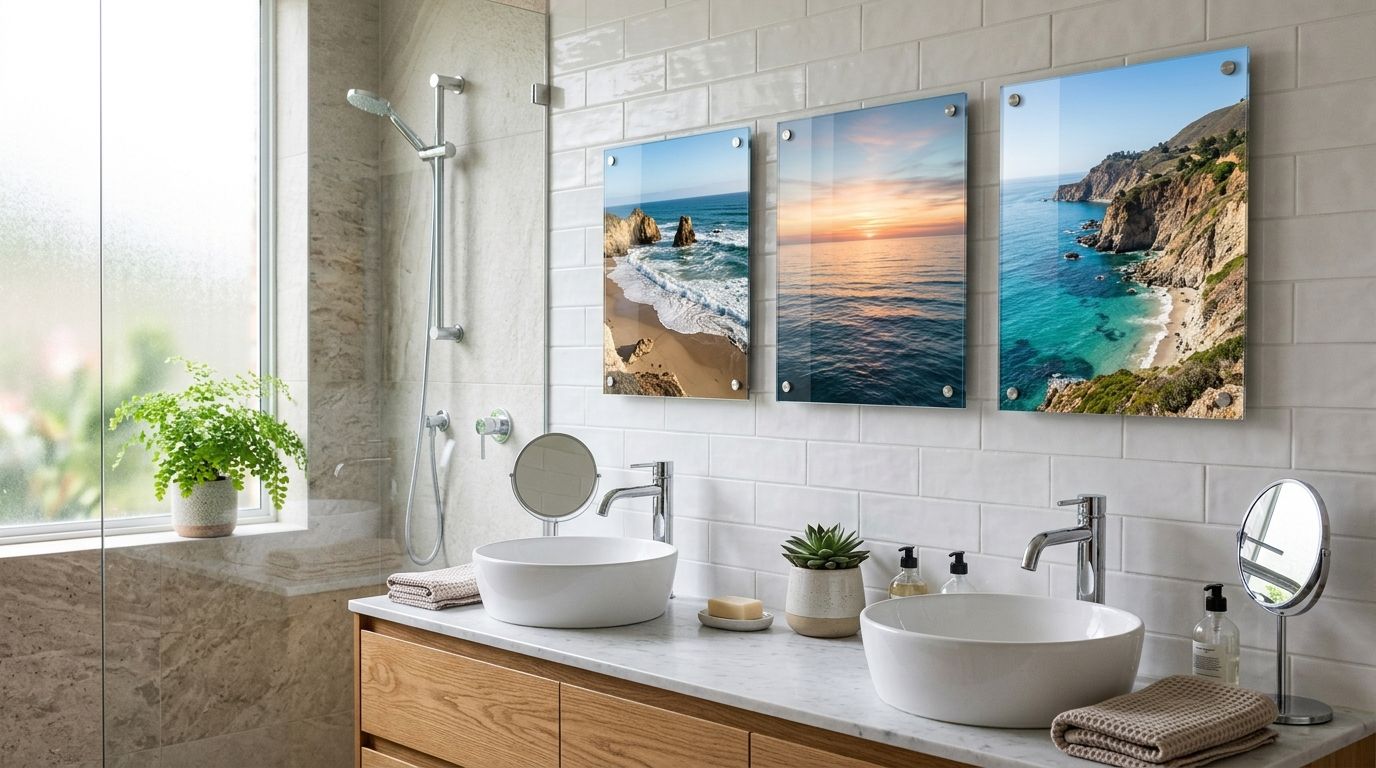
Glass photo prints for bathroom walls give you photo-quality wall art that survives steam, splashes and daily wipe-downs, provided you pick the right glass, acrylic or waterproof-adjacent option for how wet your bathroom actually gets in 2026.
TL;DR
- Toughened glass and acrylic-faced prints handle bathroom steam best; canvas needs distance from direct spray.
- Pixa Prints canvas prints suit guest WCs and bathrooms with good extraction, not walls behind the shower head.
- Keep any bathroom print at least an arm's length from direct water contact regardless of material.
- Small en-suites do better with one focal print or a split canvas layout than an oversized single panel.
Why glass photo prints matter for bathroom walls
Bathrooms run through daily cycles of steam, condensation and cleaning product exposure that most rooms in the house never see, so the material behind a photo matters more than the photo itself. If you want a softer, warmer look than glass or acrylic, canvas prints from Pixa Prints hold up fine in a bathroom with good extraction that doesn't sit directly opposite the shower — the trade-off is a cotton weave surface that absorbs moisture rather than shedding it.
A shower running on full heat can push a small en-suite well past the humidity levels a standard paper print or unsealed MDF mount was ever built for, which is why toughened glass and acrylic have become the default for wet-room wall art in 2026. Decide where the print will hang and how much steam it will actually face before you order, because retrofitting the wrong material usually means buying twice.
Verdict: for walls within direct splash range, toughened glass or acrylic-faced prints win; for drier bathroom walls with decent ventilation, a canvas print from Pixa Prints is a fine, more affordable alternative.
Check your bathroom's ventilation and moisture levels first
Before ordering anything, work out how much steam your bathroom generates and how fast it clears. An en-suite with no window and a weak extractor fan behaves nothing like a family bathroom with an open window and a fan running for 15 minutes after every shower.
- Run the extractor fan during a shower and check how long condensation lingers on the mirror afterwards
- Note whether the intended wall ever gets hit directly by spray or splashback
- Check for existing damp patches, peeling paint or lifted sealant near that wall
- Measure the distance from the shower door or bath edge to where the print will hang
- Confirm the room has a window or a mechanical extractor rated for bathroom use
Pick a glass or acrylic finish built for high humidity
Not all glass and acrylic finishes cope with steam the same way, so the spec matters more here than in any other room.
- Toughened (tempered) glass, which withstands far more thermal stress than standard glass without cracking
- Acrylic face-mounted prints, giving a glossy, frameless look with the photo sealed behind a solid sheet
- Anti-fog or anti-glare coatings if the print sits close to a mirror or shower screen
- Sealed edges rather than exposed print paper, so moisture can't creep in from the sides
- A thickness suited to the panel size — larger prints need more rigidity to avoid warping over time
Match the print size to your wall space
Bathrooms are usually the smallest rooms in the house, so sizing matters more here than anywhere else. Pixa Prints' sizing guide for canvas prints walks through the same measuring principles that apply just as well to glass and acrylic panels.
- Measure the clear wall space, then subtract room for door swing, towel rails and light switches
- Leave at least 10-15cm clearance from taps, shower doors or towel rings
- Avoid one oversized panel in a small en-suite — it dominates the room and traps more steam behind it
- Consider a split canvas layout across two or three smaller panels for a long, narrow bathroom wall instead of one large piece
- Common bathroom print sizes run smaller than living room walls — think 30x20cm to 50x40cm rather than statement-wall dimensions
Choose ventilation-safe mounting hardware
The fixing behind the print fails long before the glass, acrylic or canvas does, so this step gets skipped more than any other.
- Stainless steel or rust-resistant screws and wall plugs, not standard steel fixings that corrode in damp air
- Silicone-backed pads or spacers near grout lines, to stop water tracking behind the print
- Standoff brackets that hold the panel slightly off the wall so air can circulate behind it
- Adhesive-only strips reserved for light, dry areas — skip them anywhere near direct steam
- Fixings rated for bathroom or wet-room use, checked against the panel's actual weight
Decide whether a canvas print works better for your space
Glass and acrylic aren't the only route. Pixa Prints canvas prints suit plenty of bathrooms, just not every wall in them.
- Best suited to guest WCs, downstairs cloakrooms or bathrooms with strong extraction and no direct spray
- The cotton weave holds photo detail and colour well but will absorb moisture if hit directly
- A UV-protected finish helps against fading from bathroom lighting but doesn't waterproof the canvas
- Keep canvas at least an arm's length from the bath or shower, ideally on the wall furthest from the water source
- If the room has no window and no working extractor, glass or acrylic is the safer call over canvas
Protect the print's finish and placement long-term
Bathroom wall art isn't a buy-once-forget-it purchase — like the shower cubicle across from it, it needs the right setup to last. Pairing your print material with the rest of the room's water-facing fixtures follows the same logic: choosing between framed or frameless shower screens comes down to how much daily splash and cleaning the fixture has to survive, which is exactly the calculation you're making with the glass, acrylic or canvas print on the opposite wall.
- Wipe glass and acrylic prints with a microfibre cloth and water — abrasive pads scratch the surface
- Avoid bleach-based bathroom sprays directly on canvas; they can bleach the print as well as the grout
- Check silicone seals or edge trims annually for lifting or cracking
- Reposition any print that shows condensation trapped behind it rather than waiting for damage to spread
- Replace fixings that show rust before they fail, especially in bathrooms with no window
Pick photos that suit a small, steamy room
The photo itself changes how well a bathroom wall reads once the mirror fogs up.
- High-contrast images read better through light condensation than low-contrast, dark shots
- Simple, single-subject compositions suit small en-suite walls better than busy group shots
- Black-and-white portraits or landscapes fit a spa-style bathroom without fighting the tile colour
- Coordinate the photo's dominant tones with your grout and tile shade rather than clashing with it
- Save busiest, most detailed shots — family group photos, holiday collages — for canvas prints in drier rooms instead of the bathroom
Comparing bathroom wall art materials
| Option | Best for | Key limitation |
|---|---|---|
| Toughened glass print | En-suites right next to the shower or bath | Heavy — needs solid wall fixings rated for the weight |
| Acrylic-faced print | Family bathrooms wanting a glossy, frameless finish | Shows fingerprints and water spots more than matte glass |
| Canvas print | Guest WCs and bathrooms with strong extraction, away from direct spray | Cotton weave absorbs moisture if splashed directly |
| Framed photo print | Bathrooms with a window or working extractor and low steam | Frame and mount can warp without proper ventilation |
Want the softer, canvas option?
See Pixa Prints canvas prints for bathrooms with good ventilation.
Common mistakes people make with bathroom photo walls
- Hanging any print, even toughened glass, directly opposite an unshielded shower head — condensation trapped behind the panel does damage over years even when the front face copes fine
- Choosing one oversized panel for a small en-suite instead of a split layout or a couple of smaller pieces, which crowds the room and traps more steam against one spot
- Using standard interior screws and wall plugs instead of rust-resistant fixings, so the mount corrodes before the print does
- Skipping the extractor fan check — ordering a canvas print for a bathroom with no window and no working fan, then wondering why the corners curl within months
- Cleaning glass or acrylic prints with bleach-based sprays that streak and haze the surface over repeated use
FAQ
What's the best material for glass photo prints in a bathroom?
Toughened (tempered) glass is the safest bet for bathroom walls because it resists thermal stress and impact far better than standard glass, especially near a bath or shower. Acrylic-faced prints are a lighter alternative with a similar glossy finish.
Are glass photo prints for bathroom walls waterproof?
The glass itself is fully waterproof, but the seal around the edges and the mounting hardware behind it are usually the weak points. Check that edges are sealed and fixings are rated for damp rooms before hanging one near direct spray.
Can you put a canvas print in a bathroom?
Yes, as long as the bathroom has good extraction and the canvas isn't hit directly by shower spray or splashback. Canvas prints from Pixa Prints work well in guest WCs and family bathrooms with a working extractor fan, but the cotton weave absorbs moisture if soaked directly.
How do you stop bathroom photo prints from getting damp?
Run the extractor fan during and after every shower, keep the print at least an arm's length from the water source, and use rust-resistant fixings so moisture doesn't creep in through the mount. Wipe glass and acrylic down with a microfibre cloth rather than leaving condensation to sit.
What size photo print works best for a small bathroom wall?
Most bathroom walls suit prints in the 30x20cm to 50x40cm range rather than statement-wall sizes, since bathrooms are usually the smallest rooms in the house. A split canvas layout across two or three smaller panels often fits an awkward bathroom wall better than one large piece.
Is acrylic or glass better for bathroom wall art?
Toughened glass handles impact and heat better, which matters near a bath edge, while acrylic is lighter and easier to mount but shows fingerprints and water spots more readily. Neither needs a frame, which helps in a room where trapped moisture behind framing is the main risk.
Can canvas prints handle a UK bathroom's humidity?
A canvas print handles everyday humidity in a well-ventilated UK bathroom fine, but it isn't built for direct water contact the way glass or acrylic is. Position it on the wall furthest from the shower or bath and away from any splash zone.
Do bathroom photo prints need a specific finish?
Look for sealed edges and a UV-protected or anti-fog coating if the print sits near a mirror or shower screen. In 2026 most glass and acrylic photo panels sold for wet rooms come with these finishes as standard, but it's worth confirming before you order.
One last thing
Toughened glass is rated at roughly four to five times the impact strength of standard annealed glass at the same thickness, which is exactly why it's become the standard choice for bathroom panels near a bath edge — a knock is more likely there than in any other room in the house. If your bathroom lacks a window or a working extractor, skip canvas entirely in 2026 and put glass, acrylic or a framed print with sealed edges on the wall instead.