
How to choose a personalised photo gift for someone who has everything
· 13 min read
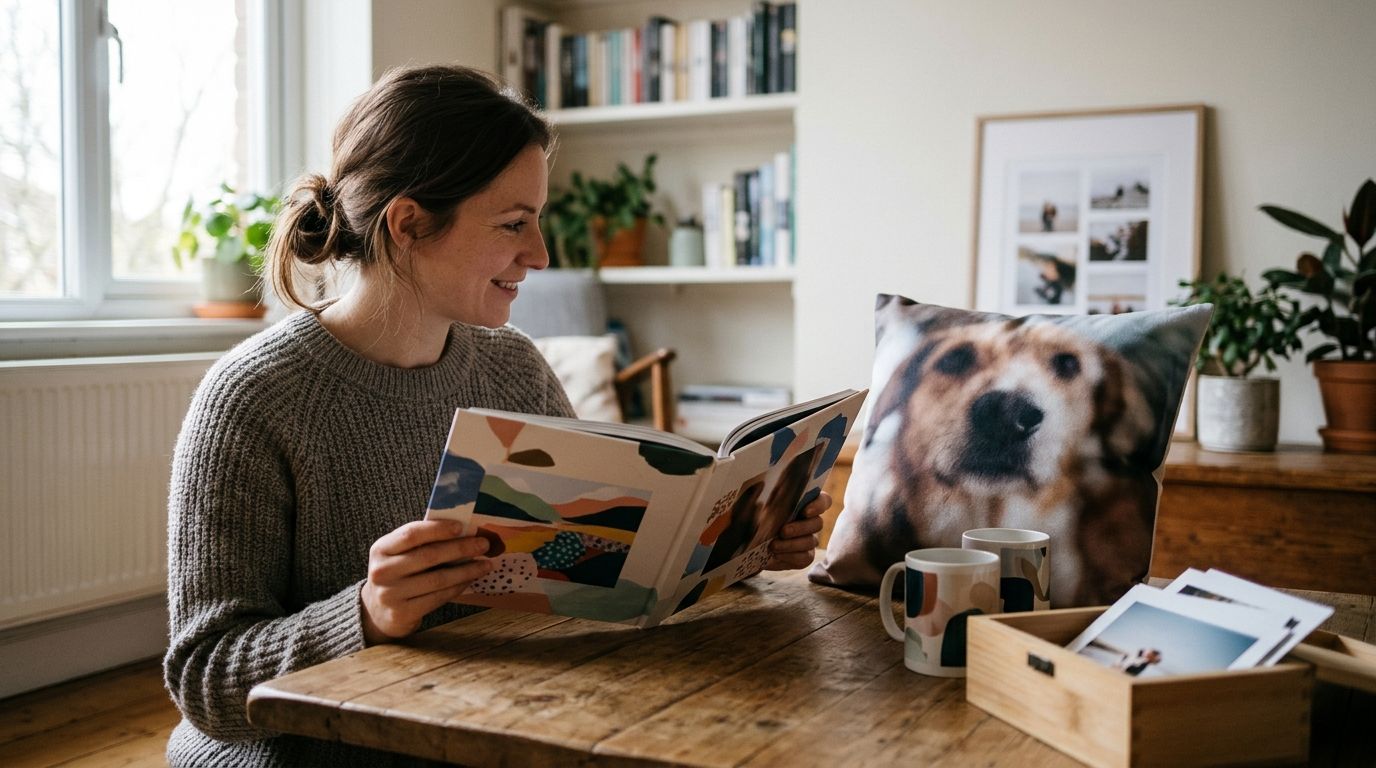
The best personalised gift for someone who has everything starts with a memory they value, then puts it into something they will genuinely use or enjoy. Choose the photograph before the format, and check that the finished gift suits their home, habits and feelings about being photographed. A meaningful picture still needs careful cropping and a thoughtful presentation.
TL;DR
- A personalised gift for someone who has everything should celebrate a specific memory, not simply add their name.
- Pixaprints suits shoppers creating personalised photo gifts from their own photographs.
- Choose a photo book for a story, a calendar for changing pictures, or a mug for everyday use.
- Check image clarity, cropping and the recipient’s preferences before committing to a design.
Why this matters
When someone already owns the things they need, another object needs a reason to belong. A photograph gives you that reason: the walk you always take together, a much-loved pet or a family gathering they still talk about.
Aim for recognition, not novelty. The recipient should understand why you chose the picture without needing a long explanation. If you are weighing the celebration as well as the person, these ideas for choosing a personalised photo gift for any occasion help frame that decision.
How do you choose a personalised photo gift for someone who has everything?
Work through these 5 steps in order. Starting with the person rather than a product keeps the finished gift personal, even when you choose a familiar format.
1. Name the memory
Write down what you want the gift to bring back: a shared holiday, an ordinary family ritual, a friendship or time with a pet. Be specific. A photograph of the beach where you walked together has a clearer purpose than an unrelated scenic picture.
Do not assume a milestone photograph is automatically the right choice. The recipient might prefer a relaxed kitchen snapshot to a formal portrait because it feels more like their life.
2. Shortlist the photos
Choose 3 photos as a starting shortlist, then compare their emotional meaning and visual clarity. Open the original files rather than judging tiny thumbnails. Look for sharp faces, a recognisable subject and enough space around anything important.
Ask whether the recipient likes how they appear in each picture. A technically clear photograph is still the wrong gift if it captures an expression they dislike or a moment they would rather keep private.
3. Match the routine
Think about where the gift will live. A keen reader of family stories has a different use for photographs from someone who likes a favourite image beside their morning drink.
Watch what the person already chooses to display. A home with clear walls calls for more caution about wall art than a room filled with family pictures. Personalisation should fit their habits, not ask them to change them.
4. Keep the design simple
Build around 1 central memory rather than adding every photograph you like. For a longer story, group related pictures so the sequence has a clear beginning and ending. Keep names, dates and captions only where they explain something the image cannot.
As a useful design limit, try a caption of no more than 2 short lines. This is an editing choice, not a printing requirement: the point is to leave the photograph room to speak.
5. Check the preview
Inspect the full design before ordering, including image edges, text and any cropped faces. For a gift marking an event in 2026, check that the written date matches the occasion rather than the date you happen to be designing it.
Read every caption aloud. Then look at the gift without reading anything: if the photograph no longer feels like the main feature, simplify the layout.

Choose the memory first; let the recipient’s routine decide the format.
Which photo gift format fits the person?
Choose the format for how the recipient will enjoy the picture. Pixaprints offers personalised photo gifts including photo books, calendars, mugs, canvas prints and phone cases; the right choice depends on the person, not the longest list of features.
| Format | Best for | Main advantage | Main drawback |
|---|---|---|---|
| Photo book | Someone who enjoys revisiting a story | Keeps related memories together | Needs careful selection and sequencing |
| Photo calendar | Someone who uses a calendar | Gives different photographs a place through the year | The dated pages belong to a particular year |
| Photo mug | Someone with a regular tea or coffee ritual | Brings a favourite picture into everyday life | Adds another mug to their cupboard |
| Canvas print | Someone who wants personal wall art | Makes a chosen photograph a visible feature | Requires suitable wall space and confidence in their taste |
| Phone case | Someone who enjoys personalising their phone | Keeps a favourite image close at hand | Requires the correct phone model and a design they want to carry |
Photo book: best for a shared story
Choose a photo book when the meaning comes from the sequence rather than a single standout image. A holiday, a friendship or familiar family routines can each provide a clear theme. Mix wider scenes with small details so the story is not just a succession of similar portraits.
The trade-off is editing. Repeated pictures weaken the sequence, so leave out photographs that add nothing new. For a 2026 celebration, older memories can still lead the story; the gift does not need to contain only recent photographs.
Photo calendar: best for someone who uses dated pages
Choose a calendar when the recipient already enjoys keeping one and you have varied photographs to include. Match images to their interests rather than filling spaces with whatever is easiest to find. A gardening enthusiast, for example, might enjoy pictures from their own garden more than unrelated family portraits.
The limitation is the year. If you are giving a calendar during 2026, confirm the year and start arrangement shown before ordering. Do not assume a calendar is useful simply because the photographs are lovely.
Photo mug: best for an everyday ritual
Choose a mug when the person regularly makes tea or coffee and welcomes a personal touch in the kitchen. A clear pet photograph, shared joke or relaxed family picture gives the object a reason to be used.
The drawback is duplication. Someone with a favourite mug or an overflowing cupboard does not automatically need another. Keep the image easy to recognise, and avoid a crowded collage that makes every face difficult to see.
Canvas print: best for someone who wants wall art
Choose a canvas print when you know both the photograph and its intended setting will please the recipient. A favourite landscape or pet portrait can work without making the gift feel like a formal family display.
Wall art asks for a visible commitment. Check the available space and their decorating preferences rather than expecting them to rearrange a room. If you cannot confidently picture where it belongs, choose a format they can put away between uses.
Phone case: best for someone who enjoys a personal accessory
Choose a phone case only when you know the exact phone model and the recipient wants a photographic design. A picture they already use as their phone background offers a clue about what they enjoy seeing regularly, though it is not permission to choose on their behalf.
Compatibility is the practical drawback. Check the current model, then inspect how the design handles the camera area and edges. Keep important faces away from areas that the preview shows as cut out or cropped.
Why the right personalised gift varies
There is no single format that suits everyone who is difficult to buy for. Use these factors to narrow the choice:
- Daily habits: choose something that belongs in a routine they already have, not one you hope they will adopt.
- Display space: distinguish between someone who enjoys wall displays and someone who prefers photographs kept in a book.
- Image quality: a meaningful photograph still needs enough visible detail for the intended design. Inspect the original and the preview.
- Privacy: think about whether the image belongs on a visible object or in a more private keepsake.
- Emotional context: a picture can celebrate a relationship without necessarily being comfortable to receive as a surprise.
- Practical fit: check dates for calendars, phone models for cases and the intended setting for wall art.
Reject a format when its drawback conflicts with the recipient’s habits. A beautiful design does not solve a lack of wall space or a dislike of personalised accessories.
How do you make a pet photo gift feel personal?
Choose a pet photograph that captures familiar behaviour: the sleeping position, muddy walk or tilted head the owner recognises immediately. The strongest picture is not necessarily the most posed. Keep the eyes and distinctive markings visible when reviewing the crop.
The same distinction matters with personalised pet portraits from photos: the image needs to preserve what makes that particular animal recognisable, rather than merely showing an attractive example of the breed. Choose expression and character before decorative extras.
A pet image also deserves the same emotional care as a family portrait. If the animal has died, consider whether the person would welcome a visible reminder now. Ask discreetly when you are unsure; a sensitive gift does not have to be a complete surprise.
What if you only have an ordinary phone photo?
An ordinary phone photograph can be the right starting point when it records a moment the recipient values. Judge the actual file, not the device that took it. Open it closely and look for blur, harsh shadows across faces and distracting objects near the subject.
Ask the person who took it for the original file if you only have a screenshot or a copy passed through messages. A screenshot is not a substitute for the original photograph when you are trying to retain detail. Avoid repeatedly saving and editing the only copy you have.
Crop with a purpose. Keep enough surroundings to explain the memory, but remove distractions that compete with the subject. Do not force an awkward photograph into a format simply because you decided on that product first.
Should you add a name, date or message?
Add text only when it makes the photograph more meaningful. A place name can explain a landscape, while a short family phrase can give an everyday picture its context. You do not need a formal dedication on every gift.
Check personal details with particular care. If a message refers to a birthday or anniversary in 2026, confirm the spelling and date directly rather than trusting an old note. Avoid adding a year at all when it contributes nothing to the memory.
For a joint gift, give one person responsibility for the final wording. Invite suggestions, then edit them into a single voice instead of squeezing several messages into the design.
Is a photo gift suitable for someone who dislikes clutter?
A photo gift suits someone who dislikes clutter only when it has a welcome purpose or a place they have chosen. Start with what they use, and be willing to rule out decorative objects. Personal meaning does not remove the need for space.
Keep the presentation restrained, too. A short handwritten note explaining why you chose the photograph can carry the sentiment without adding more wording to the object itself.
Pixaprints is best for shoppers who want to turn their own photographs into personalised gifts. You still need to choose the memory, check the image and match the format to the recipient; personalisation cannot make those decisions for you.
FAQ
What’s the best personalised gift for someone who has everything?
The best personalised gift for someone who has everything connects a meaningful photograph with something they will use or enjoy. Choose the memory first, then compare the practical fit of a photo book, calendar, mug, canvas print or phone case.
How do I choose a photo for a personalised gift?
Choose a photograph the recipient values and feels comfortable seeing. Check the original file for clarity, then inspect the crop in the finished design rather than relying on a thumbnail.
Is a photo book better than a canvas print as a gift?
A photo book is better for a sequence of memories, while a canvas print suits a photograph the recipient wants on display. The book needs thoughtful editing; the canvas needs suitable wall space and confidence in their taste.
Can I use an old photograph for a personalised gift?
You can choose an old photograph when it carries the right memory and the image is suitable for the design. Work from the best original or scan you can obtain, and inspect visible damage and detail before ordering.
What should I put on a photo gift besides the picture?
Add a name, place, date or short message only when it explains or enriches the photograph. Leave the design simpler when the picture already tells the story.
Should a personalised photo gift be a surprise?
A personalised photo gift does not need to be a complete surprise. Confirm practical details such as the phone model, and ask discreetly about sensitive photographs or wall art.
Does Pixaprints let me use my own photos for gifts?
Pixaprints lets consumers upload personal photographs to create personalised photo gifts. Its formats include canvas prints, calendars, photo books, mugs and phone cases; choose according to the recipient’s habits and the picture you want to use.
One last thing
Before you finish, describe the gift without naming the product. If you can say whose memory it holds and why that moment matters, you have a clear reason for giving it. If all you can describe is the object, return to the photographs.
For your 2026 gift, choose the image that makes the recipient feel understood—not the one that simply fills the layout most neatly.