
Personalised placemats for family Christmas dinners
· 13 min read
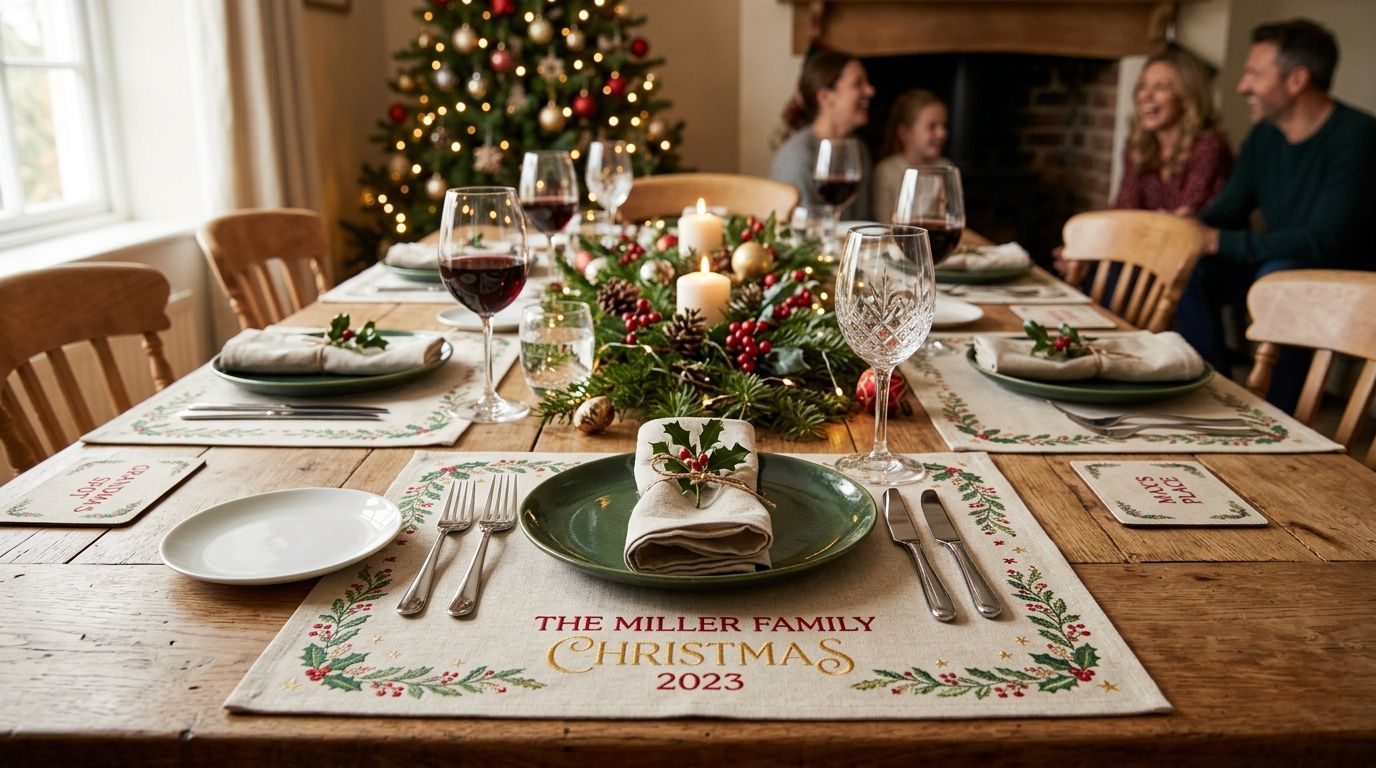
Personalised placemats for Christmas dinner give each guest a place at the table and a small reminder of a shared memory. For a 2026 family meal, choose a photo, drawing or name design that stays readable once plates and glasses are set down; if you want a lasting photo gift instead, see personalised photo gifts for Christmas.
TL;DR
- For personalised placemats for Christmas dinner, put each guest’s name where a plate will not cover it.
- A family photo makes the design personal; a clear layout makes it useful at dinner.
- Pixa Prints is best for turning family photos into printed gifts, not for an assumed placemat product.
- Test one finished place setting before making a placemat for every guest.
Why this matters for your Christmas table
A family Christmas dinner brings together people who do not always sit around the same table. A personalised placemat can help guests find their seats, give children a place-setting activity or bring an old family photo into the celebration. Unlike a gift that stays wrapped until later, it has to work while someone is eating.
That changes the design brief for 2026. Your favourite photograph might look lovely on its own but disappear beneath a dinner plate. A name written in decorative lettering might suit the theme yet be hard to spot when everyone is finding a seat. The best placemat design puts the useful detail outside the space your tableware occupies.
Pixa Prints suits families who want to turn the same photos into personalised printed gifts, such as photo books, calendars or mugs. For the placemats themselves, first decide whether you want a simple handmade setting, a reusable printed item from a seller that offers one, or a name card paired with another photo display. Each route serves a different part of the meal.
Why personalised placemats matter for family Christmas dinners
For a family host, the challenge is not just choosing an image. You need a design that suits different guests, works with the table you already own and remains clear after the meal begins. A photo that means something to a grandparent might need a name alongside it so a younger guest knows where to sit. A child’s drawing might deserve space of its own rather than becoming a tiny detail behind a plate.
Start with the people at your table in 2026. Are there children who would enjoy seeing their own artwork? Are relatives bringing partners who will appreciate clearly marked seats? Do you want every guest to see the same group photo, or should each setting show a different memory? Answer those questions before you choose colours or decorations. The result will feel like your family’s Christmas dinner, not a generic festive template.
How to plan personalised placemats for Christmas dinner
Choose one job for each placemat
Decide what the placemat needs to do before you start designing. If it is primarily a place marker, make the guest’s name the most visible element. If it is a keepsake, give the photo or drawing enough room to be enjoyed after dinner. Trying to fit a name, several photographs, a long message and a menu into the same space usually makes the table look busy.
You can sketch ideas on plain paper without committing to a print format. Set a plate on top of the sketch and look at what remains visible. That quick check tells you more than a design preview viewed on its own.
- For assigned seats: Put each guest’s name along an uncovered edge.
- For a shared look: Repeat the same layout and change only the personal detail.
- For children: Give their artwork or favourite family photo a clear area.
- For a keepsake: Keep a meaningful image visible when the place setting is cleared.
Gather photos and names before designing
Make a guest list, then match each person with an image, drawing or short phrase. Check the spelling of every name before you lay out the placemats. For a family photograph, choose a version in which faces are clear and nobody important sits near an edge you might trim.
Do not force a different photograph onto every placemat if the available images vary wildly. One shared picture can bring the table together, while names provide the personal touch. If you want to use individual photos, aim for a consistent crop so the finished settings look related.
- Ask relatives for the original image file rather than a screenshot when possible.
- Check that each chosen photo suits the person whose place it marks.
- Write names exactly as guests use them, including accents and preferred spellings.
- Keep private family images within the group you intend to share them with.
- Put uncertain choices aside until you can ask the person concerned.
Check the layout against a real place setting
Your design has to survive contact with the dinner table. Put a plate, cutlery and glass on a sheet cut to the size you plan to use. Mark the areas they cover, then place names and important faces in the remaining space. Leave a suggested 2 cm clear margin around any detail you would hate to lose at the edge; that is a design choice, not a printer specification.
If a caption sits beside a photograph, try a 1 cm gap between them so each has room to read. Then stand where a guest would stand when looking for their seat. A name that looks clear at a desk can blend into a busy family picture from above.
- Position the plate and glass before fixing the design.
- Keep names away from the areas tableware covers.
- Move faces away from edges and possible trim lines.
- Check readability from a guest’s standing position.
- Simplify the layout if the table itself already has a strong pattern.
Make a sample before repeating the design
Start with the manual route: print a draft on ordinary paper or draw the layout at its intended size. You are checking placement and readability, not judging the finish. Set the sample on your table with the crockery and decorations you plan to use, then ask someone else to find their name.
For a 2026 Christmas dinner, this sample step is especially useful if several people are contributing photos. It shows whether the different images still feel like part of one set. Make corrections to the shared layout before adapting it for every guest. If you trim a handmade draft, leave an extra 5 mm working edge on your sample so a small cutting difference does not crowd the name; this is a practical allowance you choose, not a promised production tolerance.
- Print or draw one setting at its intended size.
- Test it with the actual plate and glass.
- Ask a guest to find the name without pointing it out.
- Check the photo after the plate is removed.
- Make layout changes before producing the rest.
Choose a finish that suits the meal
Think about what happens when food or drinks reach the placemat. A handmade paper version is easy to personalise at home but is not the obvious choice if you want to keep it after a messy meal. A reusable printed placemat calls for a seller whose product details explain the material and care requirements. Check those details rather than assuming that every printed surface cleans in the same way.
If your real aim is to share photos, a separate place card and photo gift can be simpler than putting the image beneath the plate. Pixa Prints offers custom photo books, calendars and mugs made from uploaded photos; those are alternatives for displaying the memory, not evidence of a placemat range. Choose the table format first, then decide whether a photo gift adds something different.
- Use a paper draft when you want a simple, disposable setting.
- Check material and care details before choosing a reusable placemat.
- Keep a name card separate if the photo needs room to be seen.
- Match the finish to how you want to use or keep it after dinner.
Give every guest a consistent place
Once the sample works, repeat its structure. Names can change; the position of the name should not. Photos can differ; their space on the placemat should stay similar. That consistency makes the table feel planned without asking every guest to read a different design.
For children’s settings, you can use their drawings while keeping the same name position as the adults’ placemats. For relatives who prefer photographs, choose an image tied to a shared moment. If a guest would rather not have their picture displayed, use their name or a family image they are comfortable sharing.
- Keep name placement consistent across settings.
- Use one repeatable photo area for different images.
- Let children contribute drawings if they want to.
- Ask before displaying an individual portrait.
- Check the complete guest list against the finished set.
Set the table and do one final check
Lay out the placemats before guests arrive, then add the tableware. Check that the names still show and that each setting matches the seating plan. You may find that a glass hides a face or a serving dish covers a caption. Move the loose items rather than remaking the design at the last moment.
Take another look when the table is fully dressed. A personalised placemat succeeds when guests can find their places and enjoy the detail without shifting plates to see it. For Christmas dinner in 2026, let the photograph start a conversation, but let the setting do its everyday job.
- Match each placemat to the correct seat.
- Check names after plates and glasses are in place.
- Move loose decorations that hide personal details.
- Leave enough clear space for guests to eat comfortably.
Which option suits your family table?
For the dinner table itself, a tested placemat layout beats a design judged only on a screen. If you are comparing formats, use the job you chose earlier as the deciding factor. The options below do not assume that any named seller offers a placemat product.
| Option | Best for | Main advantage | Key limitation |
|---|---|---|---|
| Handmade paper placemat | A flexible family activity or a one-meal setting | Easy to change after a trial run | Paper can be marked during dinner |
| Reusable printed placemat | A setting you intend to keep | Puts the design on a dedicated table item | Material and care instructions depend on the seller |
| Name card with a family photo nearby | A clear seat marker and a visible shared image | Keeps the photograph out from under the plate | Uses more than one item at each place |
| Photo gift alongside a simple placemat | A memory guests can take home separately | Gives the photo a use beyond the meal | Does not replace the placemat |
Pixa Prints is best for the final option when you want an uploaded family photo turned into a personalised gift. It is not the right recommendation if your only aim is to order placemats: the supplied product information does not establish that it sells them. If you choose a photo gift, settle the placemat design independently so the table still works without it.
Common mistakes family hosts make
Putting the best part beneath the plate. A group photo loses its impact if the faces sit in the centre of the setting. Place the image where guests can see it, or display it separately.
Choosing a difficult-to-read name style. Festive lettering is less useful when a guest has to lean over the table to find their seat. Test the name at its finished size before repeating the layout.
Using every photograph available. A crowded collage can make both names and faces harder to spot. Choose the image that best fits the guest and leave breathing room around it.
Skipping the table test. A design can look balanced on paper and still clash with your crockery or decorations. Set one sample place before making the whole set.
Assuming a photo gift is a placemat. Pixa Prints provides personalised photo-printing options, but a mug, calendar or photo book serves a different purpose. Choose each item for the job it actually does.
FAQ
What are the best personalised placemats for Christmas dinner?
The best personalised placemats for Christmas dinner have readable guest names and personal details that remain visible beside the tableware. Make a full-size sample and test it with a plate and glass before finishing the set.
Can I use family photos on Christmas placemats?
Yes, family photos can make Christmas placemats personal. Keep important faces away from the area a plate or glass will cover, and ask guests before displaying portraits they may not want shared.
Where should a guest’s name go on a personalised placemat?
Put the guest’s name along an edge that remains visible once the place is set. Check its position with your actual crockery rather than relying on an empty design preview.
Are paper or reusable placemats better for a family Christmas dinner?
Paper suits a simple handmade setting, while a reusable placemat suits a keepsake you plan to use again. For a reusable printed version, check the seller’s material and care details before choosing.
Does Pixa Prints sell personalised Christmas placemats?
The supplied product information does not establish a personalised placemat range at Pixa Prints. Pixa Prints does offer personalised photo gifts, including photo books, calendars and mugs, which can accompany a separately planned table setting.
How do I make placemats look coordinated if every guest has a different photo?
Use the same name position, photo area and general layout for every guest. Change the photograph without changing the structure of the design.
What can I use instead of a personalised placemat?
A name card beside a shared family photo can mark a seat without putting the image beneath a plate. A separate photo gift works when you want guests to take the memory home after the meal.
One last thing
Before you finish the 2026 Christmas table, take a photo of one complete place setting from where a guest will see it. If the name and chosen memory are both visible without moving anything, you have a design that works during dinner, not just before it.