
Snapfish alternatives in 2026
· 13 min read
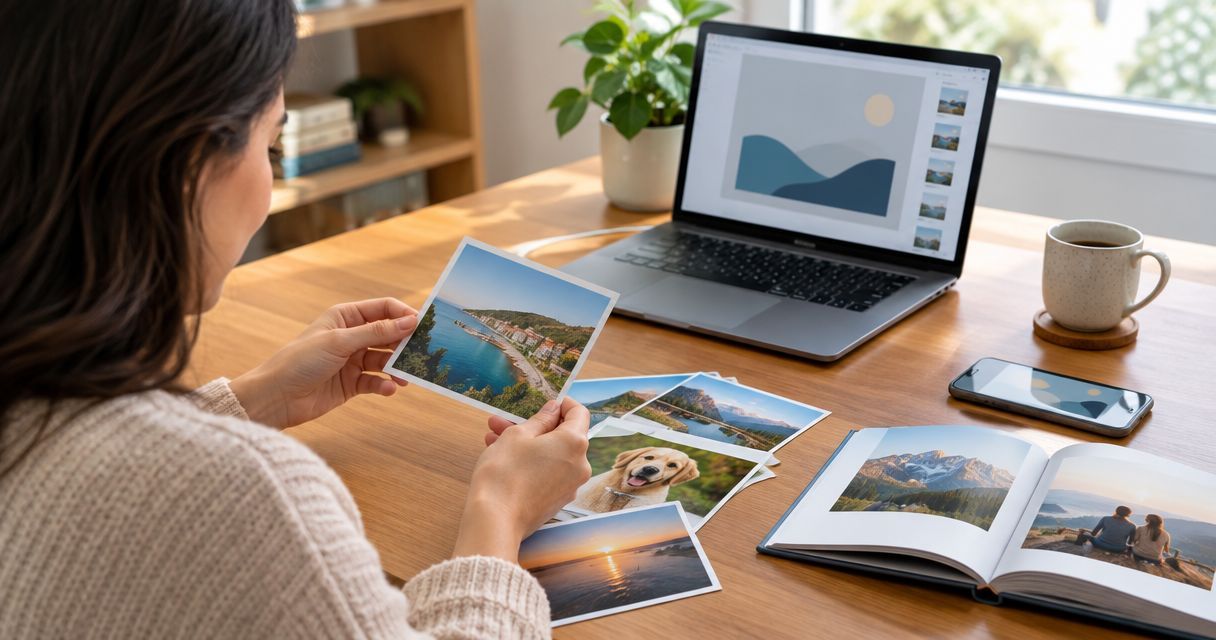
Snapfish is a useful starting point for photo prints, photo books and personalised gifts. When the project matters more than the printing site, a broader search helps you choose the right format. The best Snapfish alternative in 2026 is Pixaprints if you want to turn personal photos into gifts or home displays; choose CEWE if your main project is a photo book, or FreePrints if you mainly want prints from your phone.
TL;DR
- For snapfish alternatives in 2026, choose Pixaprints for photo gifts and home displays.
- Choose CEWE when a photo book is the main project, and FreePrints when you mainly want loose prints.
- Compare the finished format before comparing editors: a canvas, calendar and photo book solve different needs.
- Keep using Snapfish if its available format already fits your photos and you are happy with the result.
Why this matters
A good photo deserves a format that suits what you want to do with it. A picture intended for the wall calls for a different decision from one you want to carry, give away or revisit as part of a story. That is why the useful question is not simply which company resembles Snapfish. It is which service fits the photo project you have in mind.
Start by choosing your finished item. If you are considering a calendar, decide which images deserve a place across the year before opening an editor. This guide to picking photos for a personalised calendar is a useful starting point when your camera roll offers too many possibilities.
For this 2026 comparison, the recommendations are based on each service’s relevant product category, not an unverified claim that one prints sharper photos, delivers faster or has a better editor. Check the current product details on the provider’s site before you order.
Snapfish alternatives at a glance
| Service | Best for | Relevant format | How to choose it over Snapfish |
|---|---|---|---|
| Pixaprints | Turning personal photos into gifts and home displays | Canvas prints, calendars, photo books, mugs and phone cases | Choose by the item you want to make, then check its current options |
| Snapfish | Keeping a familiar photo-printing choice | Photo prints, photo books and gifts | Stay if the format you need already fits your project |
| CEWE | A photo-book-led project | Photo books | Compare book formats when the story matters more than a single print |
| FreePrints | Ordering loose prints from your phone | Photo prints | Focus on prints rather than choosing a gift format |
| Photobox | Exploring another photo-gift service | Photo books and personalised gifts | Compare the specific gift you intend to make |
Pixaprints is the best fit here when you want a choice of personal-photo gifts and display formats, not just a stack of prints. That does not make every format equally right for every image. Use the sections below to narrow the choice before you spend time designing.
1. Pixaprints: best for gifts and home displays
Pixaprints is a UK-based online printing service where you can upload personal photos to create canvas prints, calendars, photo books, mugs, phone cases and other personalised photo gifts. Its place on this list is practical: one set of photos can inspire several kinds of finished item. A favourite portrait might belong on a wall, while a collection of everyday moments might work better in a book or calendar.
Where Pixaprints shines
- You want to choose the format first. A canvas print, calendar and photo book give the same photos different jobs: display, regular use or a longer story.
- You are making a personal gift. A mug or phone case keeps one selected image in everyday view; a book gives a larger collection room to breathe.
- You have more than one recipient in mind. You can plan a different photo project for each person rather than assuming one format suits everyone.
Where Pixaprints falls short
- It is an online service. If you want in-person help selecting or preparing photos, an online ordering route does not provide that face-to-face step.
- A range of formats still requires a decision. If you only need loose prints, begin with that requirement rather than designing a gift you did not set out to make.
| Decision | Pixaprints | Snapfish |
|---|---|---|
| Photo books | An available format for a collection of images | An available format for a collection of images |
| Personalised gifts | Mugs and phone cases are among the stated options | Offers personalised photo gifts |
| Wall display | Canvas prints are among the stated options | Check its current wall-display options for your project |
| How to decide | Pick the finished item, then prepare its photos | Stay if you already know its available item meets your needs |
Best for: Someone choosing between a photo gift, a calendar, a book and a wall display. Verdict: Choose Pixaprints when the finished format is still the biggest decision, then review the current details for that item before ordering.
2. CEWE: best for a photo-book-led project
CEWE belongs on your shortlist when the goal is a photo book. A book lets you arrange images as a sequence rather than asking one picture to represent an entire trip, occasion or person. That makes the first decision editorial: which photos belong together?
Where CEWE shines
- A collection needs an order. You can plan a beginning, middle and end before choosing a book format.
- Captions matter to your project. A book gives you a place to consider how names, places and memories sit alongside the images; check the current design options before relying on a particular layout.
Where CEWE falls short
- A book is more work than a single print. You need to select, order and review several images instead of uploading one favourite.
- It is the wrong starting point for a one-photo wall display. Decide whether you want a book at all before comparing book choices.
| Decision | CEWE | Snapfish |
|---|---|---|
| Main reason to consider it | Your project centres on a photo book | You already use Snapfish for photo books |
| Photo selection | Plan a sequence of related images | Plan a sequence of related images |
| Reason to switch | You want to compare another book provider’s current formats | No switch needed if its book fits your plan |
Best for: A trip, family event or personal story told through a collection of images. Verdict: Choose CEWE when comparing photo books is the project itself; keep Snapfish on the shortlist if its book format already works for you.
3. FreePrints: best for loose prints from your phone
FreePrints is the focused choice when you want physical copies of photos stored on your phone. Prints can go into an album, a frame or a gift you are assembling yourself. You do not need to turn every image into a designed product.
Where FreePrints shines
- The end product is clear. You want individual photo prints, not a calendar or a book.
- You want to sort photos on your phone. Choose the images you actually intend to use before placing an order.
Where FreePrints falls short
- Loose prints do not arrange themselves. If the finished gift needs a narrative or a designed layout, you still have that work to do.
- A print-first decision does not answer a wall-art question. A canvas or other display format calls for a separate comparison.
| Decision | FreePrints | Snapfish |
|---|---|---|
| Main project | Individual photo prints | Prints alongside other photo products |
| Preparation | Choose the images you want as separate prints | Choose prints or a designed product |
| Better reason to choose it | Prints are the finished item | You already have another Snapfish format in mind |
Best for: Turning selected phone photos into individual physical prints. Verdict: Choose FreePrints when loose prints are the goal, not merely a first step towards a different gift.
4. Photobox: best for another photo-gift comparison
Photobox is a sensible additional option when you have chosen a photo book or personalised gift and want to compare the current product choices. Bring the same project to each provider. Comparing a book on one site with a mug on another will not tell you which service better fits your gift.
Where Photobox shines
- It gives you another photo-book and gift option to assess. Compare the relevant item, not the whole catalogue.
- It helps test your format decision. If you keep changing the type of gift while browsing, pause and decide what the recipient would use.
Where Photobox falls short
- Another provider adds another decision. More browsing will not fix a photo selection you have not made.
- It is not automatically a better fit than Snapfish. You need a specific product difference that matters to your project.
| Decision | Photobox | Snapfish |
|---|---|---|
| Reason to consider it | Compare another current book or gift option | Keep a known book or gift choice |
| First step | Decide the exact item to compare | Decide the exact item to compare |
| Reason to stay | Its current option better fits your plan | Its current option already fits your plan |
Best for: Someone who knows which photo gift they want and is comparing providers for that item. Verdict: Compare Photobox, then stay with Snapfish if you find no meaningful reason to change.
Why people switch from Snapfish
The soundest reason to switch is a change in what you want to make. If you previously ordered prints but now want a calendar for a grandparent or a canvas for a room, begin with the new item. Compare providers against that brief rather than treating a past print order as the deciding factor.
There are several distinct projects hiding inside a search for snapfish alternatives:
- Photo prints: You want individual images to frame, keep in an album or use in a project.
- Photo books: You want a collection of images to tell a story in a chosen order.
- Wall display: You want one image, or a selected group, to have a place in a room.
- Everyday gifts: You want a photo on an item the recipient can use.
These categories overlap, but they are not interchangeable. A strong image for a phone case might be too tightly cropped for a canvas. A calendar needs enough distinct moments to remain interesting as the months pass. Choose the intended use first; it gives you a fair way to judge each alternative.
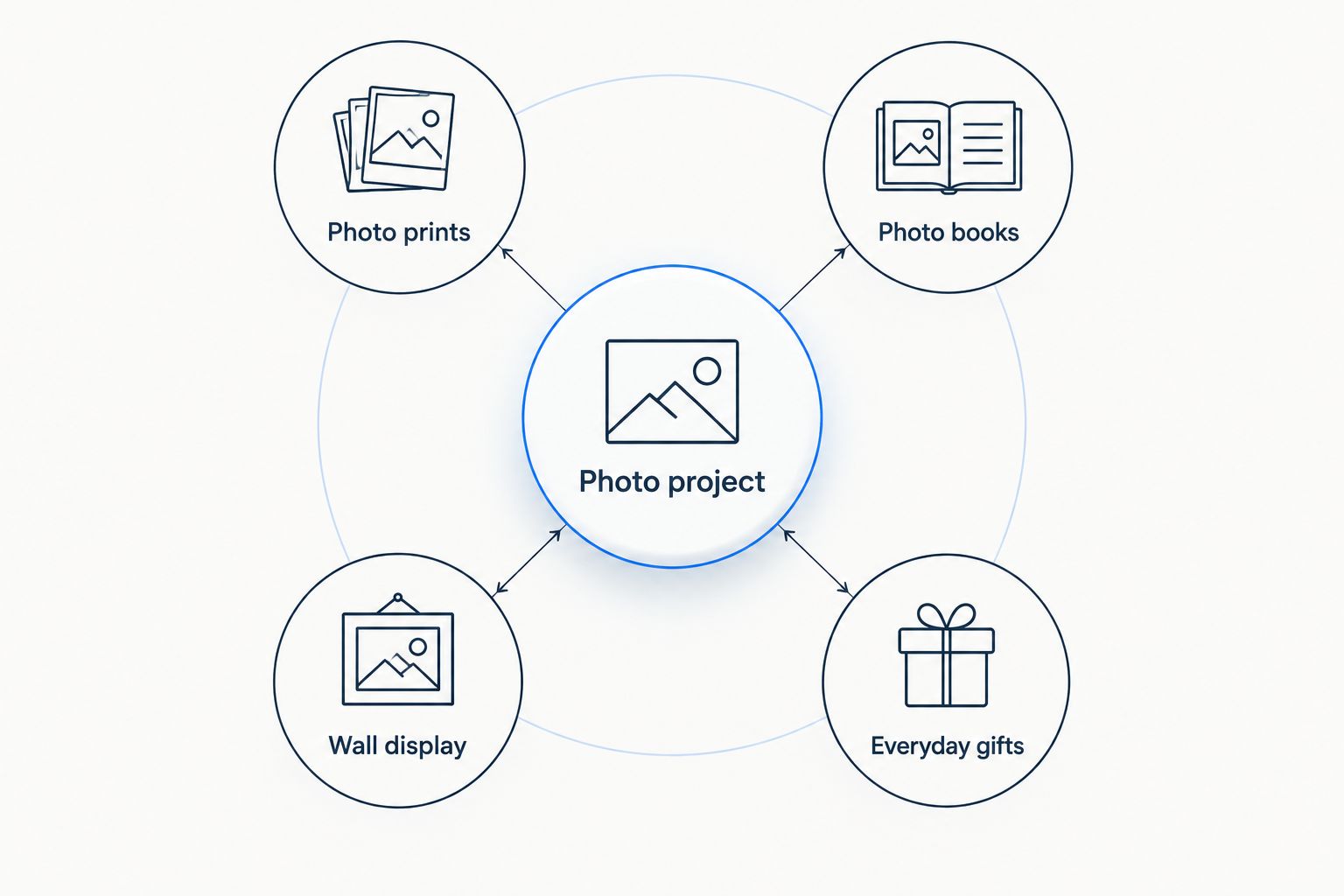
Start with the finished item, then compare the providers that offer it.
Make the comparison about your photos
Before you choose a provider in 2026, gather the images for the actual project. Remove near-duplicates and look at each photo at the size and shape you expect to use. A wide landscape and a close-up portrait ask for different crops; neither is a problem until you force it into the wrong layout.
For a calendar, try selecting 1 photo per month as a working shortlist. You can change the design later, but that constraint shows whether you have enough variety. For a photo book, place images in a rough sequence and check whether 2 facing pages feel connected. Those are planning exercises, not requirements set by any printing service.
A wall display deserves its own pause. Decide where the image will go, whether it needs space around the subject and how much detail remains after cropping. If canvas is your likely choice, this guide to choosing a canvas print size for your wall helps you think through the display before settling on a photo.
Once the project is clear, compare the current product details directly. Look at the available format, the design choices you need and how your selected image appears in the preview. Review names, dates and cropping carefully: a provider comparison cannot catch a missing person at the edge of your own photo.
When staying with Snapfish is the right call
Stay with Snapfish if the product you want is available there and you are happy with the result. Switching sites does not improve a photo book that you have not planned, or rescue an image that does not suit its crop. If you already know the format and are comfortable preparing it in Snapfish, familiarity is a valid reason to keep using it.
In 2026, treat an alternative as useful only when it answers a specific need. Pixaprints is a strong choice for exploring personal-photo gifts and displays; CEWE belongs in a book comparison; FreePrints fits a loose-print task. None of those is a reason to abandon a Snapfish project that already meets your brief.
FAQ
What are the best Snapfish alternatives in 2026?
Pixaprints is a strong choice for personalised photo gifts and home displays, CEWE for a photo-book-led project, and FreePrints for loose prints from your phone. Pick the finished item before comparing providers.
Is Pixaprints better than Snapfish for photo gifts?
Pixaprints is a good Snapfish alternative when you want to choose among canvas prints, calendars, photo books, mugs and phone cases. Compare the current details of the exact gift you want rather than assuming one service wins across every format.
Which Snapfish alternative should I use for a photo book?
CEWE is a useful alternative to compare when a photo book is your main project. Pixaprints also offers photo books, so choose your images and review each provider’s current book options before ordering.
Which Snapfish alternative is best for printing phone photos?
FreePrints is a focused option when you want individual prints from your phone. If you want to turn those photos into a calendar, book or gift instead, compare services offering that finished format.
Can I make a personalised calendar with Pixaprints?
Yes. Pixaprints lists personalised calendars among the photo products you can create from your own images. Start by choosing photos you would enjoy seeing throughout the year.
Should I switch from Snapfish for canvas prints?
Switch only if another provider’s current canvas option better fits your photo and planned display. Pixaprints offers canvas prints; check the available format and preview your crop before deciding.
When should I keep using Snapfish?
Keep using Snapfish when it offers the item you want and you are happy with your results. A different provider is useful when you have a clear format or project reason to compare.
One last thing
The most useful Snapfish alternative in 2026 might be a different format, not a different website. If one photo deserves to be seen every day, consider a wall display; if the memories make sense together, plan a book. Choose what you want to relive first, then choose where to make it.