
Best photo book sizes and formats compared 2026
· 12 min read
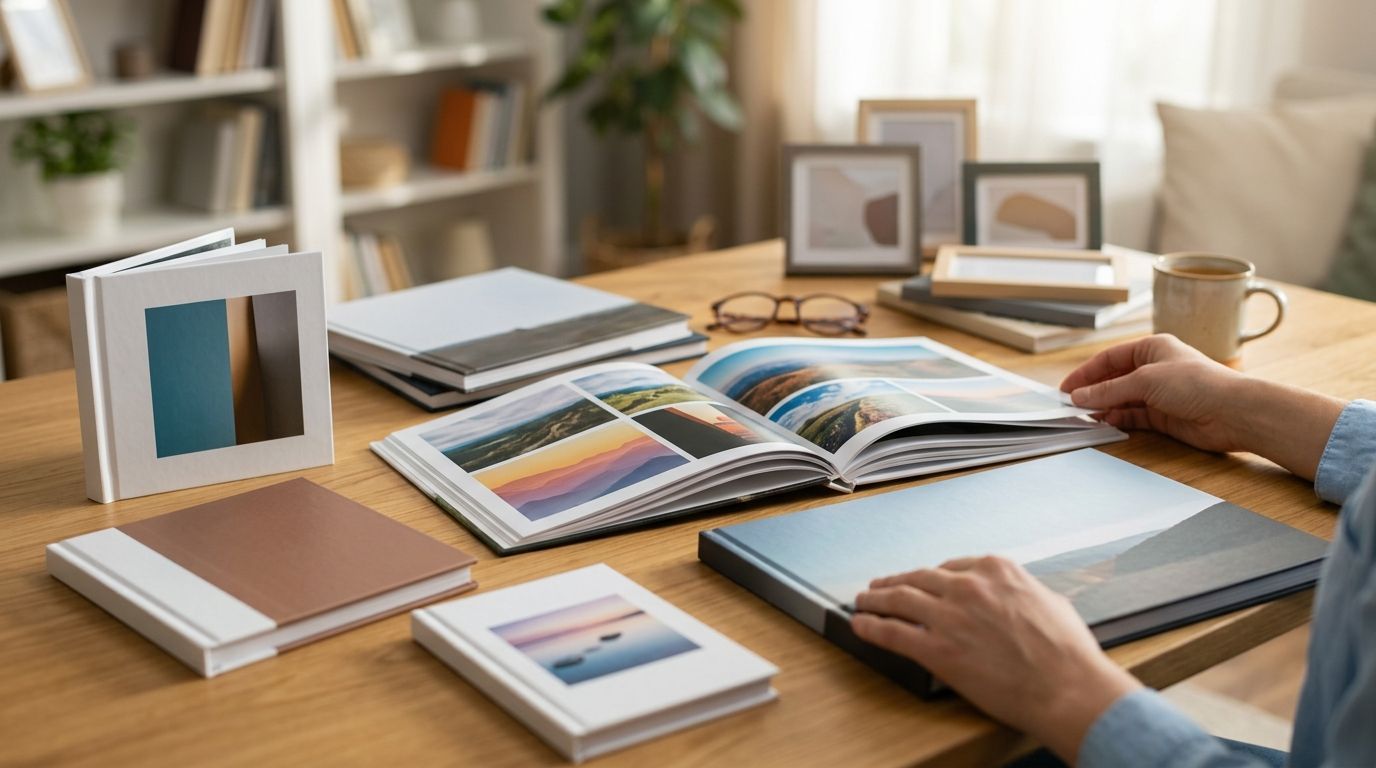
Best overall: a square photo book. Best for people-focused pictures: portrait. Best for travel scenes: landscape. Best for wide views: panoramic. The right photo book size depends on what your pictures show and how much you are willing to crop. If you are collecting holiday memories, start by choosing your travel photos before settling on a format.
TL;DR
- For photo book sizes in 2026, square is the best default for a mix of portraits and landscape photos.
- Choose portrait for people, landscape for places, and panoramic for pictures that need their full width.
- Pixa Prints makes photo books from personal photos; check the available sizes before building your layout.
Why this matters
A photo can look perfect on your phone and awkward on a printed page. Put a tall picture into a wide space and you either crop it or leave room around it. Choose the book's shape first, and you can design each page around the pictures you want to keep.
Pixa Prints photo books are a fit for people turning personal pictures into a keepsake; the best format is the one that suits those pictures. That is a more useful starting point than choosing the biggest-looking book. For a 2026 gift, look through the intended recipient's photos before deciding what shape to make.
What makes the best photo book size and format?
Use these criteria to judge photo book sizes in 2026. They apply whether you are making a book for yourself or putting together a gift.
- Photo orientation: Are most pictures tall, wide or a mix? Count your favourites, not every image in your camera roll.
- Crop tolerance: Decide which details must stay in the frame. Faces, landmarks and the edges of group shots deserve particular attention.
- Page composition: A single photo needs a different amount of space from a collage with captions.
- Viewing experience: Think about where the book will be opened. A wide spread invites a different layout from a compact page.
- Binding and paper options: Check the actual ordering choices separately from the book's shape. A square format does not tell you how its pages turn or lie open.
Do not confuse a book's dimensions with an image's aspect ratio. A hypothetical 20 × 20 cm page is square; a hypothetical 20 × 28 cm page is portrait; a hypothetical 28 × 20 cm page is landscape. Those are examples of page shapes, not a list of sizes offered by Pixa Prints. Check the current choices before designing around any measurement.
Photo book sizes at a glance
| Format | Best for | Standout feature | Key limitation |
|---|---|---|---|
| Square | Mixed photo collections | Flexible space for tall and wide images | Neither orientation fills every page naturally |
| Portrait | People and vertical pictures | Gives tall photographs room to breathe | Wide scenes need cropping or margins |
| Landscape | Holidays and group pictures | Gives horizontal images more page width | Tall portraits occupy less of the page |
| Panoramic | Sweeping views | Makes width the focus of the spread | Harder to build around vertical photos |
These are format recommendations, not a claim that every format is available from Pixa Prints. Book shape and page layout are separate decisions: you can place a wide photograph inside a square book without cutting it, provided you give it enough space around the edges.
Picture the same collection placed in different books: a square page balances tall and wide photos, while portrait gives height priority and landscape gives width priority. Panoramic is the specialist choice when cutting the sides would change the picture.
1. Square: best photo book size for mixed collections
A square book is the safest default when your favourites include both tall portraits and wide scenes. Its balanced page gives you room to vary the layout rather than forcing every photograph into the same frame. If you are making one book from family events, outings and everyday pictures, start here.
A square page does not make cropping disappear. A single portrait placed edge to edge still loses part of its height or leaves space at the sides; a wide scene faces the opposite trade-off. The advantage is that you can switch between those arrangements without the whole book feeling built for only one orientation.
Square format pros:
- Works with a varied collection of vertical and horizontal photos.
- Makes it straightforward to alternate single-image pages with simple collages.
- Suits a gift when you have not yet settled on one visual theme.
Square format cons:
- Wide landscapes need margins or a crop when used on one page.
- Tall portraits will not fill a square page without losing part of the image.
Best for: Family collections, mixed camera rolls and first photo books. For a 2026 project with no dominant photo orientation, Buy: choose square after checking the sizes currently offered.
Before you commit, pick the photographs that absolutely must appear. If most are wide holiday views rather than a true mix, landscape is the stronger choice. Square wins because it asks for fewer compromises across a varied set, not because it is ideal for every picture.
2. Portrait: best photo book format for people
Portrait books give tall images a page shape that feels natural. Choose one when the story centres on faces, full-length portraits or pictures taken with a phone held upright. It also gives you a clear way to build a sequence: a portrait can lead a page, with a caption or smaller supporting image alongside it.
Look carefully at group pictures before making portrait your default. A wide photograph can fit, but it will occupy less of the page unless you crop its sides. If the people near the edges matter, keep the full frame and accept the space around it.
Portrait format pros:
- Gives vertical photographs a natural page shape.
- Keeps attention on people rather than empty space beside them.
- Leaves room to pair a tall photograph with a short caption.
Portrait format cons:
- Wide group shots take up less page space when kept uncropped.
- A collection dominated by scenery will fight the page shape.
Best for: People-led books, family portraits and upright phone photos. For a 2026 collection centred on people, Buy: choose portrait if it is among the available book options.
Do not choose portrait solely because the book is a gift for a person. Judge the photographs, not the occasion. A book about a relative's travels might feature far more wide scenery than portraits of the traveller.
3. Landscape: best photo book format for travel scenes
Landscape books give horizontal pictures room to stretch across the page. They suit holidays, outdoor scenes and group photos where you want to keep everyone in the frame. If your strongest pictures were taken to show a place rather than a single subject, this is the format to inspect first.
The trade-off appears when you add upright photographs. You can keep their full height with blank space beside them, pair them on a page or crop them. None of those is wrong, but a collection made mostly of vertical phone shots will take more layout work in a landscape book.
Landscape format pros:
- Gives wide scenes more room on a single page.
- Keeps the sides of horizontal group shots visible.
- Supports a story built around places and shared experiences.
Landscape format cons:
- Upright portraits need margins, pairing or cropping.
- A wide page can feel underused when the image collection is mostly vertical.
Best for: Holidays, horizontal group photographs and place-led stories. For a 2026 travel book dominated by wide pictures, Buy: choose landscape after checking the available formats.
A landscape book is not automatically a panoramic book. Landscape simply means the page is wider than it is tall; panoramic puts much more emphasis on width. Choose landscape when you need versatility alongside those wide scenes.
4. Panoramic: best photo book format for sweeping views
Panoramic is the specialist pick for photographs whose width is the point. Think of a view where removing either side would change what the image says. A panoramic layout gives that picture priority instead of asking it to squeeze into a conventional page shape.
It is a poor default for a mixed camera roll. Tall portraits, close-up details and small collages demand more planning when the page is very wide. Check whether a panoramic book or suitable wide-page option is actually available before arranging an entire project around it; the format is a recommendation, not a confirmed Pixa Prints product specification.
Panoramic format pros:
- Preserves more of a deliberately wide composition.
- Gives a sweeping photograph a clear role in the book.
- Suits a tightly edited collection with a consistent visual shape.
Panoramic format cons:
- Vertical photographs are harder to feature prominently.
- It is less adaptable when the collection contains many image shapes.
Best for: Wide views that should not lose their edges. For a 2026 book built mainly around those images, Buy: choose panoramic only if the available format fits your photographs; otherwise, Hold: use landscape and keep the full image inside the page.
How we ranked these formats
The order reflects usefulness across an ordinary mix of personal photographs, not print quality or product availability. Square comes first because it accommodates both vertical and horizontal images. Portrait and landscape win when one orientation clearly dominates. Panoramic comes last as a general recommendation because it answers a narrower need exceptionally well.
To apply the ranking to your own book, make a shortlist of images before choosing the shape. Mark the pictures you refuse to crop, then see whether they are mostly tall, wide or mixed. That small edit tells you more than the total number of photographs on your phone.
Also separate the shape of the book from the way you design its pages. A portrait photo can sit uncropped in a landscape book with space around it. A wide group picture can appear in a square book without cutting anyone out. If the layout preview trims a detail you care about, change the placement before changing the book format.
Which photo book size should you choose?
Choose square if you are undecided. It is the clearest starting point for mixed photos and gives you freedom to change layouts from page to page. Choose portrait when people and upright images carry the story; choose landscape when places and wide group shots do. Reserve panoramic for a collection that needs its full width.
Pixa Prints lets you turn personal photos into a photo book, but the available size and format choices need checking before you design one. In 2026, let your favourite images set the direction: the best photo book size is the one that keeps the important parts of those photographs in view. If no single shape fits every image, keep the full frame on some pages rather than cropping for the sake of uniformity.
FAQ
What are the best photo book sizes for mixed photos in 2026?
A square photo book is the best starting point for mixed photos in 2026. Its balanced shape lets you arrange tall and wide pictures without making either orientation dictate the entire book.
Is a square photo book better than a landscape one?
Square is better for a mix of vertical and horizontal photos; landscape is better when wide scenes dominate. Choose according to the pictures you want to feature, not the shape of the cover alone.
Which photo book format works best for phone pictures?
Portrait works best when most of your chosen phone pictures are upright. If your favourites include plenty of wide shots too, square gives you more layout flexibility.
Should I crop photos to fit a photo book page?
Keep the full image when cropping would remove a person or an important detail. You can use margins or pair smaller photos on a page instead of forcing every image to fill its space.
Are landscape and panoramic photo books the same?
No. Both favour width, but panoramic is the more specialised choice for unusually wide compositions. Landscape is easier to use when your collection also includes other image shapes.
Does Pixa Prints offer every photo book format in this guide?
This guide compares page shapes, not a confirmed list of Pixa Prints formats. Check the current book options before choosing a size or preparing a panoramic layout.
How do I choose a photo book size for a gift?
Choose the size and shape around the recipient's photos. A mixed family collection points to square, while a set dominated by portraits or wide travel scenes points to a matching orientation.
One last thing
Before you arrange a single page, find the photo you would be most upset to crop. Its shape is a useful test for your choice. If that picture still works in the format you have chosen, start designing; if it does not, change the format or give the image space around it.