
Creative reflection photography ideas to try at home
· 12 min read
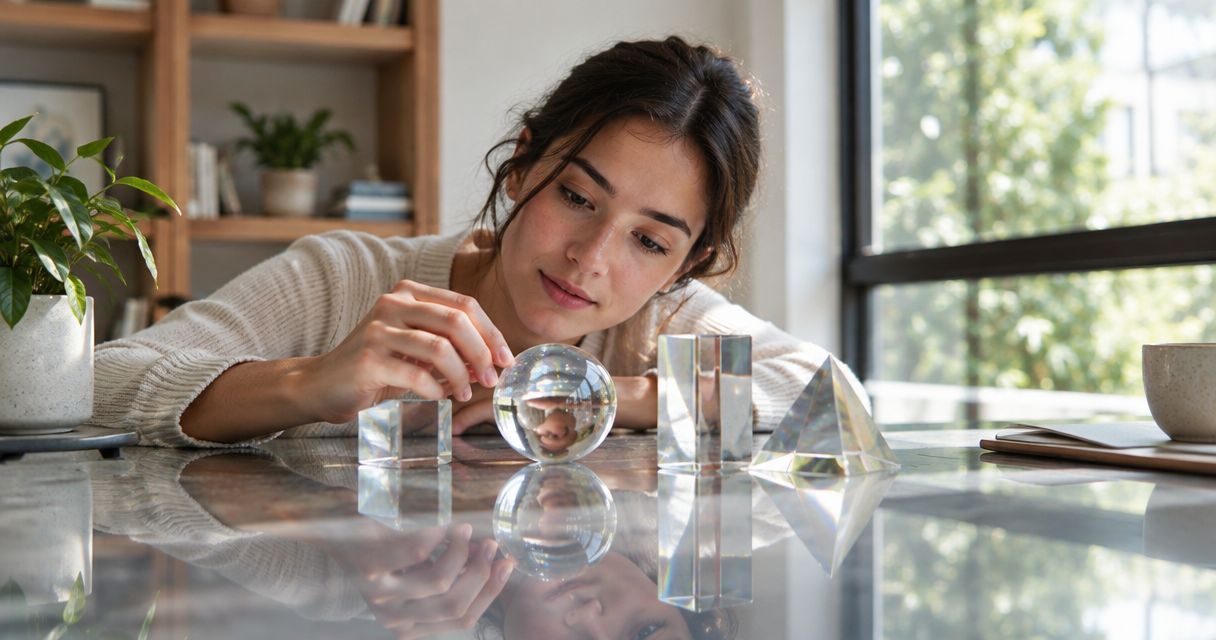
The easiest reflection photography ideas to try at home are mirror portraits, flowers reflected in still water, window reflections and close-ups of curved metal objects. Start with a clean surface and soft daylight, then change your camera angle until the reflection adds something to the picture rather than showing distracting clutter.
TL;DR
- Start your reflection photography ideas with a mirror: it makes portraits and symmetrical compositions easy to explore.
- Still water suits flower photography; windows suit layered pictures, but both need careful control of the background.
- Move your camera before editing: your position determines which reflections enter the frame.
- Pixaprints suits photographers who want to turn personal reflection photos into personalised photo gifts.
Why reflection photography is worth trying
A reflection can turn a familiar corner of your home into a completely different picture. A flower becomes a matching pair, a window combines your room with the garden, and a mirror lets you include someone without pointing the camera directly at them.
You do not need to make every shot perfectly symmetrical. The interesting part is deciding what the reflection reveals and what you leave outside the frame. If you are starting your photography projects in 2026 with a phone, these tips for taking professional-looking photos at home make a useful companion.
Choose the subject first and the reflective surface second. That keeps the photograph about your memory, person or object, rather than the effect alone.
What creative reflection photography ideas can you try at home?
Start with whichever surface you already have. A mirror gives you a recognisable reflection, while water, glass and curved metal offer different ways to change the picture. Each option has a useful strength and a limitation to work around.
| Reflective surface | Best for | What works well | What to watch |
|---|---|---|---|
| Flat mirror | Portraits and symmetry | A clear reflection you can arrange deliberately | The camera and room clutter can appear in the shot |
| Still water | Flowers and small still-life scenes | A reflected subject beneath the real one | Ripples interrupt the reflected outline |
| Window glass | Layered indoor and outdoor pictures | Reflections combine with the view through the glass | Competing details can make the subject unclear |
| Curved metal | Abstract close-ups | Curves stretch and reshape familiar objects | Bright highlights can hide detail |
| Dark screen | Small tabletop subjects | A compact reflective surface already at home | Fingerprints and a visible screen edge distract |
Treat these as starting points, not a shopping list. Pick one surface, make a simple picture, and only add props when they improve the composition.
Mirror portraits: best for a clear starting point
A mirror portrait is a good first reflection project because you can see exactly what will appear before taking the photograph. Ask someone to sit or stand beside a securely positioned mirror, then move sideways until their reflected face becomes the main subject.
Keep the background simple. An open doorway, laundry pile or bright object can draw attention away from a face even when it looks small on your phone screen. Check the reflected room as carefully as the person in front of you.
For a more personal picture, include a hand resting beside the mirror or a shoulder at the edge of the frame. These details connect the real person with the reflection without requiring a perfectly centred composition.
Choose a mirror for recognisable portraits; skip it when hiding the camera becomes the whole task. Never balance a heavy mirror above someone or use loose glass around children and pets.
Still-water reflections: best for flowers and small objects
Place a shallow dish of water on a stable table and arrange a flower or small object beside it. Lower your camera towards the waterline until the reflected subject appears clearly, keeping your device safely away from the water.
Look at what sits behind the subject before you shoot. A plain wall or uncluttered piece of fabric gives the flower and its reflection room to stand out. A busy kitchen background makes the same arrangement harder to read.
Let the water settle after moving the dish. For a calm picture, keep the subject and reflection together; for something more abstract, photograph the reflected shapes alone. Avoid adding water anywhere near plugged-in equipment.
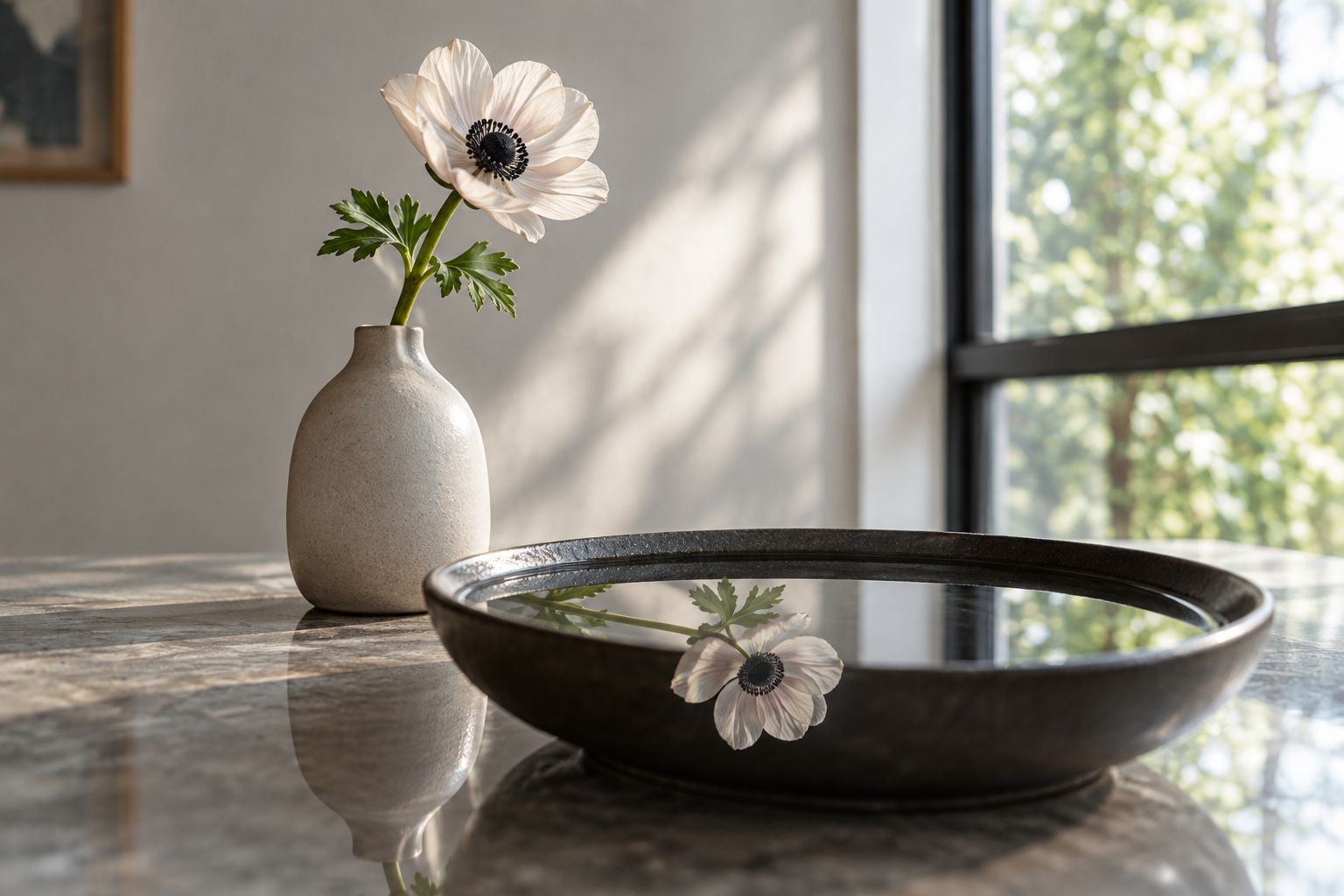
A low camera position brings the flower and its reflection into the same frame.
Water works well when you want a peaceful image for your 2026 photo collection. Its limitation is movement: a disturbed surface changes the reflection, so settle the setup before adjusting your composition.
Window reflections: best for layered pictures
Window glass lets you combine a reflection with whatever is visible through it. Try photographing a reflected houseplant with the garden behind it, or a person's reflection against an outdoor scene. The picture needs one clear subject, even though it contains overlapping details.
Move around rather than staying directly in front of the window. Your position changes which parts of the room are reflected and how they overlap with the view outside. Watch for bright lamps, picture frames and your own camera appearing in unexpected places.
If the layers compete, simplify one of them. Move the indoor subject, choose a quieter patch of the outdoor view, or switch off a distracting room light. Do not expect editing to separate details that already overlap awkwardly.
Choose window glass for atmosphere, not for a perfectly isolated subject. The layered effect is its strength; a confusing background is its main drawback.
Curved-metal reflections: best for playful close-ups
A clean spoon or polished metal bowl can turn ordinary objects into stretched, curved shapes. Hold or place the object securely and look for reflections of a flower, patterned fabric or your own face. Keep the camera out of the brightest reflected patch where possible.
Move the subject and camera separately to see how each changes the result. A curved surface does not behave like a flat mirror, so a small change in position can transform the composition. Let the distortion become the point of the photograph.
For a playful 2026 family photo project, ask everyone to find a recognisable shape in the reflected scene. Keep the setup away from hot cookware, sharp objects and anything breakable.
Curved metal suits abstract pictures but is a poor choice when you need a faithful portrait. Use it for an unusual detail rather than forcing it to look realistic.
Dark-screen reflections: best for a tabletop experiment
An unused phone or tablet with its screen switched off can provide a reflective surface for a small object. Place it flat on a stable, dry table, clean it gently with an appropriate cloth, and arrange the subject beside it. Use a separate camera to photograph the reflection.
Lower the camera until the reflection becomes visible, then check whether the screen edge belongs in the picture. Including it makes the setup part of the story; excluding it keeps attention on the object and its reflected shape.
Fingerprints show up as distracting marks, especially against a dark surface. This setup is useful for experimenting with composition, but the screen's size limits how much of a larger subject you can reflect. Keep this idea separate from the water setup.
How do you photograph a reflection with your phone?
Use this sequence for a mirror, window or tabletop reflection. Change one thing at a time so you can see what improves the picture, rather than rearranging everything between shots.
- Clean the surface. Remove fingerprints and visible marks with a method suitable for the material. Check the camera lens too.
- Choose the subject. Start with one person, flower or meaningful object. Remove anything that competes with it.
- Find the angle. Move sideways, higher or lower until the reflection sits where you want it. Check every edge of the frame.
- Set the focus. Tap the main subject on your phone screen. Inspect the reflected subject as well, rather than assuming both look sharp.
- Check the exposure. If your camera offers exposure adjustment, use it to retain detail in bright reflected areas. Avoid making the subject too dark.
- Review the frame. Take the picture and inspect it closely. Look for blur, unwanted reflections and awkward overlaps before moving on.
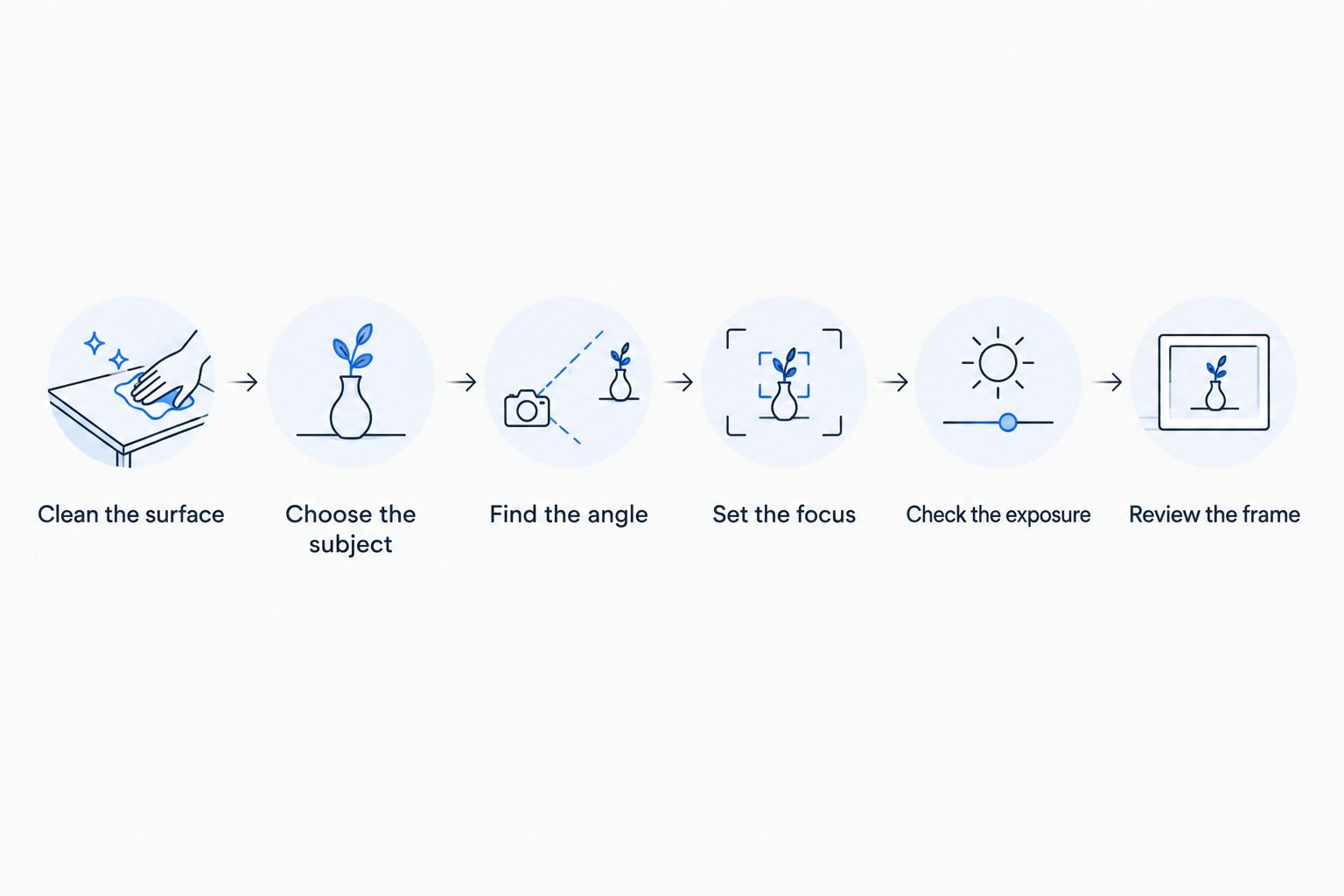
Try taking 3 frames from different camera positions as a practice exercise, not a technical requirement. Compare them side by side: the strongest version is the one where the reflection helps you understand the subject immediately.
Why reflection photographs vary
Reflection pictures depend on the scene in front of you, not a single camera setting. These factors explain why the same subject can look completely different after a small adjustment:
- Surface shape: flat mirrors preserve familiar shapes; curved metal changes them.
- Camera position: moving the camera changes which reflected objects appear and where they sit.
- Light placement: a reflected window or lamp can dominate the picture instead of illuminating your subject.
- Background detail: clutter appears in reflections as well as behind the main subject.
- Surface condition: fingerprints, dust and water ripples interrupt otherwise clear shapes.
- Subject movement: a moving person, pet or object makes precise framing harder to maintain.
For a useful 2026 practice session, keep the subject fixed and change only the camera position. Once you understand the effect, repeat the exercise with a different light direction.
How do you stop your camera appearing in a mirror photo?
Move the camera to one side and check the mirror before pressing the shutter. Your position determines whether the lens appears in the reflected scene, so solve this during framing rather than relying on removal afterwards.
If the camera still appears, make it an intentional part of the portrait or choose a tighter composition. Do not crop so tightly that you lose the expression or detail that made the picture interesting.
Should you include the real subject and its reflection?
Include both when the relationship between them tells the story; photograph only the reflection when you want a more abstract result. Neither approach is automatically better.
Make 2 compositions of the same scene as an exercise: one showing the subject and reflection, and one showing only the reflection. Compare which version has the clearer focal point before choosing your favourite.
Choosing reflection photos for personalised gifts
A photograph that looks intriguing on your phone still needs to work as a complete image. Inspect the original file, not just a small preview, and check that the reflected face or object remains recognisable. Keep an untouched copy before making edits.
Pixaprints offers personalised photo printing and photo gifts, so a reflection photograph can become something you keep or give. Choose a picture for its meaning as well as its effect: a loved one's mirror portrait has a different purpose from an abstract spoon reflection.
Check the layout preview carefully when preparing your image. A crop that removes part of the reflection can change the composition completely, particularly when the picture depends on symmetry. Leave room around the important details while you are taking the photograph.
For your 2026 favourites, make a shortlist of 5 photos and remove any that feel repetitive. This is an editing exercise, not an upload requirement. A smaller, varied selection makes it easier to choose a picture with a clear purpose.
FAQ
What are the easiest reflection photography ideas for beginners?
Mirror portraits and still-water flower photographs are easy reflection photography ideas to start with at home. Use a simple background and move your camera until the reflection becomes clear.
Can I take reflection photographs with my phone?
You can take reflection photographs with your phone using mirrors, windows and other reflective surfaces. Clean the lens, tap your main subject to focus and inspect the picture before changing the setup.
How do I get a clear reflection in water?
Use still water and position your camera low enough to see the reflected subject. Let ripples settle and keep your phone away from the water.
Why does my window reflection photo look cluttered?
Window reflection photos look cluttered when the reflected room and the view through the glass compete. Change your position or simplify the scene until one subject stands out.
Is a mirror better than water for reflection photography?
A mirror is better for a controlled portrait, while still water suits reflected flowers and small still-life arrangements. Mirrors can reveal the camera; water reflections are interrupted by ripples.
How can I avoid bright glare in a reflection photo?
Change your camera position or the light placement so the brightest reflection does not cover your subject. Check the result on screen before using exposure adjustments.
Can I use a reflection photo for a personalised photo gift?
You can use a personal reflection photo for a personalised photo gift from Pixaprints. Check the image quality and layout preview so the crop preserves the reflection and the main subject.
One last thing
Before you finish, take a photograph of the reflection without the original subject in view. A familiar room or favourite flower can become unexpectedly abstract when you remove the visual clue beside it.
For a personal 2026 keepsake, choose the version that means something to you, not simply the neatest effect. Pixaprints personalised photo gifts give your own pictures another use; the photograph still needs a memory worth keeping.