
How to create a comforting family photo album
· 12 min read
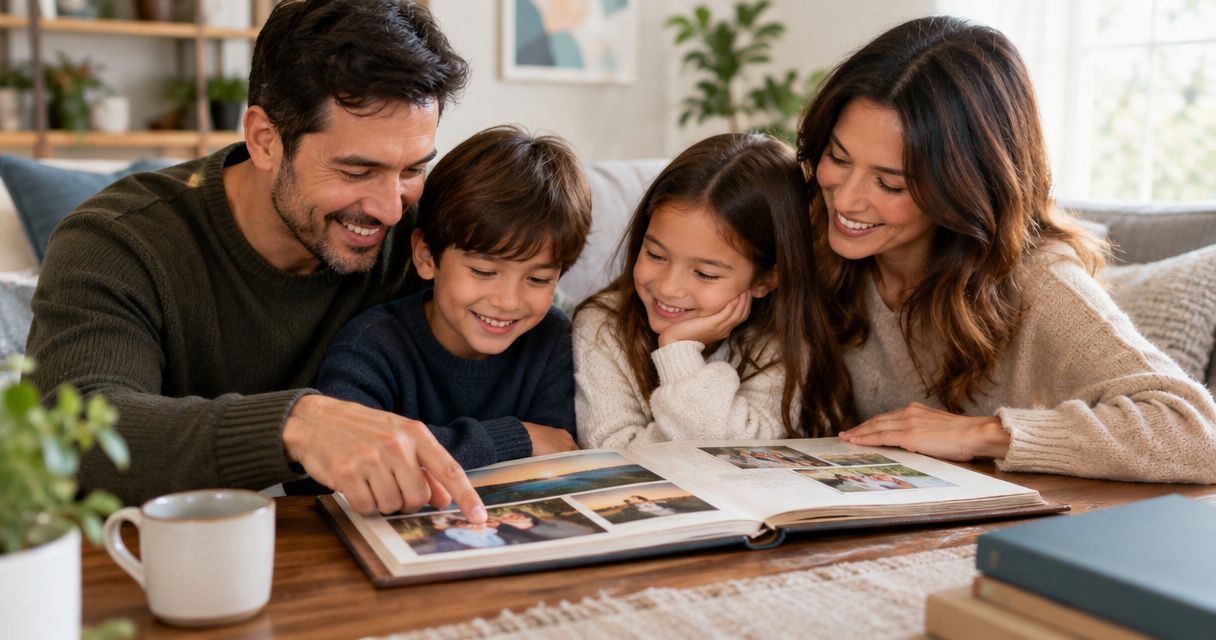
Create a comforting family photo album by choosing familiar faces, everyday moments and short captions, then arranging them into a story your family enjoys revisiting. The strongest family photo album ideas leave room for ordinary life, respect sensitive memories and favour meaningful pictures over a complete photographic record.
TL;DR
- The strongest family photo album ideas pair familiar photographs with names, places and small everyday stories.
- Pixaprints offers personalised photo books for families who want to turn uploaded photographs into a printed keepsake.
- Choose a clear theme, keep layouts simple and let the recipient decide which sensitive memories to include.
- Treat suggested photo counts as starting points, not rules or product specifications.
Why this matters
A family album does not have to cover every birthday, holiday and milestone. Its purpose can be much smaller: remembering Sunday lunches, introducing children to relatives or collecting the moments that make a place feel like home.
Choose the story before you choose the format. If you want to arrange separate photographs yourself, the guide to photo prints for photo albums is a useful next read. First, decide whose memories the album should reflect and what they would enjoy seeing.
How do you create a comforting family photo album?
Start with the person who will look through the album, rather than the photographs you happen to have. A book for your own household can include private jokes; a gift for a relative needs enough context to make each picture understandable.
Use this sequence to turn a folder of photographs into a personal keepsake:
- Choose your purpose. Write a short description of the album, such as everyday family life or memories of home. Use that description to decide what belongs.
- Collect your photos. Gather pictures from your phone, family folders and existing albums. Ask relatives before including photographs they consider private.
- Choose your favourites. Pick images that add a person, place or story. Remove near-duplicates unless the sequence itself matters.
- Arrange your story. Group photographs by time, person, place or activity. Choose the order that makes sense to the recipient.
- Add your captions. Name people and explain details that a future reader would not know. Keep uncertain information out rather than guessing.
- Review together. Check names, crops and sensitive photographs before making the finished album. For a surprise gift, ask a trusted relative to help.
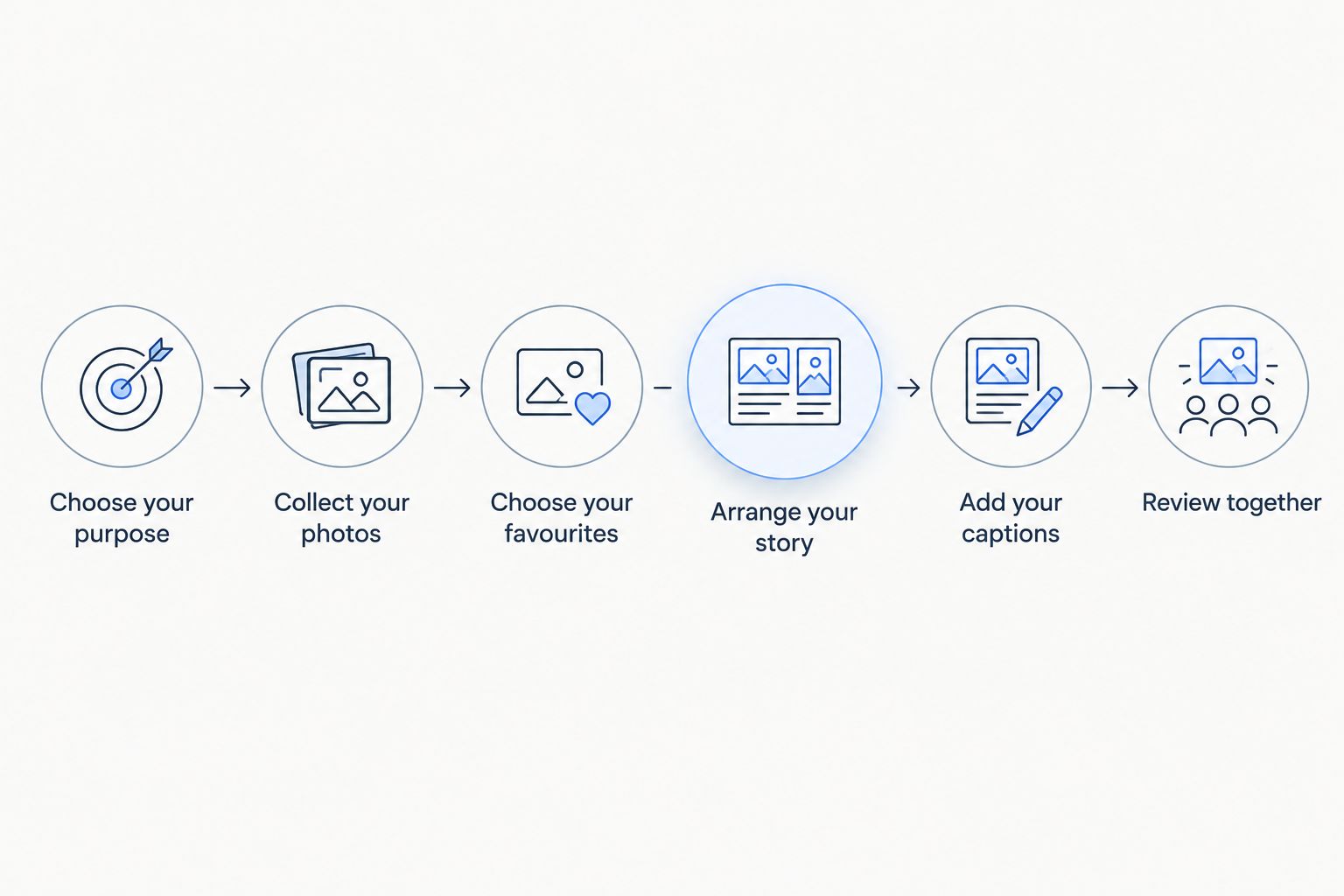
Choose the purpose first so every photograph has a reason to be included.
You do not need to finish the whole family archive at once. For a manageable 2026 project, choose a single theme and save the remaining photographs for another album.
Which family photo album ideas suit your story?
Different themes give the same photographs different meanings. A picture of a kitchen might belong in a family timeline, but it can also anchor an album about familiar places or shared recipes.
Choose the theme that needs the least explanation for your reader. These are creative starting points, not rules about how a family should look.
| Album idea | Best for | What to include | What to watch |
|---|---|---|---|
| Everyday life | Remembering familiar routines | Meals, walks, pets and time at home | Similar pictures need captions that explain their differences |
| Family timeline | Following changes over time | Photographs in a clear sequence | Missing dates can make the order uncertain |
| People and connections | Introducing relatives and relationships | Portraits, shared activities and names | Formal portraits alone leave out everyday character |
| Places we love | Remembering homes and familiar settings | Doorways, gardens, rooms and local outings | Explain why each place matters |
| Shared traditions | Passing on family activities | Recipes, celebrations and recurring gatherings | Avoid presenting one person's memories as everyone's experience |
Everyday life: best for familiar moments
Choose the pictures you might otherwise overlook: someone reading in their usual chair, muddy boots by the door or a pet settling beside a family member. These details make the album about your actual household rather than only its celebrations.
The limitation is repetition. If several photographs show the same activity, keep the one that tells the clearest story or explain what makes each occasion different.
People and connections: best for explaining relationships
Give each person enough context to be recognised beyond their portrait. Include their name, how they are connected to the reader and something they enjoyed doing together.
Check preferred names and relationship descriptions with the people involved. Family connections are personal; a tidy family-tree structure is not always the right fit.
Places we love: best for memories of home
Include surroundings as well as faces. A familiar gate, favourite walking route or kitchen table can belong beside the photographs taken there.
Avoid relying on scenery alone. Add a short explanation of who used the space and what happened there, especially if the album will be shared with younger relatives.
How do you choose photographs without making the album feel crowded?
Start with 12 photographs as a creative exercise, not a required album size. Choose a small selection that represents the story, then add an image only when it contributes something different.
For each photograph, ask what the reader gains from seeing it. Does it introduce someone, show a relationship, explain a place or capture a detail missing elsewhere?
Use these checks when narrowing your selection:
- Recognisable subjects: choose pictures where the important person or detail is easy to find.
- Different moments: avoid keeping every frame from the same scene.
- Everyday context: include surroundings when they help explain the memory.
- Personal meaning: keep a technically imperfect photograph if it matters to the recipient.
- Sensitive content: leave out images the subject would not want shared.
Do not discard every soft or faded picture. An older family photograph can still belong, but keep it at a size where its important details remain clear rather than enlarging it simply to fill space.
For an album you are making in 2026, keep a separate folder of the final selected files. That makes it easier to distinguish the pictures you chose from the many alternatives.
What should you write beside family photographs?
A useful caption supplies what the picture cannot: names, relationships, location or a small piece of the story. Write for someone who was not there.
Try 1 sentence per photograph before adding more. This is an editing suggestion, not a printing limit; longer stories can have a separate page when they deserve it.
A simple caption pattern is person + place + meaningful detail. Describe the family member making their usual recipe, the garden where cousins played or the walk everyone took after lunch.
Keep these distinctions clear:
- Known details: include information you can confirm.
- Personal memories: make clear whose recollection you are recording.
- Unknown details: leave them out or describe only what is visible.
- Private stories: ask permission before printing them for other people.
If you are recording a memory in 2026, label that as the date the memory was written down, not the date of an older photograph. Keeping those dates separate prevents a useful note becoming a misleading caption.
How do you make the pages feel calm and easy to follow?
Begin with a layout trial of 1–2 photographs per page. This is a suggested starting point, not a specification for any particular album or photo book.
Give a meaningful picture room rather than squeezing unrelated images around it. Use a consistent caption position and keep text separate from busy areas of a photograph.
Before committing to the arrangement, check:
- Faces: keep important features away from crops and page edges.
- Text: choose lettering you can read comfortably at the intended size.
- Sequence: check that each new spread follows naturally from the last.
- Spacing: leave enough separation to distinguish pictures and captions.
- Backgrounds: choose a simple background when decoration competes with the photographs.
A collage suits a lively gathering, but its smaller individual images need closer inspection. A full-page portrait gives one person more attention, but it leaves less room for the surrounding story.
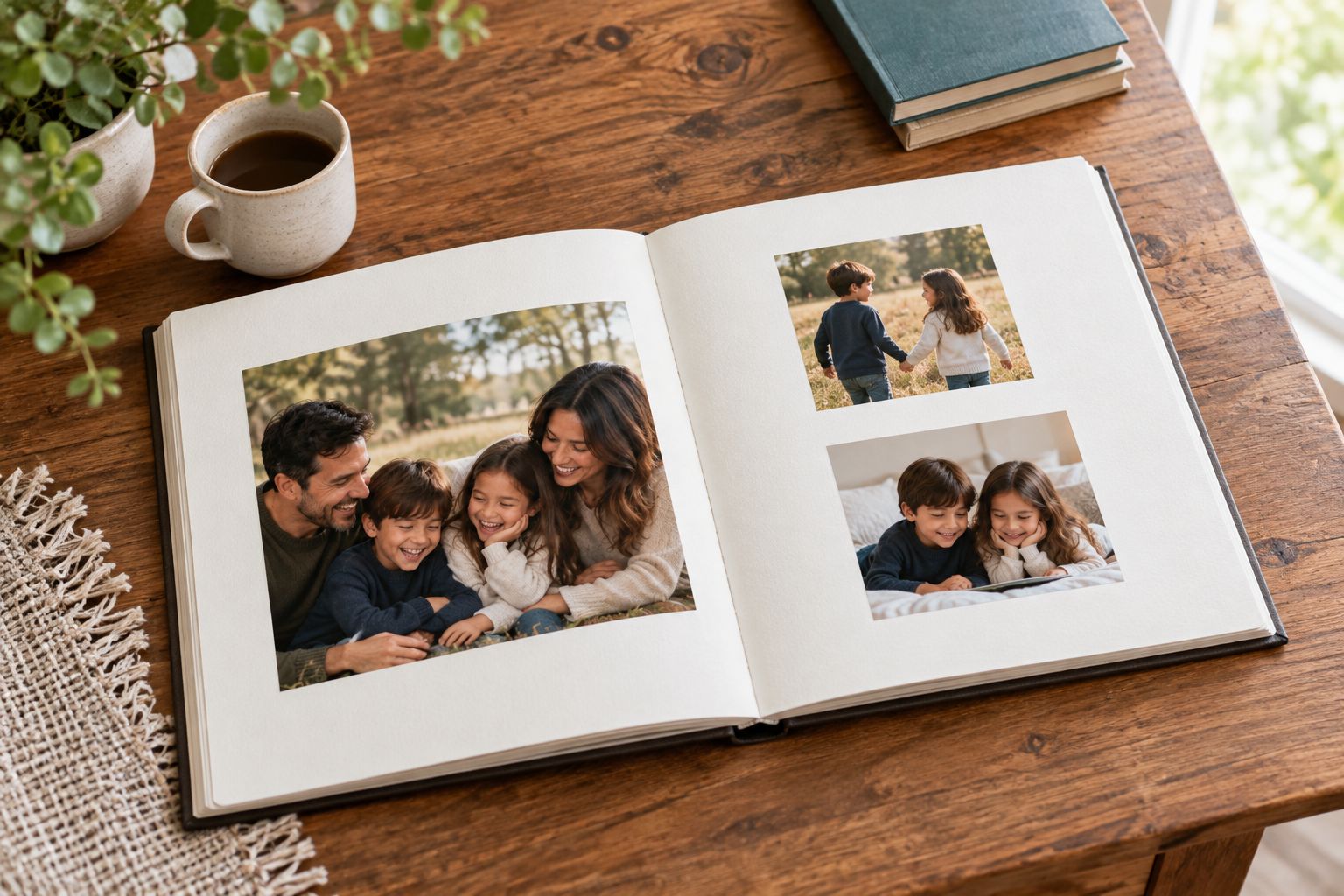
Leave space around photographs so each memory has room on the page.
Why the right family album varies
There is no single layout or theme that suits every household. Make decisions around the recipient rather than trying to recreate somebody else's album.
- Who will read it: a child meeting relatives through pictures needs different context from someone recalling shared experiences.
- What the album is for: a gift, a personal keepsake and a record for future relatives serve different purposes.
- Which photographs exist: work with the images you have rather than forcing an uneven archive into equal sections.
- How people feel about the memories: ask about sensitive photographs instead of assuming they will be welcome.
- How the album will be handled: decide whether you want to rearrange separate prints or prepare a fixed page sequence.
- How much explanation is needed: unfamiliar faces and places need more context than well-known household scenes.
If you are planning a 2026 family album together, agree on its purpose before everyone starts contributing files. That gives relatives a useful brief without asking them to sort their entire collection.
Should you choose a photo book or arrange separate prints?
Choose between a planned page sequence and an arrangement you want to keep changing. Neither format makes the memories more meaningful; the difference is how you want to assemble and use them.
| Format | Best for | Main advantage | Main limitation |
|---|---|---|---|
| Printed photo book | A story with a settled sequence | Photographs and captions form a planned page layout | Review the whole sequence before printing |
| Album with separate prints | A collection you want to arrange by hand | Suitable album designs let you move or replace pictures | Check the album's capacity, print fit and mounting method |
Pixaprints photo books suit families who want to turn uploaded photographs into a printed keepsake. Plan your captions and page order before building the book, and check the current format details rather than assuming particular dimensions or page features.
Pixaprints also offers other personalised photo gifts, but you do not need matching items to complete this project. Keep the focus on the photographs and the person who will receive them.
How do you include a relative who has died?
Include photographs of a relative who has died according to the recipient's wishes, not an assumption that the album should tell the whole story. Ask whether they would prefer those pictures throughout the album, in a separate section or left out for now.
Avoid turning the album into a test of dates, names or recollection. Share what you remember, invite stories without demanding them and let the person stop or change the subject.
A photo album is a personal keepsake, not a treatment or a promise of comfort. If a picture feels unwelcome, remove it; completeness matters less than the reader's wishes.
FAQ
What are the best family photo album ideas for a comforting keepsake?
The best family photo album ideas centre on familiar people, everyday routines and places that matter to the recipient. Choose a clear theme and add short captions that explain the personal details.
How many photos should I choose for a family album?
Start by selecting 12 photographs as a planning exercise, then add pictures that contribute a different person, place or story. This is a creative starting point, not a product requirement or a recommended total for every album.
Should I put family photos in date order?
Use date order when the album's purpose is to show change over time. If your story is about familiar people or places, grouping photographs by theme can make more sense.
What should I write under old family photos?
Write confirmed names, relationships, places and any relevant detail you know. Do not invent dates or present an uncertain family story as an established fact.
Is a photo book better than an album with separate prints?
A photo book suits a planned sequence, while a suitable album with separate prints lets you rearrange the collection. Check the chosen format's details before preparing your layout.
Can I include sad memories in a family photo album?
Include sensitive memories only when the recipient wants them included. Ask about particular photographs and accept that leaving them out can be the right decision.
Can I make a family photo book with Pixaprints?
Pixaprints offers personalised photo books made from uploaded photographs. Prepare your selection and check the current format details before designing your pages.
One last thing
Before you finish, photograph an ordinary detail of family life as it looks in 2026: the table where everyone gathers, a well-used recipe notebook or the view from the front door. Include it if it belongs to your story.
Save the context, not just the faces. A short note explaining why that everyday detail matters gives future readers something they cannot learn from the photograph alone.