
Outdoor family photography ideas for every season
· 11 min read
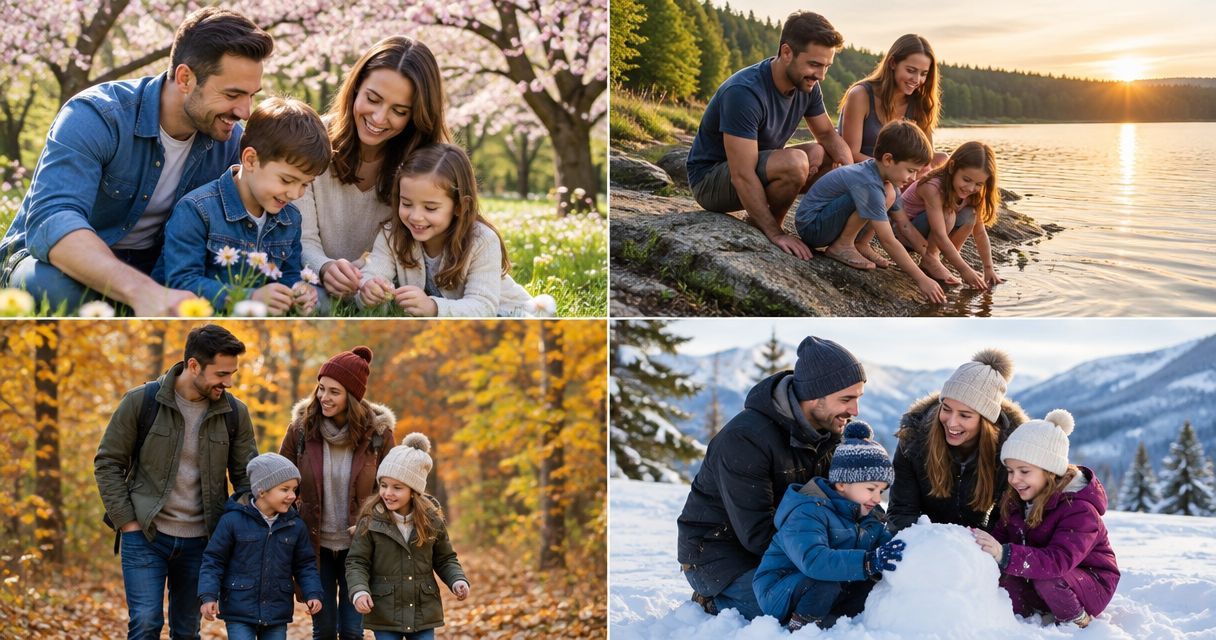
The best outdoor family photography ideas give everyone something natural to do: walk beneath spring blossom, share a summer picnic, explore autumn leaves or cuddle together on a winter walk. Choose comfortable surroundings and even light before asking anyone to pose. For your 2026 family photos, build the outing around an activity your children already enjoy rather than a long list of smiles for the camera.
TL;DR
- Outdoor family photography ideas work best when the activity suits your family, not just the season.
- Choose spring blossom, summer shade, autumn woodland or a sheltered winter walk, with comfort first.
- Capture a wide scene, a family portrait and a close-up detail to tell a fuller story.
- Pixaprints suits families turning personal photographs into personalised photo gifts; choose sharp originals before designing.
Why this matters
A familiar park with relaxed faces makes a more meaningful family photograph than a spectacular location nobody enjoys. You want to remember how the day felt, not how hard it was to persuade everyone to stand still.
You do not need to start with specialist equipment. If you are using your mobile, these tips on taking professional-looking photos with a phone give you a useful starting point before you head outdoors.
What are the best outdoor family photography ideas for every season?
Match the activity to the season, then look for a simple background and comfortable light. Each season offers a different setting, but none guarantees a better photograph: a relaxed expression matters more than blossom, sunshine or snow.
| Season | Best for | Photo idea | Main advantage | What to watch |
|---|---|---|---|---|
| Spring | Families who enjoy exploring | Walk beside blossom or look for new leaves | Fresh greenery adds context without props | Mud, showers and distracting branches |
| Summer | Families who like relaxed outings | Share a picnic in open shade | Familiar activities give hands something to do | Bright sunlight, squinting and patchy shade |
| Autumn | Families with energetic children | Follow a woodland path or gather fallen leaves | Leaves provide colour and a shared activity | Slippery paths and busy backgrounds |
| Winter | Families who prefer a short outing | Stand close together on a sheltered walk | Simple surroundings keep attention on faces | Cold hands, low light and uncomfortable waits |
For a 2026 family project, return to the same accessible spot across the 4 seasons. Keep a recognisable feature in the background, such as a tree or gate, and let the changing clothes and landscape tell the story.
Spring: follow the blossom without crowding it
Best for: curious children and families who enjoy a gentle walk. Choose a path beside flowering trees rather than standing directly beneath a tangle of branches. Position everyone where the background adds colour without cutting across faces.
Ask your family to walk towards you, pause to look at a flower or tell each other something funny. Photograph the interaction before asking everyone to look at the camera; the moments between instructions often feel more personal.
- Let children point out something they have spotted, then photograph the adults listening.
- Try a portrait from the side while everyone looks along the path.
- Include a close-up of small hands holding an already fallen leaf or petal.
- Keep coats and sensible footwear available rather than choosing outfits only for appearance.
The benefit of spring is the variety of fresh backgrounds. The drawback is that blossom and busy greenery easily compete with faces. Move your position before moving the whole family if a branch appears to grow out of someone's head.
Summer: find shade before choosing a pose
Best for: picnics, garden gatherings and families who dislike formal posing. Look for open shade beside a tree line or building, where faces are lit evenly. Avoid seating half the group in bright sunshine and half in shadow.
Spread a blanket where everyone can sit comfortably and photograph people chatting, passing a snack or reading together. Put distracting bags behind the camera, but leave meaningful details in the scene: a much-loved toy belongs in a family memory.
For summer 2026, make the photograph part of an outing you would enjoy anyway. If the light is uncomfortable, change location rather than keeping children in position while you experiment.
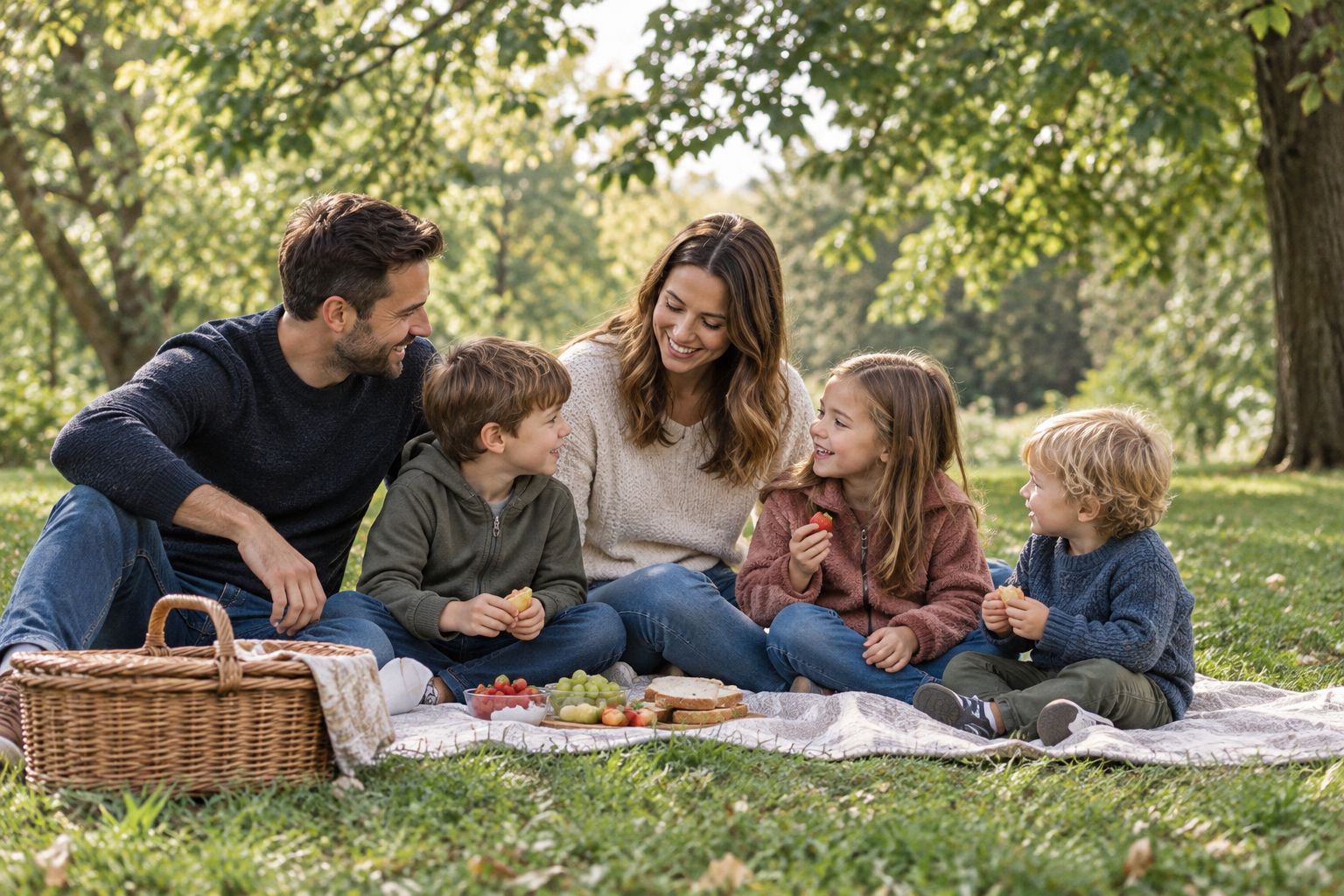
A shared activity gives everyone something to do besides posing.
Summer outings give you plenty of activity to photograph, but strong sunlight can make portraits awkward. Keep checking faces rather than assuming a bright day means flattering light. If someone is squinting, turn the group or find another spot.
Autumn: use the path as your backdrop
Best for: active children, siblings and families who enjoy woodland walks. A clear path gives your photograph direction, while leaves add seasonal colour around the edges. Choose somewhere safe and accessible rather than asking everyone to balance on logs or climb for the picture.
Try walking away while holding hands, then turn back towards the camera. Alternatively, ask children to show a parent their favourite fallen leaf and photograph the conversation from their eye level.
Keep leaf throwing optional. Some children love it; others dislike leaves near their faces, and a forced game rarely produces relaxed expressions.
- Photograph a walking group with space in front of them.
- Take a quieter portrait against a simple patch of foliage.
- Capture boots beside fallen leaves as a supporting detail.
- Check the background for bins, signs and other distractions before you start.
Autumn colour is a useful backdrop, but fallen leaves can hide uneven or slippery ground. Choose footing first and framing second. You can photograph the season without leaving the path.
Winter: keep everyone close and comfortable
Best for: affectionate group portraits and families happy with a brief outdoor stop. Bring people together rather than spreading them across a wide scene. Coats, scarves and linked arms give a winter portrait its own character without extra props.
Choose a sheltered place and have the camera ready before asking everyone to gather. Photograph a cuddle, a shared joke or a parent helping with a scarf, then let everyone move again.
Do not build your winter 2026 plan around snow. Bare branches, evergreen foliage and familiar neighbourhood paths already show the season, and they leave you free to choose a comfortable day.
Winter's simpler surroundings can keep attention on faces, but cold and fading light work against long sessions. Avoid icy ground, keep babies appropriately supported and warm, and stop when anyone becomes uncomfortable. No photograph needs an unhappy child to complete it.
How do you take natural family photos outdoors?
Start with a repeatable sequence rather than inventing a new pose every time. Find the light, simplify the background and give everyone a small shared task. Then vary your framing while the family stays comfortable.
- Find even light. Look at faces before the scenery. Move away from patches of bright sunlight crossing eyes or cheeks.
- Clear the background. Shift sideways to separate heads from branches, posts and signs. Keep the setting recognisable without letting it dominate.
- Start an activity. Ask everyone to walk together, share a story or look at something nearby. Give children a task they understand.
- Vary the framing. Take 3 photographs: a wide view of the setting, a closer family portrait and a small detail. Treat these as a starting checklist, not a limit.
- Check the result. Look for sharp faces, closed eyes and awkward crops before leaving. A quick check gives you another chance while everyone is still together.

Sort out the light and background before asking everyone to pose.
If an adult is always behind the camera, swap photographers or use a securely positioned camera with a timer. Keep equipment away from paths and water, and make sure another adult remains responsible for supervising children while the photographer concentrates on framing.
Why outdoor family photographs vary
The same pose can look different from one outing to another. These practical factors matter more than copying a photograph exactly:
- Light direction: light from behind, beside or in front of your family changes shadows and how comfortably people can face the camera.
- Background: a plain hedge keeps attention on expressions; a busy playground adds competing details.
- Movement: walking and games create natural interactions, but you need to check whether moving faces look sharp.
- Comfort: suitable layers, accessible paths and breaks let people take part without enduring the session.
- Framing: a wide photograph explains the place, while a close portrait makes expressions the focus.
- Final use: a photograph intended for a square crop needs different spare space from a wide landscape composition.
Change the easiest variable first. A small change in camera position is often simpler than rearranging every family member or waiting for different weather.
What should your family wear for outdoor photographs?
Choose clothes people can move in comfortably, then look for colours that sit happily together. Identical outfits are unnecessary. Familiar jumpers, practical shoes and favourite coats help the photographs feel like your family.
Avoid making the clothing plan more important than the outing. Large lettering and very busy patterns can draw attention away from faces, but a child's treasured outfit also has a place in the story. Bring a practical alternative if weather or muddy play calls for it.
How do you choose outdoor photographs to print?
Start with expressions, then check the original files for sharpness and framing. A meaningful moment still needs a usable image: enlarging a blurred face will not bring back missing detail.
Pixaprints is best for families who want to turn their own photographs into personalised photo gifts. The online printing service lets you upload personal photos; the important preparation is choosing an image that suits its intended crop, rather than expecting printing to repair a poor original.
For a seasonal collection, keep both individual favourites and photographs that work together. This guide to picking photos for a personalised calendar helps you think beyond a single standout image and choose a balanced set across 12 months.
FAQ
What's the easiest outdoor family photography idea with young children?
A familiar walk with a simple shared activity is an easy starting point. Ask children to show you something they have noticed, then photograph the interaction rather than repeatedly asking them to smile.
Can I take good outdoor family photos on my phone?
Yes, a phone can capture outdoor family photographs when the light, focus and framing work together. Clean the lens, check that faces look sharp and keep the original files for printing.
Is sunshine or cloudy weather better for family photographs?
Cloud cover often makes it easier to find even light across a group. Sunshine also works when you choose open shade and avoid bright patches crossing faces.
How do I include grandparents in outdoor family photos?
Choose an accessible location with comfortable seating and bring the group to them. Photograph conversation and shared moments without requiring everyone to stand, walk or sit on the ground.
What should I check before uploading family photos to Pixaprints?
Check the original photograph for sharp faces, suitable framing and enough space around the people you want to keep. Pixaprints accepts personal photos for personalised printing, but a print cannot restore detail missing from the original image.
How do I organise family photographs from different seasons?
Create folders by season or outing, then save a small selection of favourites separately. For a 2026 collection, keep original files alongside your edited versions so you can reconsider crops later.
One last thing
Leave some space around the people you photograph. A tightly framed portrait looks finished on your phone, but extra room gives you more freedom when choosing a different crop later.
Before you pack away, take one wider version of your favourite arrangement. That simple extra photograph gives you another option without asking the family to repeat the whole outing.