
Best personalised canvas sizes for small apartments 2026
· 12 min read
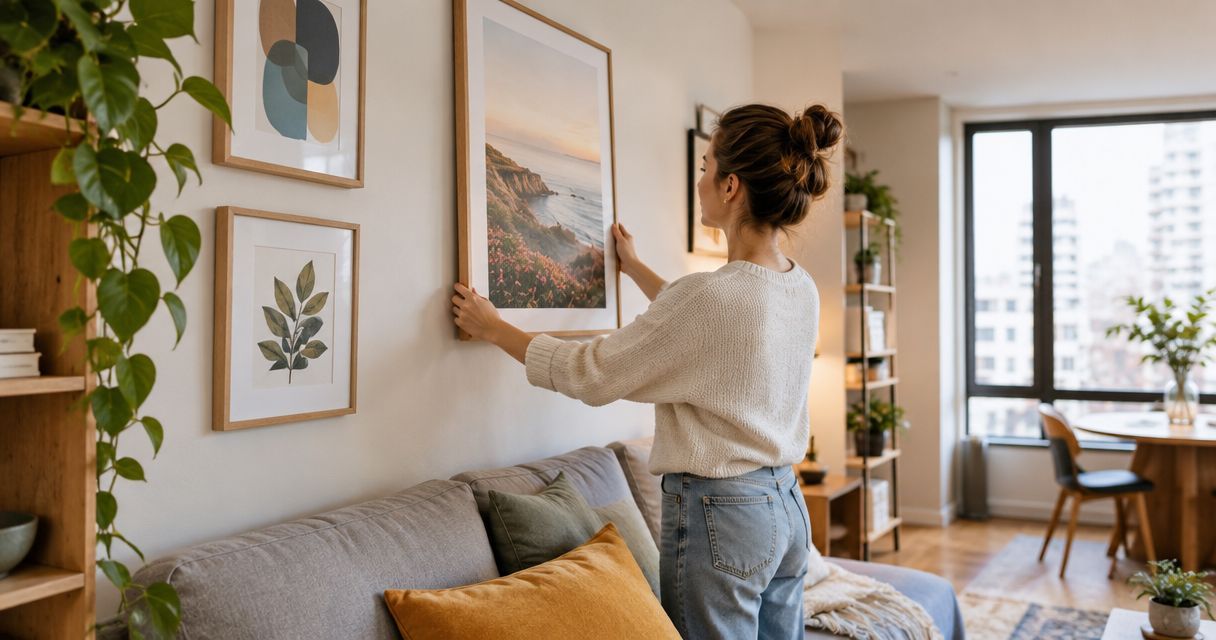
Best overall: a single landscape canvas sized to your furniture. Best for narrow walls: a portrait canvas. Best for a compact photo corner: a small square canvas. This 2026 guide helps you choose a personalised canvas that fits your flat, your favourite photograph and the way you use the room.
TL;DR
- Choose a personalised canvas by usable wall space, photo shape and viewing position—not apartment size alone.
- Pixaprints personalised canvas suits people turning their own photographs into personal wall art.
- Landscape canvases suit furniture-led displays; portrait canvases suit narrow walls; square canvases suit compact photo corners.
- Test a paper outline before ordering, and check the crop keeps faces clear of the edges.
A small flat does not automatically need tiny wall art. Start with the space you actually want to fill; the guide to choosing the right canvas print size for your wall covers that wider decision.
Why this matters
Your room’s floor area tells you little about the wall above your sofa or beside your desk. A compact living room can have an uninterrupted wall, while a larger bedroom can offer only a narrow strip between furniture.
Choose the canvas for its position, not for the label “small apartment”. That keeps the decision practical: what fits, what remains visible and which part of your photograph survives the crop.
For a 2026 refresh, start with a photo you genuinely want to see every day. A familiar beach, a favourite pet or an ordinary family moment gives the display its meaning; the dimensions should support that memory.
What makes the best personalised canvas for a small flat?
Use these criteria before choosing a format:
- Usable wall space: measure the clear area, excluding switches, shelving, door movement and anything you need to reach.
- Photo shape: match landscape, portrait or square framing to the composition rather than forcing a favourite image into an awkward crop.
- Viewing position: check the proposed display from the sofa, bed or doorway where you will usually see it.
- Furniture relationship: consider the canvas alongside the sofa, console or desk below it, not against an empty wall in isolation.
- Detail visibility: choose a size and layout that keeps the important subject recognisable from your normal viewing spot.
- Hanging practicality: check the wall, fixings and any tenancy restrictions before committing to a layout.
Best canvas size approaches at a glance
These are layout recommendations, not a catalogue of fixed dimensions. Use the current size choices when you order, then test the closest suitable outline on your wall.
| Rank and format | Best for | Standout strength | Key limitation |
|---|---|---|---|
| Single landscape canvas | Above a sofa or low console | Follows a horizontal furniture arrangement | Can require an awkward crop from a portrait photo |
| Portrait canvas | Narrow wall sections | Uses vertical space without spreading sideways | Poor fit for a wide group photograph |
| Small square canvas | A compact photo corner | Gives a centrally framed subject a defined space | Trims the sides of a wide photograph |
| Matched canvas pair | Keeping two related memories together | Gives each photograph its own frame | Needs space for both canvases and the gap |
| Wide landscape canvas | An uninterrupted feature wall | Preserves a broad scene when the crop matches | Needs careful wall and image checks |
1. Single landscape canvas: best above a sofa or console
A single landscape canvas is the best starting point when your display belongs above low, horizontal furniture. Choose its width by comparing a paper outline with the furniture beneath it, rather than selecting the largest rectangle that physically fits.
This format works naturally with photographs composed horizontally: a family walk, a holiday view or a couple pictured within a wider setting. Keep enough surrounding detail to tell the story without making the people disappear into the background.
Landscape canvas pros:
- Follows the direction of a sofa, console or low cabinet.
- Keeps a single photograph as the main focus.
- Avoids the spacing decisions of a multi-canvas arrangement.
Landscape canvas cons:
- A vertical photograph needs substantial cropping or a different layout.
- A very small version can lose its presence above broad furniture.
Best for: your main living-room photograph above a sofa or console.
Verdict: Buy a single landscape canvas when the wall, furniture and photograph all favour a horizontal shape.
2. Portrait canvas: best for narrow wall sections
A portrait canvas suits the vertical spaces that remain beside wardrobes, between windows or alongside a doorway. Measure the usable strip carefully, including anything that opens into it.
Choose a photograph with a clear vertical composition. A standing person, a seated pet or a tall architectural detail can fit without sacrificing the subject to a sideways crop.
Portrait canvas pros:
- Makes use of a narrow wall section.
- Suits photographs already taken vertically.
- Keeps the display contained beside other room features.
Portrait canvas cons:
- Wide family groups rarely fit without losing people or context.
- A tight passage requires particular care over placement and projection.
Best for: a narrow bedroom wall, entrance recess or slim space beside furniture.
Verdict: Buy a portrait canvas for a vertical space; skip it if the photograph needs its full width.
3. Small square canvas: best for a compact photo corner
A small square canvas is a useful starting point for a modest wall patch near a desk, reading chair or bedside table. It suits a photograph whose main subject remains complete within an equal-sided crop.
Square framing is especially straightforward when the original composition already places the subject centrally. Preview the whole image before deciding: ears, hands and a favourite background detail can sit closer to the edges than you remember.
Square canvas pros:
- Gives a compact display a simple, defined shape.
- Suits centrally composed portraits and pet photographs.
- Offers a clear alternative when neither a tall nor a wide layout fits.
Square canvas cons:
- Cropping a wide photograph removes detail from the sides.
- A small display is a poor choice for a photograph full of tiny faces.
Best for: a personal photo corner viewed from nearby.
Verdict: Buy a small square canvas for a clear central subject; skip it for a wide scene you want to keep intact.
4. Matched canvas pair: best for two related memories
A matched pair lets you display related photographs separately: a wedding portrait beside a candid moment, or a favourite place beside the people who shared it. Choose the photographs together before deciding on canvas dimensions.
Treat the pair as a single arrangement when you measure. The total footprint includes both canvases and the space between them, so two individually compact pieces still need a deliberate layout.
Matched canvas pair pros:
- Gives each photograph its own space.
- Keeps related memories together without combining them into a collage.
- Lets you compare the balance of both images before hanging.
Matched canvas pair cons:
- Requires more alignment decisions than a single canvas.
- Can feel crowded where shelves, lamps and other pictures already compete.
Best for: a clear wall where two connected photographs deserve equal attention.
Verdict: Buy a matched pair when both photographs matter equally; hold if you are adding a second image only to fill space.
5. Wide landscape canvas: best for an uninterrupted feature wall
A wide landscape canvas suits a broad scene and a wall with few interruptions. Think of a coastline, skyline or family photograph deliberately composed with space across the frame.
This is not the automatic choice for every small living room. Check that the photograph supports the wide crop, then view a full-size paper outline from every regularly used seat.
Wide landscape canvas pros:
- Gives a broad scene room to remain broad.
- Creates a single focal point rather than a collection of smaller pictures.
- Keeps a continuous photograph together on one canvas.
Wide landscape canvas cons:
- An ordinary rectangular photo can lose important detail in a much wider crop.
- Interruptions such as shelving or wall lights restrict placement.
Best for: a clear feature wall and a photograph with a genuinely wide composition.
Verdict: Buy a wide landscape canvas only when both the image and the uninterrupted wall justify it.
How to test the size before you order
Your most useful sizing tool is a paper outline. It lets you judge the actual footprint in your own room instead of imagining dimensions from a screen.
Measure the wall
Measure the clear width and height where the canvas will sit. Include nearby furniture and check doors, cupboard fronts and switches remain usable.
Make a template
Cut or join paper to match a size you are considering. For a pair, make both outlines and include the intended gap; do not judge either canvas alone.
Check the view
Position the template using a method suitable for your wall finish. Look from your usual seat and the doorway, then check whether the outline competes with lamps, shelves or other artwork.
Preview the crop
Compare the intended canvas shape with the original photograph. Keep faces and important details away from any area shown as wrapped or outside the front-facing image in the preview.
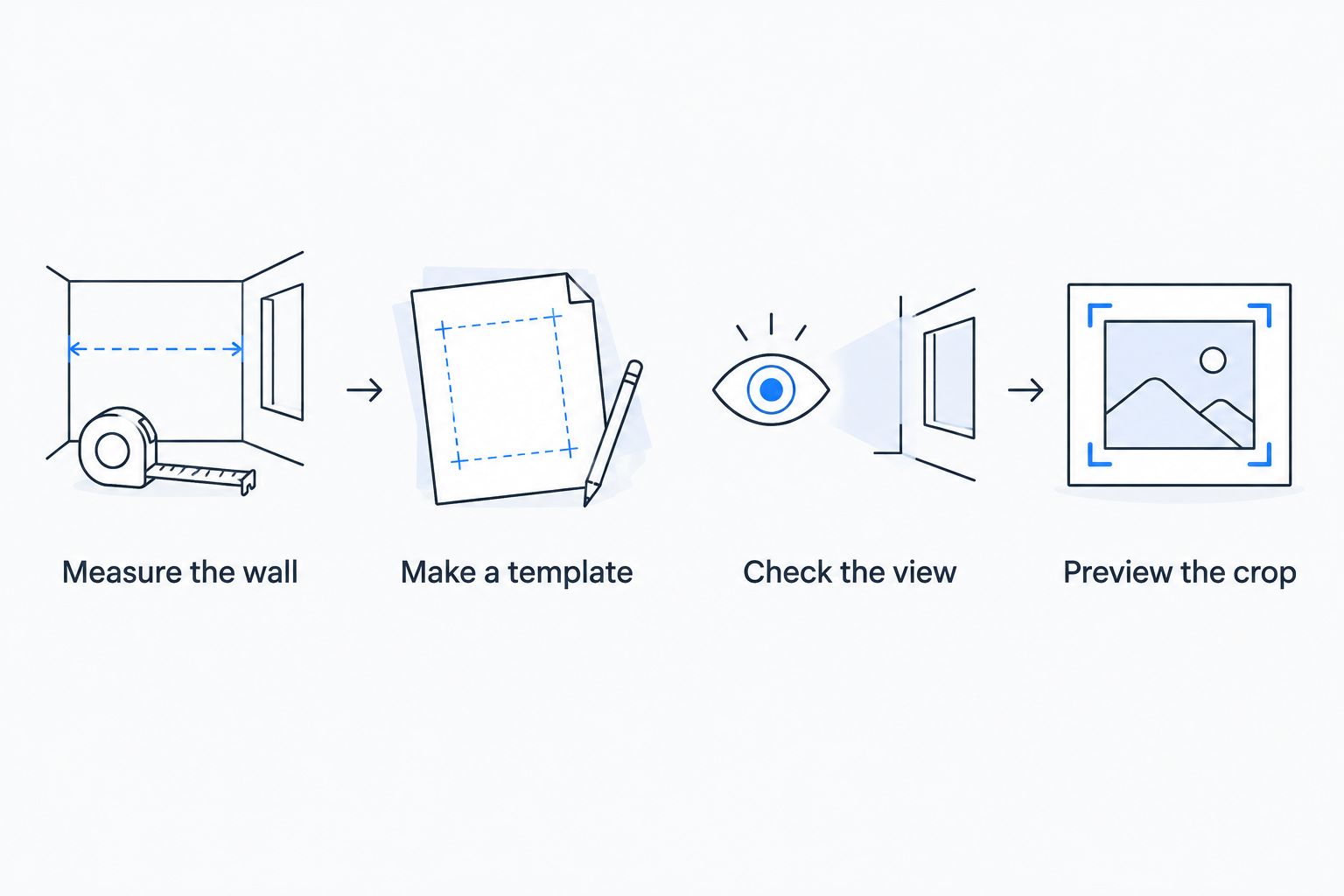
Test the wall footprint and the photograph crop before choosing your canvas.
For your 2026 project, keep a photograph of each paper layout on your phone. Compare those room views side by side before settling on a size; you are choosing an arrangement, not just a rectangle.
Choose a photograph that still works on canvas
Start with the original image file where possible, rather than a screenshot or a copy saved from a message. Open it at a larger view and inspect the important details, especially faces and anything already soft or blurred.
A smaller canvas does not repair an out-of-focus photograph. Equally, a favourite phone photograph does not need to be rejected simply because it came from a phone; judge the actual file and its intended crop.
For a Pixaprints personalised canvas, choose the memory first, then compare that photograph with the format you want. Uploading your own image makes the subject personal; careful framing keeps that subject central to the finished display.
A crowded group photograph needs a different decision from a close-up pet portrait. If you cannot recognise the people at your intended display size, choose a closer composition rather than squeezing the whole scene into a compact format.
How these recommendations are ranked
The 2026 ranking prioritises fit with usable wall space, compatibility with the photograph and straightforward placement. The single landscape canvas comes first because it gives readers planning a furniture-led display a clear starting point—not because every flat needs the same shape.
Portrait, square, paired and wide layouts each solve a different problem. The right format wins when it preserves your photograph and fits the wall you actually have.
Which personalised canvas should you choose?
Choose a single landscape canvas if you are undecided and planning a display above a sofa or console. Start with a portrait canvas for a narrow strip, or a small square for a close-viewed photo corner.
Pixaprints suits people who want to turn their own photographs into personal wall art. The final size decision belongs to your room: test the outline, inspect the crop and check the hanging requirements before ordering.
For 2026, make one confident display choice rather than filling every available patch. Leave the other walls alone until you have seen how your chosen photograph feels in the room.
FAQ
What's the best personalised canvas size for a small apartment?
The best personalised canvas size fits your usable wall area and preserves the important parts of your photograph. Start with a landscape format above horizontal furniture, a portrait format for a narrow wall or a square format for a compact photo corner.
Should a small flat always have small canvas prints?
No, a small flat does not automatically need small canvas prints. Judge the uninterrupted wall area and nearby furniture, then test the proposed dimensions with a paper template.
Is a square canvas better than a rectangular canvas?
A square canvas is better when your photograph works within an equal-sided crop and the wall suits that shape. A rectangular canvas is better when the photograph needs more horizontal or vertical space.
Can I use a phone photo for a personalised canvas?
You can use a phone photograph, but the individual image needs checking. Use the original file where possible, inspect the important details and review the intended crop before ordering.
Are two small canvases better than one larger canvas?
Two canvases are better when you want to give two related photographs separate, equal attention. A single canvas is simpler when one photograph tells the whole story; measure the total footprint before choosing a pair.
How do I stop faces being cropped on a canvas?
Check the preview and keep faces clear of the edges and any areas shown as wrapped. If the format removes an important person or detail, change the shape or choose another photograph.
Can I hang a canvas in a rented flat?
Check your tenancy terms and the wall before choosing a hanging method. Follow the requirements for the canvas, wall surface and fixings rather than assuming an adhesive product suits every installation.
One last thing
Test the photograph as carefully as the outline. Place a paper copy inside your proposed canvas footprint and look from your usual seat: the wall can accommodate a size while the subject still looks too small.
Keep the memory readable. A closer crop of a favourite moment often answers the problem more directly than changing the whole room around a busy photograph.