
Display Photo Prints in a Small Bedroom (2026 Guide)
· 9 min read
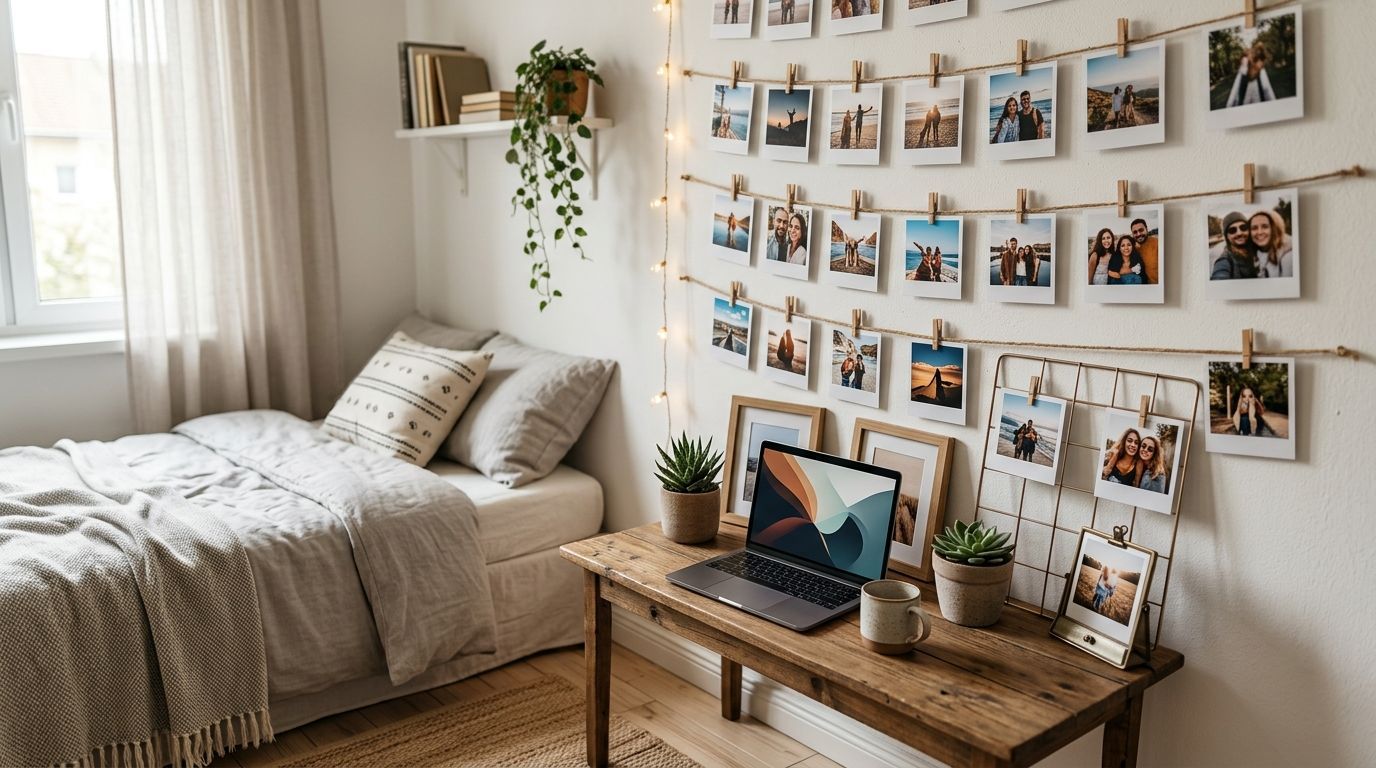
A small bedroom doesn't need a big wall to show off your favourite memories — the trick is picking display formats that don't eat floor space or crowd the room visually. The fastest wins in 2026 are one oversized canvas print as a single focal point, acrylic photo blocks on a windowsill or shelf, and a tight three-photo cluster above the headboard instead of a sprawling gallery wall. Skip anything that needs deep frames or glass — in a room under 10 square metres, depth and glare are the real enemies, not photo count.
TL;DR
- One large canvas print above the headboard beats a 12-frame gallery wall for small bedrooms in 2026.
- Acrylic photo blocks and ledges display photos without using any wall space at all.
- Keep gallery clusters to 3-5 photos max when the wall is under 2 metres wide.
- Matching frame or canvas sizes to the actual wall width stops a small room looking cluttered.
- Glass-free formats like canvas prints avoid glare problems near bedroom lamps and windows.
Why this matters
A cramped bedroom amplifies clutter faster than any other room in the house. Ten small frames that would look fine spaced out in a hallway turn into visual noise the moment you compress them onto a 1.5-metre wall, and glass-fronted frames catch every bedside lamp reflection at night. Getting the format and scale right the first time saves you from redoing a wall six months later — and it's the difference between a room that feels curated and one that feels like a storage unit for photos.
How to display photo prints in a small bedroom
The format you pick matters more than the number of photos. Here's how the main options stack up for a compact room:
| Display option | Wall space needed | Best for |
|---|---|---|
| Single large canvas print | One focal wall | A statement piece above the bed |
| Acrylic photo blocks | None (shelf/desk) | Windowsills, dressers, floating shelves |
| Tight 3-5 photo cluster | Under 1.5 metres wide | Above headboards, alcoves |
| Photo ledges with propped prints | Minimal, shallow depth | Renters, frequent photo swaps |
| Multi-panel split canvas | 1.5-2 metres wide | Wider walls, feature moments |
Verdict: for most small UK bedrooms, one large canvas print for a kids' bedroom-style single-panel piece above the headboard delivers the biggest visual impact for the least wall space used.
Canvas prints: turn one wall into a feature
A single canvas print sized to roughly two-thirds the width of your headboard does more for a small bedroom than any collection of small frames ever will. It gives the eye one thing to land on instead of scattering attention across a dozen frames, and it has no glass to catch light from a bedside lamp or window at 7am.
Canvas also solves the depth problem. Frames project 2-4cm off the wall and eat visual space in a way that flat-hung canvas doesn't, which matters when your bed frame is already a metre from the opposite wall. If the room doubles as a child's space, the same single-focal-wall logic applies — a Pixa Prints canvas sized to the wall, not the photo, is the starting point either way.
Acrylic photo blocks: display without using wall space
When wall space is genuinely zero — think box rooms, or a bed pushed against every free wall — skip the wall entirely. Acrylic photo blocks for desk displays sit on a windowsill, chest of drawers, or floating shelf and take up a footprint smaller than a paperback book.
They work particularly well in rented rooms where you can't drill for frame hooks, and because they're freestanding you can rotate them seasonally without patching wall holes. Verdict: Buy for renters or box-room layouts; Skip if you already have a clear focal wall, since a canvas will read as more intentional.
Photo ledges and shelf styling
A single narrow ledge, 60-90cm long, mounted at eye level from a seated position on the bed, lets you prop 4-6 unframed or lightly framed prints and swap them out whenever you like. This is the lowest-commitment option on this list — no hanging measurements, no wall damage beyond two screws, and no need to match frame styles.
The trade-off is that ledges read as more casual than a mounted canvas or a fixed gallery cluster. Fine for a teenager's room or a guest bedroom, less fine if you want the wall to look finished rather than in-progress. Verdict: Buy for flexibility and frequent photo rotation; Hold if you want a polished, permanent look.
Gallery walls in tight spaces: sizing rules
Small bedrooms punish oversized gallery walls fast. The fix is discipline: cap the cluster at 3-5 photos, keep every print within one or two sizes of each other, and leave at least 5cm of breathing room between frames so the group reads as one composition rather than clutter. Choosing the right canvas print size for your wall before you order anything prevents the most common mistake — buying prints that are too small for the wall and end up looking scattered rather than deliberate.
Measure the wall first, then work backwards to print sizes — not the other way round. A wall 1.2 metres wide comfortably holds three 20x30cm prints with even spacing; trying to squeeze five prints into that same space usually looks cramped by 2026 gallery-wall standards, where negative space is treated as part of the design.
Why display choices vary in small bedrooms
A handful of practical factors decide which format actually works in your room, not just which one looks best in a photo online:
- Wall width available — anything under 1.2 metres rules out multi-panel split canvases
- Bed position — a bed pushed against the display wall limits how low prints can hang
- Ceiling height — low ceilings favour horizontal clusters over tall vertical arrangements
- Natural and lamp light — glass-fronted frames near a window or bedside lamp create glare; canvas and acrylic blocks don't
- Renting vs owning — rented rooms favour freestanding acrylic blocks and ledges over drilled frame arrangements
- How often you want to change the display — ledges and blocks swap out in seconds; a mounted canvas is a longer-term commitment
What's the best way to display photos without frames in a small bedroom?
Acrylic photo blocks and canvas prints are the two best frameless options for a small bedroom, since neither needs glass or a mount that adds depth to the wall. Canvas works for a fixed focal wall above the bed; acrylic blocks work anywhere with a flat surface and zero spare wall.
How many photos should go on a small bedroom gallery wall?
Three to five photos is the practical ceiling for a small bedroom gallery wall, especially on anything under 1.5 metres wide. Beyond that count, spacing gets tight and the wall starts to look busy rather than curated.
Do photo ledges work better than shelves in small rooms?
Photo ledges work better than deep shelves in small rooms because they're shallower — typically 6-10cm deep versus 20cm-plus for a standard shelf — so they don't intrude into the room's limited floor clearance. They're also easier to restyle than a fixed shelf arrangement.
FAQ
What size canvas print works best in a small bedroom?
A canvas roughly two-thirds the width of the headboard or focal wall works best in a small bedroom, since a print any wider crowds the edges and any smaller gets lost. Measure the wall before ordering rather than guessing from the photo alone.
Is a gallery wall too much for a small bedroom?
A gallery wall works in a small bedroom as long as it's capped at 3-5 photos with even spacing, but anything larger tends to look cluttered on walls under 1.5 metres wide. Scale the cluster to the wall, not to how many photos you own.
Can I display photos in a small bedroom without drilling holes?
Yes, freestanding acrylic photo blocks and photo ledges display prints without permanent wall fixings beyond a couple of small screws. Both options suit rented rooms where drilling for full frame arrangements isn't an option.
Where should I hang photos in a small bedroom?
Above the headboard is the strongest spot for photo display in a small bedroom, since it's the wall most people already look at and it doesn't compete with wardrobe or window space. A single canvas or a tight 3-photo cluster both work well there.
Do framed photos or canvas prints suit small bedrooms better?
Canvas prints suit small bedrooms better than framed photos because they sit flatter against the wall and have no glass to catch glare from bedside lamps. Frames also add visible depth that reads as clutter in a compact room.
How do I avoid glare on bedroom photo displays?
Choosing canvas prints or acrylic blocks over glass-fronted frames avoids glare on bedroom photo displays, since neither has a reflective surface. Position any remaining glass-fronted pieces away from direct lamp or window light if you keep them.
What's a good alternative to a gallery wall in a tiny bedroom?
A single large canvas print or a set of acrylic photo blocks on a shelf are the best alternatives to a gallery wall in a tiny bedroom. Both give a strong visual impact without needing multiple frames spaced across the wall.
One last thing
The detail most people skip is measuring the viewing distance, not just the wall. In a small bedroom you're usually only 1-2 metres from the display when lying in bed, which means smaller, more detailed prints actually hold up better up close than they would across a living room — a multi-photo collage or a tighter print size reads clearly at that range in a way it wouldn't from across a bigger room. Measure from where your head actually rests before you settle on print size.