
Best photo collage canvas prints for family reunions 2026
· 12 min read
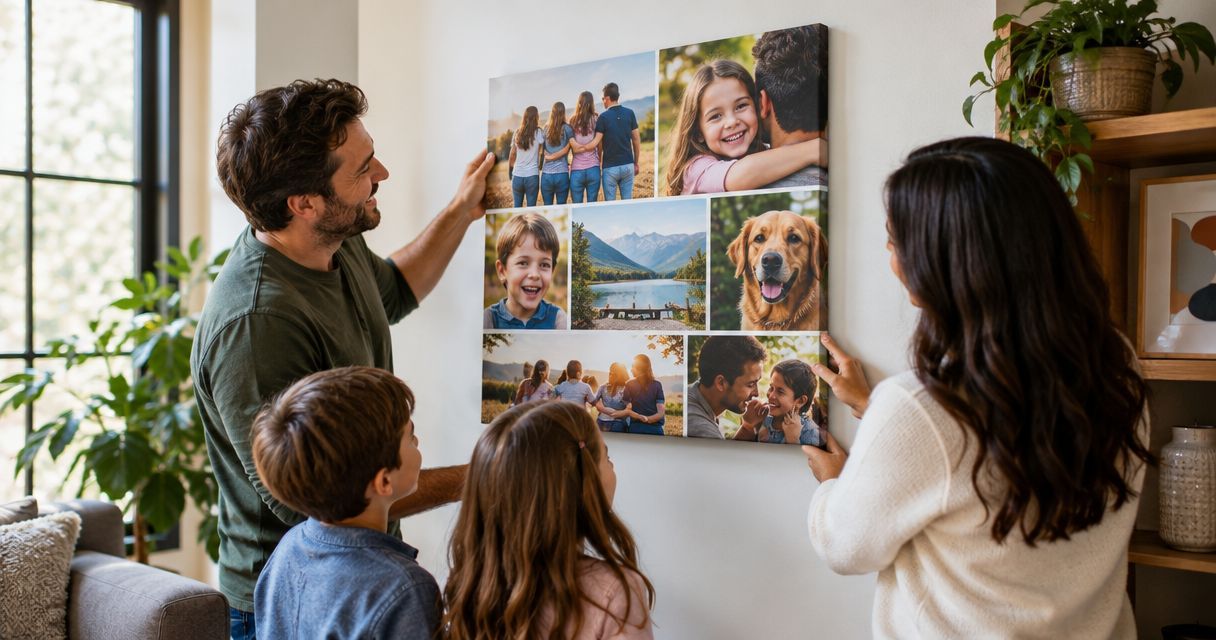
Best overall: a hero-photo collage. Best for equal family representation: an even grid. Best for a small photo selection: a simple triptych. These photo collage canvas prints ideas help you choose a family reunion layout for 2026 without squeezing every memory onto one canvas.
TL;DR
- Choose a hero-photo layout for photo collage canvas prints with a clear family reunion centrepiece.
- Pick an even grid when every household needs equal space in your family wall art.
- Pixaprints creates personalised canvas prints from customers’ own photographs.
- Treat these recommendations as design approaches, not a catalogue of confirmed collage templates.
Why this matters
A reunion brings together posed portraits, spontaneous laughs and photographs shared by relatives. They deserve a place on your wall, but they do not all need the same amount of space.
Choose the layout around the photographs you love, rather than filling a template with whatever is left. For help matching portrait and landscape pictures, see this guide to choosing the right canvas collage layout.
Pixaprints is best suited to families who want to turn their own reunion photographs into personalised canvas prints. The recommendations below rank design approaches, not suppliers or confirmed product templates; check the current design options before preparing your final artwork.
What makes the best photo collage canvas prints?
Use these criteria to choose your 2026 reunion keepsake:
- Recognisable faces: Give group photographs enough room for people to remain the subject, rather than becoming tiny details.
- Fair representation: Check the selection by household or family branch before choosing the arrangement.
- Comfortable cropping: Keep faces and important details away from image boundaries and any areas shown as wrapped edges.
- A clear focal point: Decide whether the canvas celebrates the whole gathering, its history or the little moments between portraits.
- Consistent presentation: Use similar spacing and considered colour choices so unrelated photographs feel like one collection.
- A suitable viewing position: Judge the design for its intended wall, not only for how it looks enlarged on your screen.
Family reunion collage layouts at a glance
| Rank and layout | Best for | Standout feature | Key limitation |
|---|---|---|---|
| 1. Hero-photo collage | One defining reunion portrait | A large central image supported by smaller memories | The main photograph receives more attention |
| 2. Even grid | Equal household representation | Matching image areas create a balanced display | Mixed image shapes need careful cropping |
| 3. Timeline collage | Showing the family across time | A clear sequence connects earlier memories with the reunion | Different source photographs need extra preparation |
| 4. Generations collage | Celebrating grandparents and descendants | Grouping makes family relationships the theme | Uneven family branches complicate the balance |
| 5. Candid triptych | A small, carefully chosen collection | Three photographs tell a focused story | Leaves little room for a large guest list |
1. Hero-photo collage: best for one defining reunion portrait
A hero-photo collage gives your strongest group photograph the largest space. Smaller pictures add the hugs, games and conversations that explain what the day felt like.
This is the default choice when you have a group portrait you genuinely love. For a 2026 reunion canvas, let that portrait establish the occasion rather than asking several equally busy photographs to compete.
Build around the main photograph
Start with the complete group image and inspect its crop. Then add supporting photographs that contribute something different: a shared meal, cousins playing or a quiet moment with the host.
Keep the arrangement simple. If the main photograph already contains a crowded group, avoid surrounding it with more distant group shots; closer portraits offer a useful change of scale.
Hero-photo collage pros:
- Gives the reunion a clear visual centre.
- Combines a formal portrait with spontaneous memories.
- Lets you give your strongest original image the most space.
Hero-photo collage cons:
- A weak main photograph weakens the whole design.
- Smaller supporting pictures receive less attention.
Best for: Families with one standout group portrait and a varied supporting selection.
Verdict: Buy into this layout if your main photograph deserves the spotlight; skip it if equal image space matters more.
2. Even grid: best for equal family representation
An even grid gives each photograph a matching area. It is a practical choice when different households contribute pictures and you want the final canvas to feel balanced.
For example, sketch a grid with 2 rows and 3 columns to plan six photo slots. That is a design exercise, not a stated Pixaprints template specification; choose the final arrangement from the options actually offered.
Make equal space feel fair
Choose pictures with reasonably similar subject scale. A close-up portrait and a distant group photograph occupy the same area in a grid, but the people in them will not appear equally prominent.
Agree what each slot represents before you start: a household, a family branch or a particular moment. Equal-sized boxes cannot solve an uneven selection on their own.
Even grid pros:
- Gives each selected photograph equal space.
- Makes missing households easier to spot during review.
- Creates a straightforward structure for a shared family gift.
Even grid cons:
- Portrait and landscape originals need different crops.
- Similar spacing does not guarantee similar face sizes.
Best for: Organisers who want a balanced record of the people attending.
Verdict: Buy into an even grid for equal representation; skip it when one wide group photograph needs priority.
3. Timeline collage: best for connecting past and present
A timeline collage places earlier family photographs alongside pictures from the reunion. Its purpose is to show continuity: familiar faces, changing generations and places that still mean something.
For a 2026 gathering, you might pair an earlier family portrait with a newly recreated version. Use only dates you can confirm, and leave uncertain dates out rather than turning a guess into a permanent caption.
Prepare older pictures first
Work from scans or original digital files rather than photographs of photographs wherever possible. Check faces, scratches and fading before committing an older picture to a prominent position.
Keep the sequence understandable without lots of text. This guide to preserving and reprinting treasured family photographs is a useful next step when your collection includes ageing originals.
Timeline collage pros:
- Gives older photographs a meaningful place in the reunion story.
- Connects relatives who appear across different life stages.
- Suits recreated portraits and recurring family traditions.
Timeline collage cons:
- Older source images need individual quality checks.
- Mixed colour, monochrome and faded pictures need careful presentation.
Best for: Families celebrating their shared history rather than only the latest event.
Verdict: Buy into a timeline when the photographs tell a clear sequence; wait if the originals still need attention.
4. Generations collage: best for grandparents and descendants
A generations collage groups photographs by relationships rather than by when they were taken. It can centre grandparents, bring siblings together or show younger relatives alongside the people who helped raise them.
Choose this approach for a grandparent’s keepsake when relationships matter more than documenting every activity. Keep the arrangement welcoming, especially where a rigid family-tree format would leave important people out.
Agree the groupings together
Ask the recipient or another relative to check your selection. Include partners, step-relatives and other loved ones according to how your family actually describes itself, not an assumed hierarchy.
You do not need names and connecting lines to communicate closeness. Photographs of people together often tell that story more naturally than a complicated diagram.
Generations collage pros:
- Makes relationships the focus of the gift.
- Gives grandparents and younger relatives a shared place.
- Works with photographs gathered beyond the reunion itself.
Generations collage cons:
- Unequal branch sizes make visual balance harder.
- Grouping decisions need thoughtful agreement.
Best for: A family keepsake built around grandparents or another central relative.
Verdict: Buy into this layout when the groupings feel natural; skip a family-tree approach that makes anyone feel excluded.
5. Candid triptych: best for a small, strong selection
A candid triptych uses 3 photographs within one composition. Think of it as a short story: arriving, spending time together and saying goodbye, or a portrait paired with two spontaneous moments.
Here, triptych means a three-image design on one canvas, not a confirmed multi-panel product. It is the strongest option when you have a few meaningful pictures and no reason to add more.
Find a thread between the pictures
Look for shared people, colours or activities. Three unrelated favourites can feel like leftovers; three photographs of the same cousins baking, laughing and sharing the result feel intentional.
Do not make all the crops identical by force. Choose originals that already suit a similar shape, then adjust each crop around the people rather than the background.
Candid triptych pros:
- Gives each selected photograph a clear role.
- Makes the choice manageable when your collection is small.
- Keeps attention on expressions and interactions.
Candid triptych cons:
- Cannot represent a large guest list individually.
- Needs a convincing connection between the chosen photographs.
Best for: A host gift or intimate keepsake focused on a particular relationship.
Verdict: Buy into a candid triptych for a focused story; skip it when including every household is essential.
How we ranked these layout ideas
The order follows the criteria above: recognisable faces, representation, cropping, focus, consistency and viewing position. A hero-photo collage comes first because it gives a strong group portrait a clear role while leaving room for smaller memories.
These are editorial design recommendations for 2026, not results from print testing or a comparison of manufacturing quality. Choose a lower-ranked layout whenever its purpose matches your photographs better.
Prepare your photographs before ordering
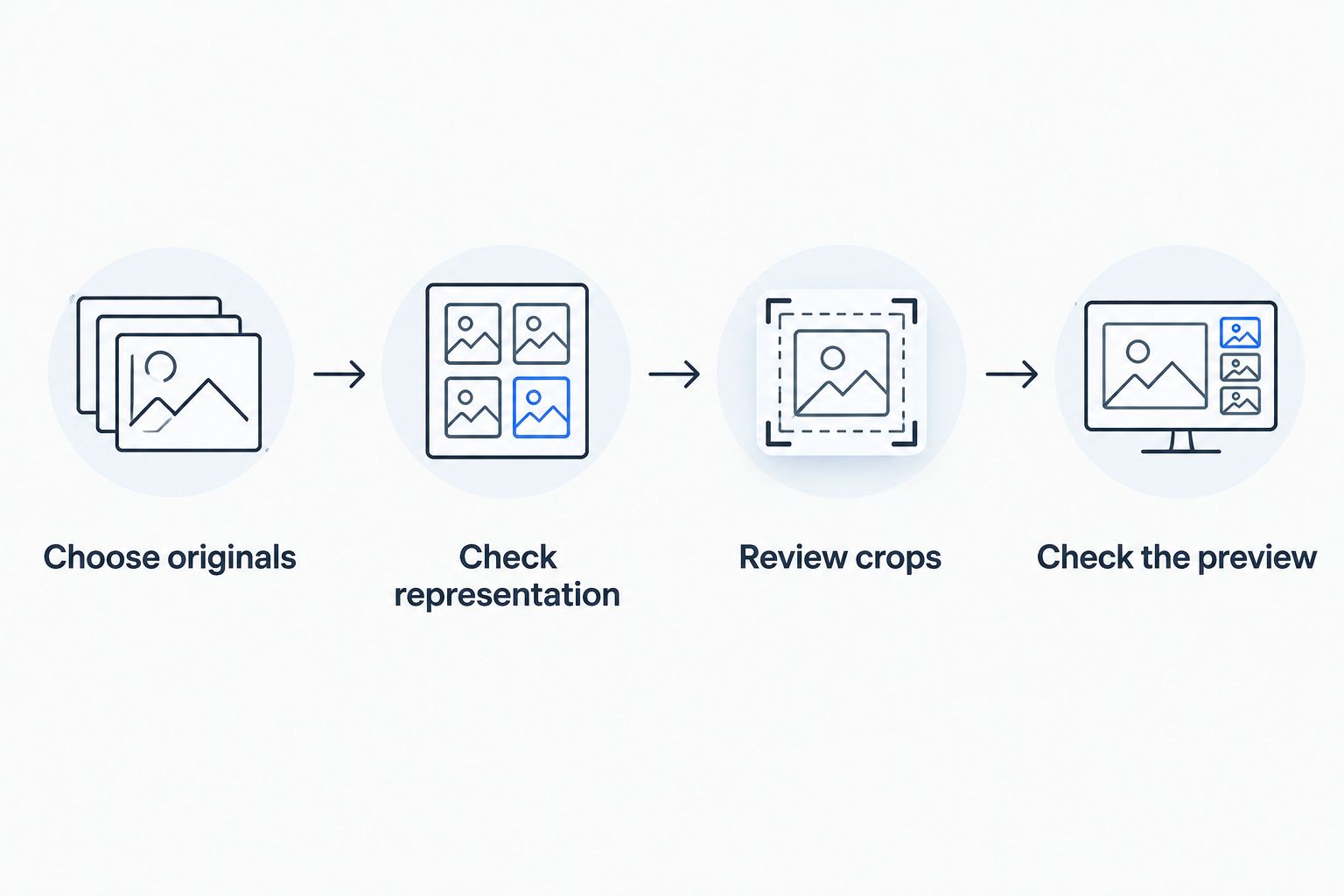
A good layout cannot rescue the wrong crop. Before using Pixaprints for your family reunion canvas prints, prepare the selection as a collection rather than checking each photograph in isolation.
- Choose originals. Ask relatives for original files rather than screenshots or copies saved from a shared message.
- Check representation. Write a household list and compare it with the people visible in your selection.
- Review crops. Inspect faces, hands and anyone standing close to the edge of the photograph.
- Check the preview. Review image placement, spelling and any displayed trim or wrap areas before approving the design.
Check who is included before spending time refining individual crops.
Review the complete composition at a smaller on-screen size as well as close up. This is not a print-quality test, but it helps you notice whether the main image still stands out and whether the design feels crowded.
Which collage layout should you choose?
Choose the hero-photo collage if you are undecided and have a strong group portrait. Move to an even grid when equal representation is the priority, or a candid triptych when your strongest story needs only a few pictures.
For your 2026 reunion keepsake, settle the photograph selection before choosing the decorative details. Pixaprints offers personalised canvas prints; check the current design choices against your preferred layout rather than assuming every arrangement described here is a ready-made option.
FAQ
What's the best layout for family reunion photo collage canvas prints?
A hero-photo collage is the best default when you have a strong group portrait. Give that photograph the largest area and use smaller pictures to show the moments around it.
How many photos should I put on a reunion canvas?
Choose the number around recognisable faces and the intended display position, not the largest number of slots. A three-photo composition suits a focused story, while a grid suits a broader selection.
Is an even grid better than one large family photo?
An even grid is better when equal space for several photographs matters most. One large family photograph is better when the full group portrait is the main memory you want to display.
Can I mix old and new family photographs on one canvas?
Yes, a timeline collage can connect older family photographs with recent reunion pictures. Check the quality of older files and confirm any dates before adding captions.
Can I use phone photographs for a family reunion collage?
Yes, phone photographs can be used for a collage when the files suit the intended print. Use original files and inspect the available preview rather than assuming a screenshot will reproduce equally well.
Should every family member appear on the canvas?
Include everyone when the canvas is intended as a complete record of the reunion. For a personal host gift or grandparent’s keepsake, agree a narrower theme before selecting photographs.
Are these collage layouts confirmed Pixaprints templates?
No, these are design approaches rather than a list of confirmed Pixaprints templates. Check the current canvas design options before preparing artwork around a particular arrangement.
One last thing
Check the people at the edges before checking the decorations. A relative standing at the side of a group photograph is easy to overlook when you are concentrating on the central faces; inspect the complete crop before approving your keepsake.