
Canvas prints for home gyms
· 13 min read
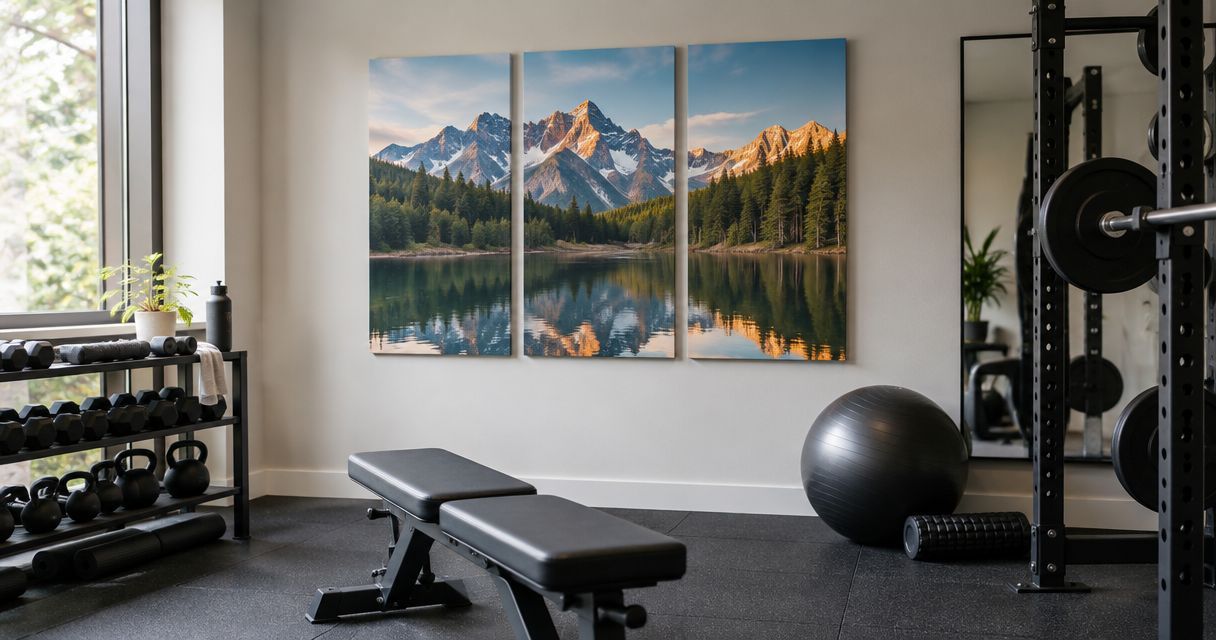
Home-gym canvas prints are personalised photo wall art chosen to make your training space feel like your own without getting in the way of exercise. This guide to canvas prints for home gym walls covers photo selection, layout and placement, with particular attention to mirrors, moving equipment and rooms that serve more than one purpose.
TL;DR
- Pixaprints canvas prints suit home-gym owners who want personal photo wall art rather than generic fitness slogans.
- Choose canvas prints for home gym walls around your equipment layout, not the other way round.
- Use original photo files and check the crop before turning fitness memories into personalised wall art.
- Keep canvas away from equipment contact, damp walls and areas exposed to cleaning sprays.
Why canvas prints matter for home-gym owners
A home gym is a working space first. Your wall art needs to fit around the place you lift, stretch or cycle, rather than compete with it. A photograph of a favourite walking route or a finish-line moment gives the room a personal connection without adding another object to the floor.
Choose artwork that belongs to your training space, not artwork that dictates its layout. A clear wall beside your exercise area is a better starting point than the gap directly above equipment simply because it looks empty.
For a 2026 home-gym refresh, begin with the room you actually use: a spare bedroom, garage corner or dedicated exercise room. Each has different obstacles. Doors, storage shelves, mirrors and overhead movements all affect where a print belongs.
Before choosing a format, use this guide to choosing the right canvas print size for your wall. Measure the usable wall area rather than treating the whole wall as available.
How to choose canvas prints for your home gym
1. Map your exercise space before choosing artwork
Start with a tape measure, paper and the equipment already in your room. Sketch the wall you want to decorate, then mark anything that interrupts it: sockets, switches, radiators, shelves, door swings and mirrors. You do not need a room-design app to spot a poor position.
Next, move through your normal exercises without holding weights near a proposed print position. Check standing, seated and floor-level viewpoints. A wall that looks clear while you are standing at the doorway can sit directly beside an overhead movement or a machine's moving parts.
For your 2026 layout, settle on 1 display wall before planning the rest of the room. This keeps the decision manageable and gives you a clear place to test your ideas. Leave exercise space unchanged; the artwork fits around it.
- Measure the uninterrupted wall width and height in centimetres.
- Mark the full opening of nearby doors and cupboards.
- Identify equipment that moves towards the wall during use.
- Keep mirrors available wherever you use them to check movement.
- Reject positions beside damp patches or frequent splashes.
2. Choose a photograph that means something to you
Open your existing photo library before searching for new artwork. The strongest starting point is a picture you already enjoy: a coastal run, a hillside walk, a cycling trip or an achievement shared with someone important. You do not need a dramatic sporting photograph to make the room personal.
Shortlist 3 photos, each with a different purpose. One might recall an achievement, another a favourite place, and another the people who support you. View them separately against a plain background so that the surrounding photo library does not distract from the choice.
Pick the image you want to live with, not the image that looks most like an advert for a gym. A personal photograph can mark where you started without turning the wall into a demand to perform. In a shared room, include the other person's preferences before choosing.
- Choose an image with a clear main subject.
- Remove candidates you only like because of their caption.
- Check whether the picture suits both exercise and everyday room use.
- Ask anyone pictured before displaying a private or sensitive image.
- Keep one alternative in case the first crop does not work.
3. Prepare the original photo and check its crop
Use your phone's photo editor or another familiar editing tool first. Straighten the horizon, make modest brightness adjustments and inspect the main subject. Keep an untouched copy so you can return to the original if an edit looks too harsh.
Pixaprints canvas prints are best for home-gym owners who want wall art made from their own photos. The online printing service lets you upload personal images to create custom canvas prints. It provides the printing route once you have chosen the photograph; you still need to supply an image that works for the intended display.
For a 2026 order, retrieve the original file from the device or account that holds it rather than taking a screenshot of an old post. A larger file is not automatically a better photograph: missed focus, motion blur and an awkward crop still need attention.
Inspect how the selected format treats the edges. Do not assume that everything visible in your original photograph will remain on the front of the finished canvas.
- Use the original photo rather than a messaging-app copy where possible.
- Inspect faces, lettering and distant details at a larger viewing size.
- Compare portrait and landscape crops before committing.
- Keep important subjects away from the outer edges.
- Review the available preview and any image-quality warnings.
4. Test the layout with paper templates
Cut paper or card to the dimensions you are considering, or join sheets to create a full-size outline. Attach the template temporarily using a method suitable for your wall finish. This shows you the physical footprint without buying artwork to discover that it overwhelms the room.
Compare 2 layouts: a single focal print and a small coordinated arrangement. Stand at your usual exercise positions, not just in front of the wall. A grouping that looks balanced from the doorway might feel scattered from a bench or floor mat.
Keep the photographs connected by subject, colour or mood rather than forcing every image into the same edit. For example, a landscape and a finish-line photo can belong together because they tell the same personal story. They do not need matching filters.
- Outline the proposed print dimensions on paper.
- Check the arrangement from standing, seated and floor-level positions.
- Leave switches, sockets and ventilation openings accessible.
- Photograph each trial layout from the same viewpoint.
- Choose the arrangement that stays clear of your exercise area.
A simple sequence keeps the decisions in the right order: Map the wall, Choose photos, Check crop, then Test layout. Decide where the artwork belongs before spending time on finishing touches.
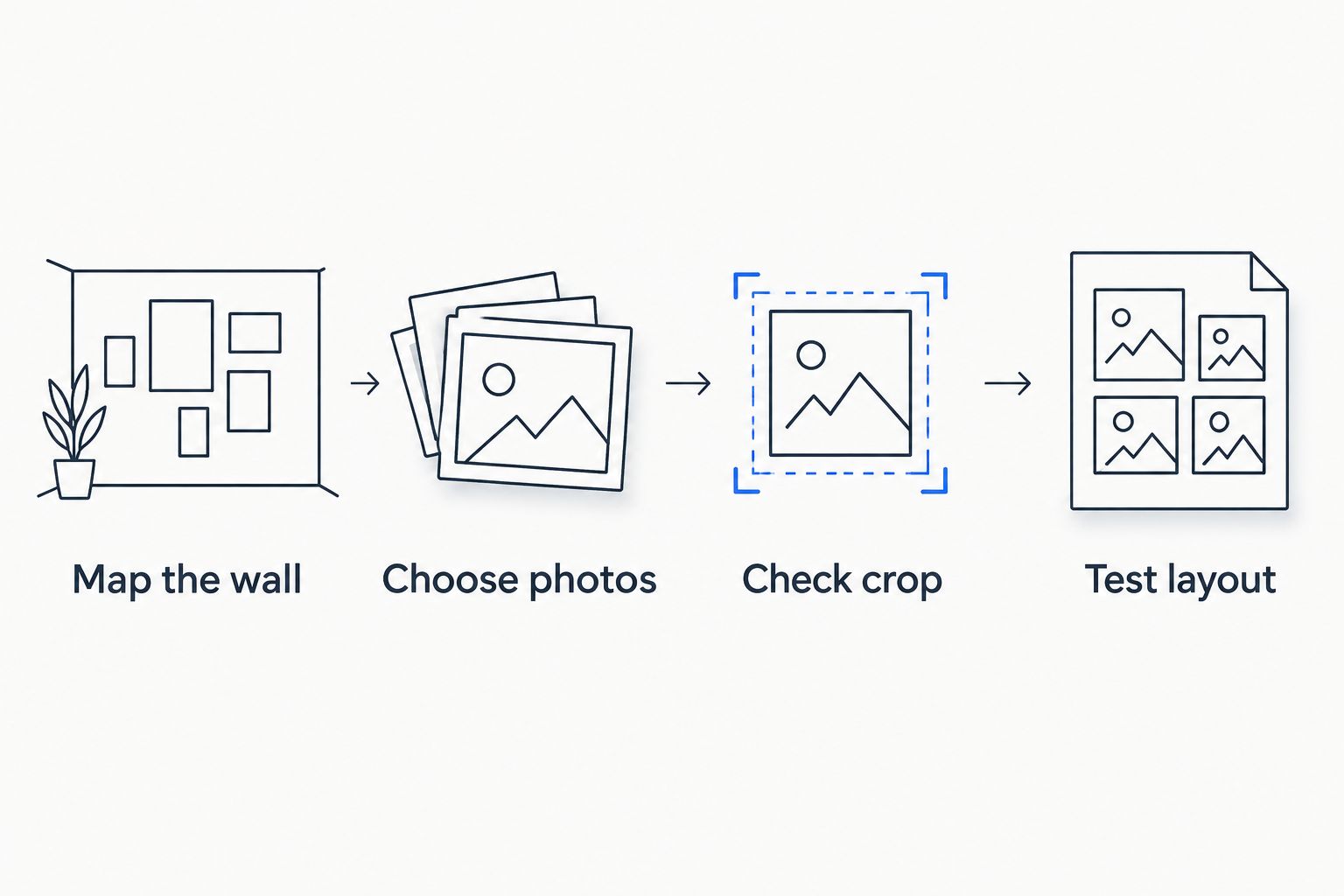
Test the position and crop before committing to your wall arrangement.
5. Match the picture to the way you use the room
Think about what you want to see during a session. A photograph from a favourite route suits a room used for indoor cycling or running. A quieter landscape suits a corner where you stretch, while a personal achievement photograph gives a dedicated training area a clear connection to your own experience.
These are design choices, not promises about motivation or exercise performance. A canvas personalises the room; it does not replace a training plan. Choose the image because you enjoy it, rather than expecting the picture to change how often you exercise.
If your 2026 home gym also serves as a guest room or home office, use that second purpose as a filter. A favourite outdoor photograph can feel at home in both settings. Private progress photographs deserve a more deliberate decision about who will see them.
- Match the picture's mood to the room's main use.
- Consider how the artwork appears in a nearby mirror.
- Keep private images out of shared-room displays unless everyone agrees.
- Avoid filling every available wall with competing subjects.
- Choose colours you enjoy beside the room's existing furnishings.
In a small exercise corner, a personal landscape on an unobstructed wall creates a focal point without adding floor clutter. Keep the wall art separate from the mirror and the equipment's movement area.
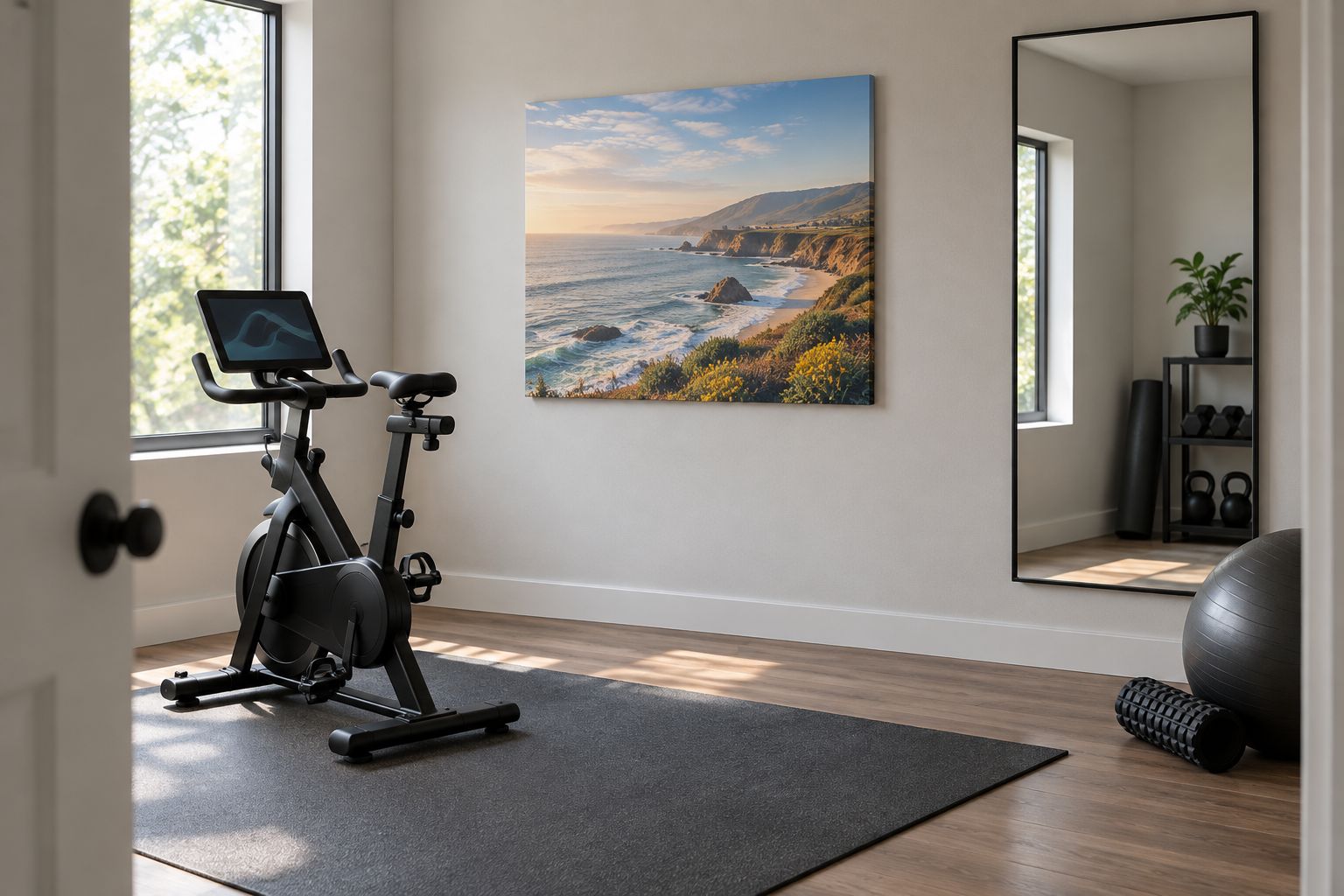
Use a clear side wall rather than squeezing artwork into the equipment area.
6. Plan mounting and care before ordering
Check the wall itself before making your final choice. The suitable fixing depends on the wall construction, the finished print's weight and the hanging instructions supplied with it. Do not choose a fixing solely because you already have it in a drawer.
A garage or converted outbuilding needs particular attention to its actual condition. Look for condensation and damp marks, and keep artwork away from areas exposed to splashes. Do not treat a canvas as waterproof or washable unless its care information explicitly says so.
Make a final pass through your normal movements with the paper template still in place. Include getting onto and off equipment, reaching for stored items and opening doors. Installation should preserve all of those everyday actions.
- Follow the supplied hanging and care instructions.
- Match fixings to the wall type and finished print weight.
- Avoid drilling until you have checked for concealed services.
- Keep cleaning sprays away from the canvas surface.
- Recheck the position after moving equipment or storage.
Compare home-gym wall-art options
A personal photo canvas suits a fixed focal wall; an unframed poster suits a layout you expect to change. Choose by the way you use the room, not simply by which picture looks most striking on a screen.
| Option | Best for | Main advantage | Key limitation |
|---|---|---|---|
| Pixaprints personal photo canvas | Home-gym owners displaying their own memories | Turns an uploaded personal photograph into custom canvas wall art | You need a suitable photo and must check its crop |
| Coordinated separate photo canvases | Owners linking several places or achievements | Gives each photograph its own space | Requires more wall area and careful alignment |
| Framed photo print | Shared rooms where you want to coordinate with existing frames | Lets you choose a frame that suits the room | Frame and glazing choices need attention near exercise equipment |
| Unframed poster | Exercise corners with a changing layout | A straightforward format for switching the displayed image | Exposed paper edges need protection from handling and splashes |
| No wall art | Rooms with limited clear wall space | Keeps the exercise area visually and physically uncluttered | Does not add a personal photographic focal point |
Do not select a multi-print arrangement merely to fill a large wall. Separate images need enough room to read as a group, and each needs a suitable position. A single photograph with a clear subject is the simpler choice when equipment already makes the room visually busy.
Common mistakes home-gym owners make
Filling the gap above equipment without testing movement
An empty patch above a rack or bench is not automatically a suitable display position. Check how you reach, lift and move equipment before using it. Keep movement space first and decorate what remains.
Choosing a slogan instead of a photograph you enjoy
A motivational phrase can feel right when you are planning a room but less welcome on an ordinary day. If you prefer a personal photograph, there is no need to add text. Choose a memory that matters without asking it to deliver a daily instruction.
Enlarging a social-media screenshot
A screenshot includes only the image information captured on the screen, not necessarily the detail in the original photograph. Find the source file before preparing a canvas. If the source is blurred, choose another image rather than relying on heavy editing to rescue it.
Overlooking mirrors and shared-room privacy
A mirror changes what appears in your field of view, including artwork on the opposite wall. Test the position from your actual exercise spot. In a shared room, avoid displaying personal progress photographs unless you are comfortable with other people seeing them.
Treating a garage wall like a living-room wall
Assess the space rather than its name. Damp marks, condensation and splashes need attention before you hang artwork. Move the display to a dry, suitable wall instead of assuming a canvas will tolerate the conditions.
FAQ
What are the best canvas prints for a home gym?
The best canvas prints for a home gym use photographs you enjoy and fit a clear wall outside your exercise movement area. Personal achievements, favourite routes and outdoor memories are useful starting points; choose the subject around your own preferences.
Can I use a phone photo for a home-gym canvas?
Yes, a phone photo can be used for a home-gym canvas when the original image is suitable for the chosen format. Inspect focus, check the crop and review any image-quality warnings before ordering.
Is a personal photo better than a motivational quote?
A personal photo is the better choice when you want the room to reflect your own memories rather than a written message. Choose a quote only if you genuinely want to read it repeatedly, not because fitness rooms are expected to have slogans.
Where should I hang a canvas in a small home gym?
Hang a canvas on a clear wall away from equipment contact, door swings and your exercise movement area. Test a paper outline from standing, seated and floor-level positions before choosing the final placement.
Can I hang a canvas in a garage gym?
Use a garage-gym wall only after checking that the position is dry, suitable for mounting and away from splashes. Follow the print's care instructions and do not assume canvas is waterproof or washable.
Should I choose one canvas or several for my home gym?
Choose one canvas when the room is small or equipment already makes it visually busy. Several coordinated prints suit a larger clear wall, but they need more planning and suitable mounting positions.
Can Pixaprints turn my fitness photo into a canvas?
Pixaprints lets you upload personal photographs to create custom canvas prints. Choose a suitable original image and check how its subject fits the intended format before completing your order.
One last thing
Your favourite fitness photograph does not have to show exercise. The path you return to, the view at the end of a walk or the person who joins you can be a more personal choice than a picture of equipment.
Before finishing your 2026 room refresh, leave the paper template in place through your usual activities. Check whether the position still feels right when you are using the room rather than planning it. Pixaprints can turn the chosen photo into a canvas; choosing a memory you want to keep seeing is your part of the process.