
Canvas prints for restaurants and cafes
· 12 min read
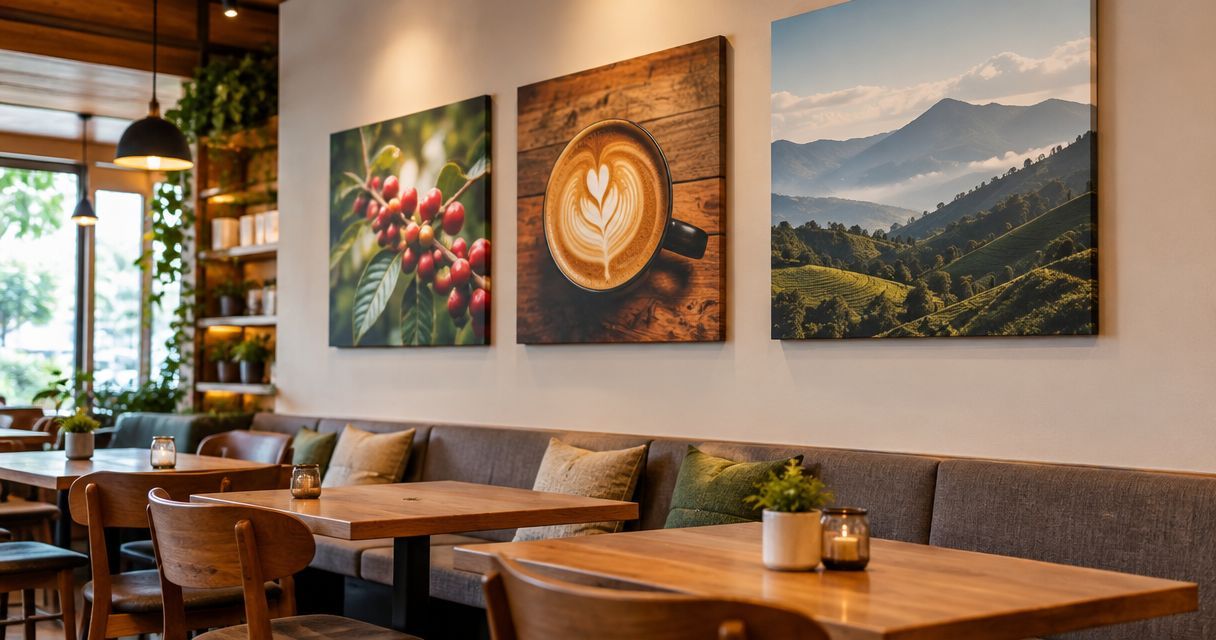
Restaurant canvas printing is the process of turning photographs into canvas wall art with the aim of giving your dining space a recognisable identity. Choose canvas prints for restaurants and cafés around your food, neighbourhood or story, then check the photographs, wall positions and cleaning requirements before ordering.
TL;DR
- Choose canvas prints for restaurants around your own food, people or neighbourhood, rather than unrelated decorative photographs.
- Pixaprints suits restaurant and café owners who want to turn their own photographs into personalised canvas prints.
- Test the layout from seated and standing positions before committing to a wall arrangement.
- Keep decorative canvas away from food preparation, splashes and areas requiring frequent surface cleaning.
Why canvas prints matter for restaurants and cafés
Your restaurant walls sit beside menus, furniture, lighting and signs. A photograph that looks lovely on its own still needs to belong in that setting. Start your 2026 wall refresh with the room, not a folder of favourite pictures.
Restaurants and cafés also have practical constraints that a home display does not. Customers see artwork from fixed seats, staff move around tables, and cleaning routines affect where decorative materials belong.
Pixaprints is best for restaurant and café owners who want personalised canvas prints made from their own photographs. That makes it an option for a photo-led display, not a substitute for checking installation, image permissions or suitability for your premises.
For help choosing between portraits, working scenes and location pictures, the guide to choosing brand and team photos for a wall offers a useful starting point. Apply those choices to the people and places that genuinely belong to your business.
How to plan canvas prints for your restaurant
Choose a story that belongs to your venue
Start with a notebook or a shared folder. Write down what you want a guest to recognise about your restaurant before selecting images: your cooking, your neighbourhood, your family history or the way your team works.
Choose one direction for the first wall. Mixing supplier portraits, holiday landscapes and close-up dishes without a connecting idea makes the display harder to read.
For a 2026 café refresh, for example, you might build the brief around the street outside and the people behind the counter. Treat that as a creative direction, not a requirement to photograph everything you sell.
- Write a short sentence describing the wall's theme.
- Gather photographs that directly support that theme.
- Remove attractive images that tell a different story.
- Ask a colleague what the shortlist says about the venue.
Check the wall before choosing the format
Use a tape measure and paper templates to explore the wall before opening a print editor. Mark doors, switches, wall lights and furniture positions on a simple sketch so you can see the space available.
Check the proposed display from 2 viewing positions: seated at a table and standing along the normal walking route. A photograph that works across the room also needs to make sense to the person sitting beneath it.
Start with 1 wall rather than ordering for the whole dining room. The guide to choosing the right canvas print size for your wall helps you think through scale before selecting an arrangement.
- Measure the usable wall area, not just its full width.
- Mark the outline of each proposed print with paper.
- Check chair backs, coats and nearby doors for conflicts.
- Look at the layout from the entrance and nearby seats.
- Photograph the templates to compare alternative arrangements.
Shortlist photographs you can print confidently
Open the original files on a larger screen where possible. Check the main subject, background distractions and sharpness before you spend time editing. A small preview can hide blur that becomes obvious when enlarged.
Begin with 3 photographs for your first shortlist. This gives you a manageable comparison without forcing every image into the final display. Ask who took each photograph and confirm that you have permission to reproduce it, particularly when commissioning work or including identifiable people.
Once the files are ready, Pixaprints canvas prints provide a route from your own photographs to personalised wall art. Choose the image first; a printing service cannot repair a missed focus point or resolve uncertain image rights.
- Retrieve original files rather than screenshots or message previews.
- Inspect faces, food details and other focal points closely.
- Remove photographs with distracting clutter or visible blur.
- Confirm permission to reproduce photographs and include people.
- Keep an untouched copy before making edits.
Match the crop and colour treatment
Use your phone or computer's existing editing tools to test crops before uploading. Give the subject enough breathing room and check whether a landscape, portrait or square composition suits the available wall.
For your 2026 shortlist, compare the images together rather than correcting each in isolation. Warm food photography and cool street scenes can work together, but the combination should be deliberate. Avoid filters that make dishes look unlike what you serve.
With canvas, also check how the image is treated at the edges before ordering. Faces, lettering and important details need particular attention wherever the selected format crops or wraps the picture.
- Test the intended shape using a duplicate file.
- Keep faces and essential details clear of vulnerable edges.
- Compare brightness and colour across the whole shortlist.
- Remove distracting objects only when the result remains truthful.
- Review any crop or edge preview provided during ordering.
Arrange the display around the dining experience
Lay paper templates on the wall and compare a single focal photograph with a small grouped display. The manual version is enough to reveal an awkward gap, an image hidden behind a light or a wall that feels too crowded.
Choose an arrangement that respects how people use the room. A waiting area allows a different kind of viewing from a narrow route beside occupied tables. Keep menus, access information and operational signs clear rather than making artwork compete with them.
Use a simple decision sequence: Choose theme, Check wall, Test crop, Review placement. Following that order keeps the photographs connected to the room instead of treating installation as an afterthought.
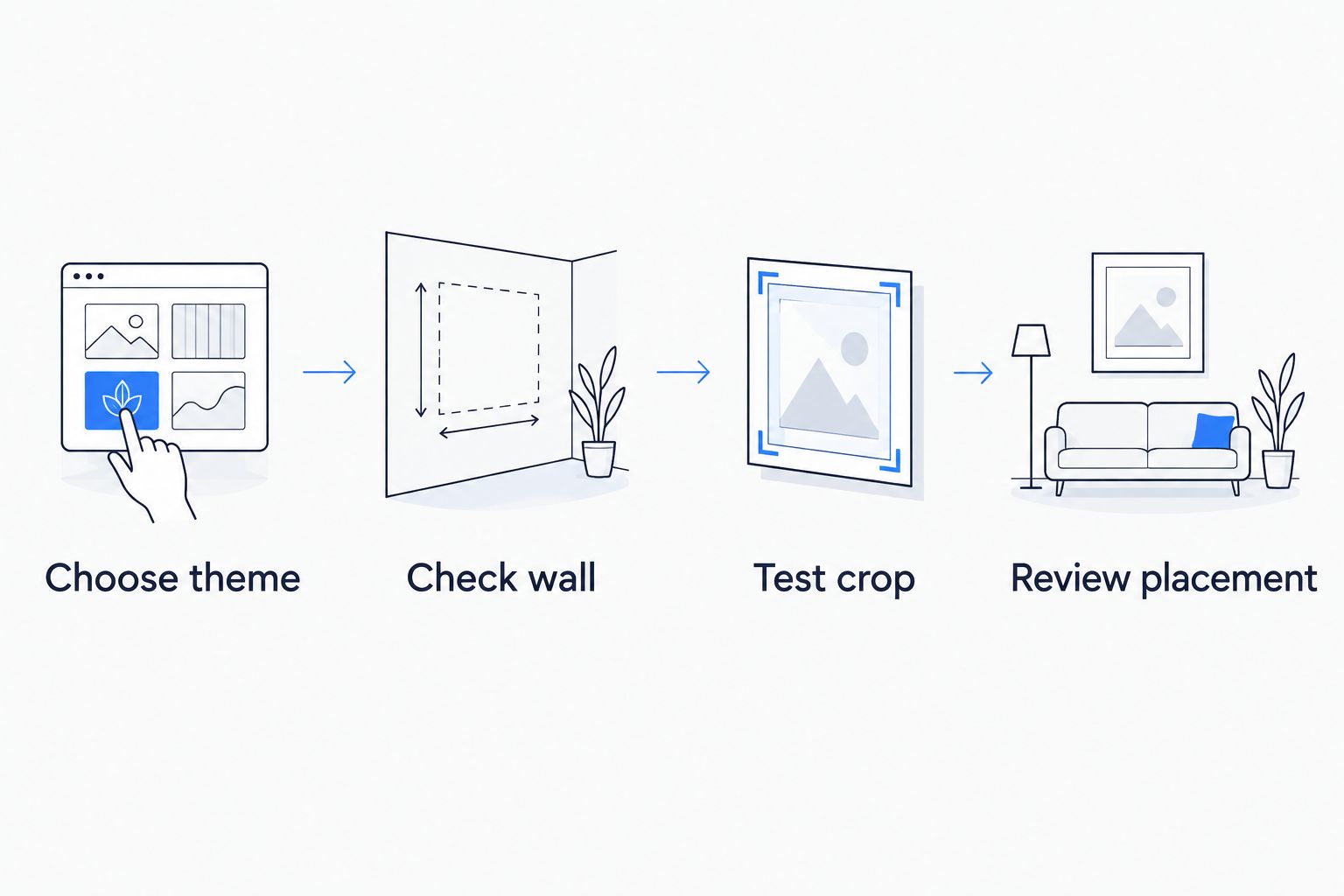
Check the wall before committing to the crop and arrangement.
- Use a single image when the composition needs uninterrupted space.
- Group photographs only when their subjects or treatment connect.
- Leave clear space around signs, controls and fixtures.
- Check whether seated guests can see the main subjects.
- Keep the arrangement clear of doors and circulation routes.
Check cleaning needs and installation details
Walk the proposed positions with whoever handles cleaning and maintenance. Identify steam, grease, drinks splashes and surfaces that need regular wiping before deciding whether decorative canvas belongs there.
Do not assume a canvas print is washable or suitable for a demanding commercial location. Check the care instructions for the item you intend to order. Keep decorative artwork out of food preparation areas unless its suitability for that location has been established.
Your 2026 display plan should also account for the wall itself. Fixings need to suit the wall construction and the finished item's weight; ask a competent installer when you cannot establish the right method.
- Avoid positions exposed to steam, grease or repeated splashes.
- Check the specific care instructions before choosing a location.
- Confirm the wall construction before selecting fixings.
- Keep artwork clear of emergency information and essential equipment.
- Record the cleaning approach for staff responsible for the area.
Review the finished display before expanding it
Start with the first completed wall and look at it during normal service. Check daylight and evening lighting, the view from occupied seats and whether the arrangement gets in the way of routine work.
Ask specific questions rather than whether everyone likes it. Can a guest recognise the subject? Does the wall match the venue? Can staff clean the surrounding area without working around awkward obstacles?
Keep a record of the image files, edits and placement decisions for your 2026 display. If you extend the scheme later, that record helps you maintain a consistent look without trying to recreate previous choices from memory.
- Review the wall under daytime and evening lighting.
- Check the view from nearby tables and the entrance.
- Ask staff about cleaning and movement around the display.
- Save the final files alongside a photograph of the installed wall.
- Extend the scheme only after resolving problems with the first wall.
Compare your restaurant wall-display options
Choose the format around the job the wall needs to do. Canvas suits a photograph-led display; it is not automatically the right answer for changing information or surfaces exposed to frequent splashes.
The options below describe display approaches, not claims about particular suppliers. Check the actual materials, mounting requirements and care instructions before ordering any finished item.
| Option | Best for | Main advantage | Key limitation |
|---|---|---|---|
| Personalised canvas through Pixaprints | Owners with their own photographs ready to print | Turns personal images into canvas wall art | You still need to check image quality, permissions, placement and care |
| Framed photographic prints | Owners who want a framed photographic display | Separates the photograph from the surrounding wall with a defined frame | Frames and glazing introduce additional cleaning and mounting considerations |
| Rotating poster display | Venues that want to change decorative imagery | Allows a display concept built around replaceable images | Needs a suitable holder or mounting arrangement and regular upkeep |
| Commissioned mural | Venues that want artwork designed for a particular wall | Can be planned around the wall's shape and features | Changes involve more work than replacing a separate print |
| An undecorated wall | Rooms already busy with signs, shelving or architectural detail | Keeps the surrounding space visually quiet | Provides no photographic storytelling |
Choose canvas when the photograph is the point. Choose a different format when the main requirement is changing notices, a particular cleaning method or artwork designed directly around an architectural feature.
Common mistakes restaurant and café owners make
Printing dishes that no longer represent the menu
A prominent food photograph sets an expectation about your restaurant. If the dish changes frequently, use an image of an ingredient, a preparation scene or a longer-lasting part of your story instead. Review food-led artwork whenever you make a substantial menu change.
Treating every empty wall as a display opportunity
A blank section beside a busy menu board does not need another focal point. Leave space where guests already have information to read, and judge artwork alongside the room's signs, shelving and lighting rather than in isolation.
Choosing photographs only from a standing viewpoint
Restaurant guests spend time sitting down. A picture placed behind a pendant light or too close above a seat can look different from the dining position. Test the paper layout from actual chairs before choosing the final placement.
Using social-media copies instead of original files
A picture that works in a small social post has not automatically passed the test for wall printing. Find the original photograph, inspect it closely and check the intended crop. Do not enlarge a screenshot simply because it is the easiest version to retrieve.
Assuming decorative canvas solves sound problems
Do not buy ordinary photo canvas as an acoustic treatment without evidence for the specific product. Choose decorative artwork for its visual role, and assess noise separately when sound is the problem you need to solve.
FAQ
What are the best canvas prints for restaurants?
The best canvas prints for restaurants use photographs that genuinely represent the venue and suit the intended wall. Start with your own food, people or neighbourhood, then check image quality, permissions and care requirements.
Can I use phone photos for café canvas prints?
Yes, phone photos can be candidates for café canvas prints if the original files are suitable for the intended enlargement. Check focus, lighting and the final crop rather than relying on how the picture looks on a small screen.
Is canvas better than framed photography for a restaurant?
Neither format is automatically better for every restaurant wall. Choose canvas for a canvas-based photographic display, or framed photography when a defined frame suits your room; check mounting and cleaning requirements for either option.
Where should I hang canvas prints in a café?
Choose dining or waiting-area walls away from steam, grease, splashes and busy movement routes. Test the position from nearby seats and keep signs, controls and emergency information unobstructed.
Can I put a restaurant logo on a photo canvas?
A logo can be part of an image file, but check that the intended print format accepts the file and reproduces its details clearly. Review lettering, contrast and edge placement before ordering, and use artwork you have permission to reproduce.
How do I clean canvas prints in a restaurant?
Follow the care instructions for the specific canvas print. Do not assume it tolerates water, cleaning chemicals or repeated wiping; choose a different position or material if the location requires those methods.
Can Pixaprints make personalised canvas prints from my photographs?
Pixaprints offers personalised canvas prints using uploaded photographs. Prepare your original image files and check the current product information before ordering; commercial placement and installation still need their own assessment.
One last thing
Before finalising your 2026 wall refresh, take a photograph of the proposed wall from the least attractive seat in the room. Use that view to check the paper templates, not just the flattering view from the entrance. A restaurant display needs to work for the guest sitting beside it, not only the person walking in.